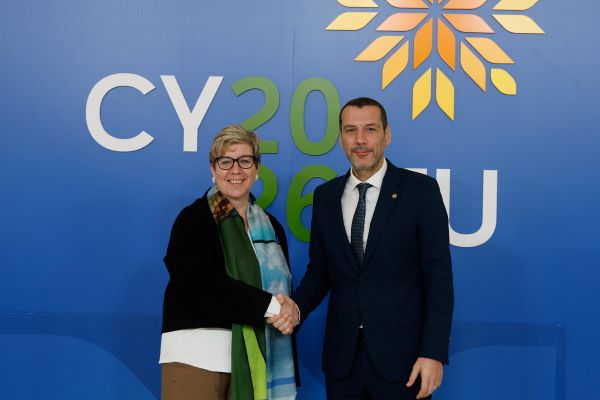
 Martine Deprez, Luxembourg’s Minister of Health and Social Security; Neofytos Charalambides, Minister of Health of the Republic of Cyprus;
Credit: Cyprus Presidency of the Council of the EU 2026
Martine Deprez, Luxembourg’s Minister of Health and Social Security; Neofytos Charalambides, Minister of Health of the Republic of Cyprus;
Credit: Cyprus Presidency of the Council of the EU 2026
On Monday 26 and Tuesday 27 January 2026, Martine Deprez, Luxembourg’s Minister of Health and Social Security, travelled to Nicosia, Cyprus to take part in the conference on mental health and inclusiveness.
Organised within the framework of the Cypriot Presidency of the Council of the European Union (EU), the “High Level Conference on Mental Health and Inclusion” brought together political decision-makers, institutional representatives, experts and civil society stakeholders to discuss current challenges related to mental health.
According to the ministry, it placed emphasis on the involvement of all stakeholders, including young people and individuals with lived experience, in the development of mental health policies, with particular attention given to strengthening resilience and empowerment in the field of mental health.
During the event, Minister Deprez delivered a presentation focusing on Luxembourg’s experience with mental health first aid. According to the ministry, she presented this approach as a practical prevention tool designed to strengthen citizens’ ability to recognise psychological distress, respond appropriately and guide individuals towards existing support services. Since 2020, Ligue santé mentale has adapted and implemented the programme at national level with strong institutional support.
“Mental health cannot be addressed solely through specialised care. It must start as close as possible to people, in schools, workplaces and communities, by giving citizens the means to recognise distress and to act in a spirit of solidarity,” Minister Deprez underlined.
Minister Deprez also recalled that mental health represents a political priority enshrined in the 2023-2028 coalition agreement, with a focus on prevention, early intervention and coordination between the health, education and social sectors. She also highlighted the inclusive and community-based approach developed in Luxembourg, which contributes to strengthening resilience and social cohesion.