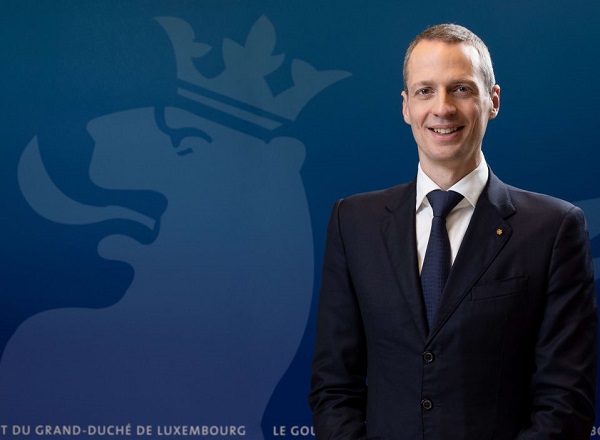
 Serge Wilmes, Luxembourg's Minister of the Environment, Climate and Biodiversity;
Credit: © SIP / Claude Piscitelli
Serge Wilmes, Luxembourg's Minister of the Environment, Climate and Biodiversity;
Credit: © SIP / Claude Piscitelli
Luxembourg's Ministry of the Environment, Climate and Biodiversity has reported that Minister Serge Wilmes took part in the European Union (EU) Environment Council meeting held in Brussels on Tuesday 16 December 2025.
During the meeting, ministers discussed the EU bioeconomy strategy, the state of the environment in Europe towards 2030, recent international climate meetings and the environmental impact of the textile industry.
Under the first agenda item, ministers exchanged views on the European Commission’s proposed Strategic Framework for a Competitive and Sustainable European Bioeconomy, presented on Thursday 27 November 2025, which aims to ensure the widespread use of sustainable bio-based materials and products across the EU by 2040, according to the ministry. The framework places particular emphasis on large-scale deployment, innovation, the creation of new markets, a sustainable supply of biomass, the promotion of the circular economy, the creation of green jobs and the achievement of the EU’s objectives for a sustainable and competitive economy.
In his intervention, Minister Wilmes recalled that the bioeconomy offers Europe an opportunity to reduce its dependence on imported fossil energy by making use of its own natural resources to combat climate change. However, he stressed the importance of respecting ecological limits: “Unsustainable growth of the sector, for example through overexploitation or unsustainable production methods, would be detrimental to our well-being, the long-term viability of the sector itself and our ability to tackle climate change. Successfully meeting this challenge by integrating ecological limits is essential to ensure the success of the EU’s bioeconomy strategy.”
Ministers then adopted conclusions on the environment in Europe entitled “Building a More Resilient and Circular Europe”, based on the mid-term review of the Eighth Environment Action Programme (2024) as well as the latest report by the European Environment Agency on the state of Europe’s environment, the ministry noted.
The conclusions underline the urgency of action to strengthen resilience to climate change and accelerate the transition towards a circular economy, while highlighting the interdependence of these two challenges in addressing major environmental issues such as pollution, biodiversity loss and resource scarcity.
During the discussions, Minister Wilmes reaffirmed the need to establish a genuine level playing field between European producers and those from third countries. He also stressed the importance of targeted support for small and medium-sized enterprises engaged in the transition towards a circular economy, underlining the essential role of an integrated European framework in strengthening climate resilience and supporting the efforts of Member States.
The Council also reviewed recent major international meetings under the Danish presidency. In this context, ministers discussed in particular the outcomes of COP30, held in November in Belém, Brazil, whose conclusions were limited, especially with regard to greenhouse gas mitigation.
Minister Wilmes expressed regret that the current geopolitical context had not allowed for a more ambitious agreement that would have put the world back on a trajectory compatible with limiting global warming to 1.5°C. He suggested that the EU should better prepare future climate conferences by strengthening communication on EU actions, particularly in the area of financing, and by intensifying diplomatic efforts to forge alliances well ahead of such meetings.
Finally, at the initiative of France, ministers debated the environmental impact of the textile industry, with a particular focus on fast fashion. Minister Wilmes supported France’s call on the European Commission to act swiftly in response to the environmental impacts of this model: “To reduce our carbon footprint and environmental impact, it is essential to decrease resource use along the textile value chain, one of the most polluting sectors in the world. We must steer our economy towards responsible resource consumption and a quality-driven market. This will help promote durability, repairability and, as a last resort, competitive recycling, which is currently under threat.”
The next meeting of the EU Environment Council will be held under the Cypriot presidency on 17 March 2026 in Brussels.