 Tianshsn Victory Tunnel;
Credit: Chronicle.lu
Tianshsn Victory Tunnel;
Credit: Chronicle.lu
In continuing my series of articles on visiting Ürümqi, the capital of Xinjiang in north-western China, this is what we got up to on Day 3 - for the first article in the series, and links to all others, see here.
Trip from Urumqi to Korla, Yanqi County
Glorious weather, bright sunshine, sat on the rhs to avoid the sun (posh); past light industrial zones, fields of sunflowers, corn, beans and rapeseed, giving way to scrubland with little vegetation, the start of the desert; mountain ranges all around us, with snow-capped mountains in the distance.
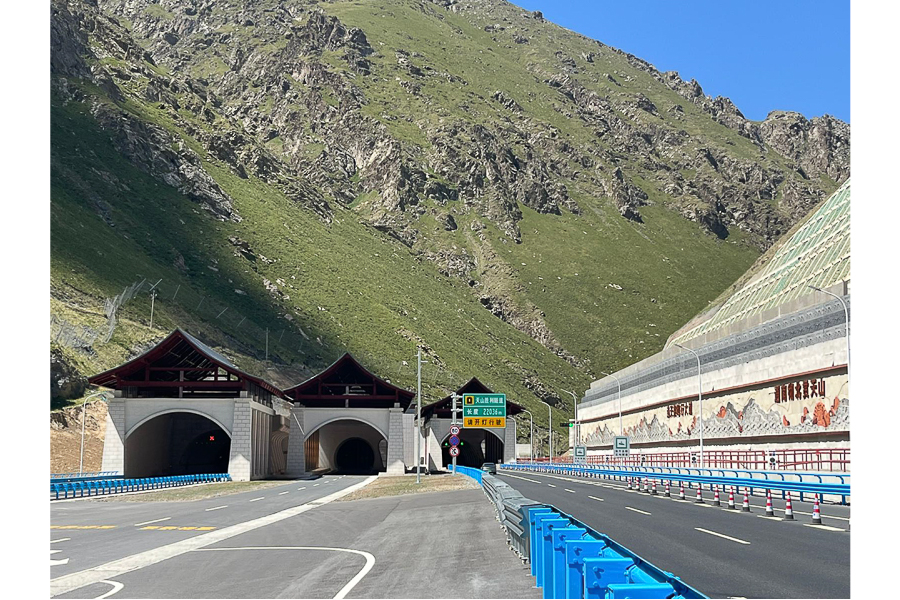
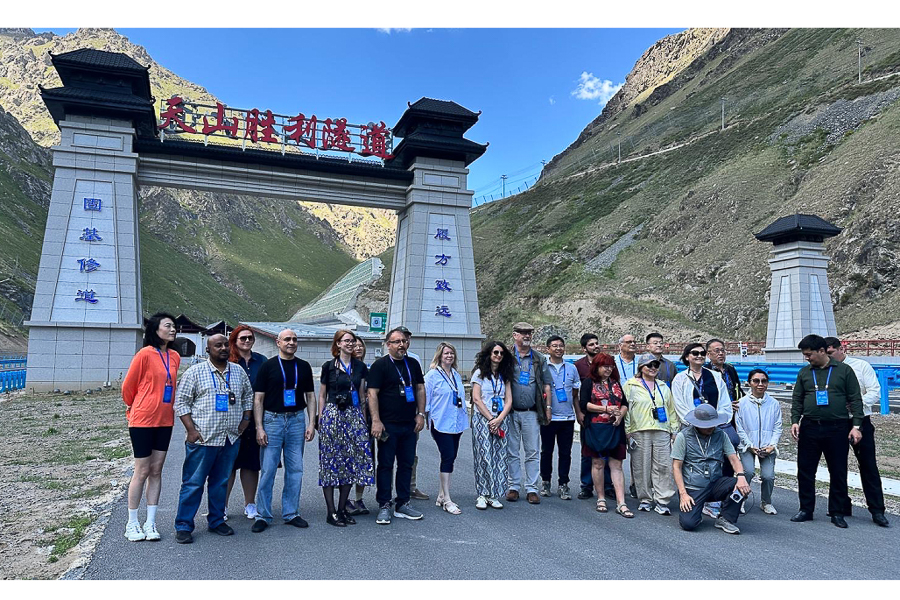
Going through the Tianshan Victory tunnel (the longest runnel in China) through the Tianshan mountain range that runs from west to east across Xinjiang, one first travels though a series of shorter tunnels to get to the northern entrance (we travelled south from Urumqi to Korla).
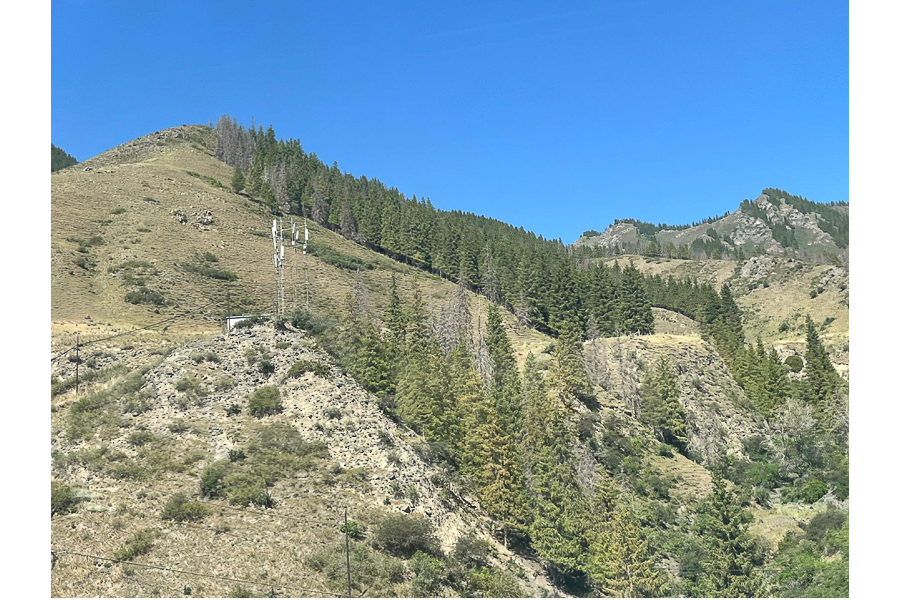
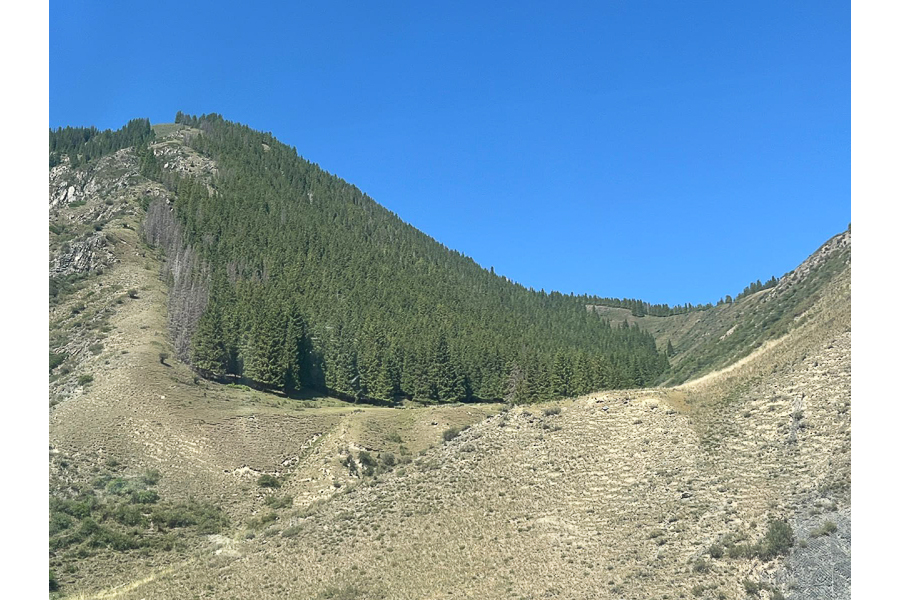
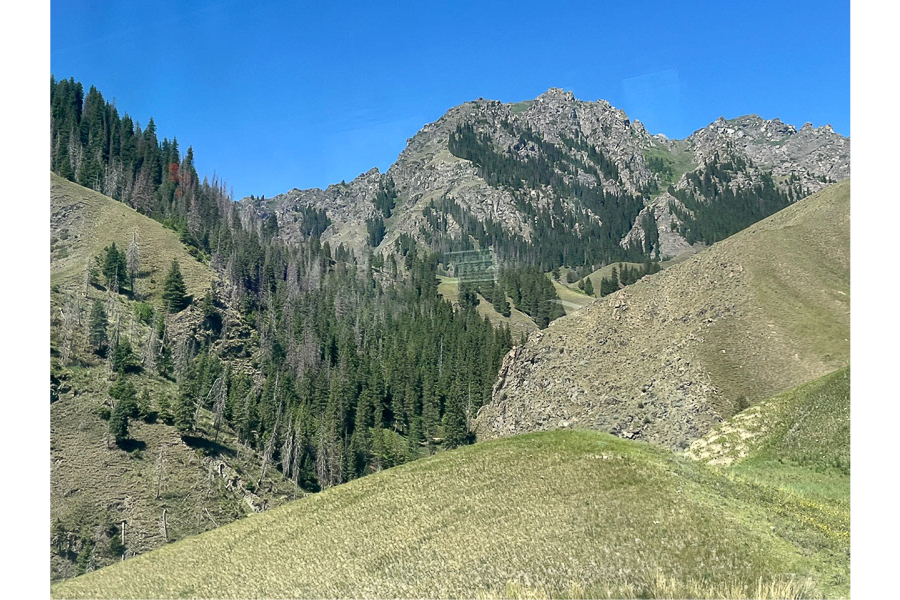
Driving through the smaller connected tunnels, it was interesting to see the coniferous forests which are known to contain wildlife from black bears, marmots, gazelles, foxes and snow leopards (in the higher reaches), but we did not come across any birds of prey, even though the mountains are home to vultures.
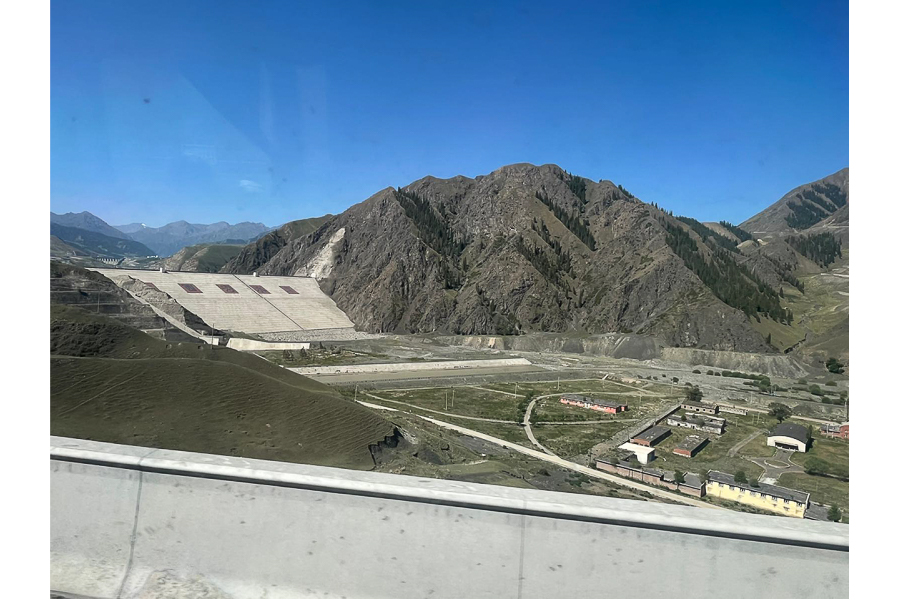
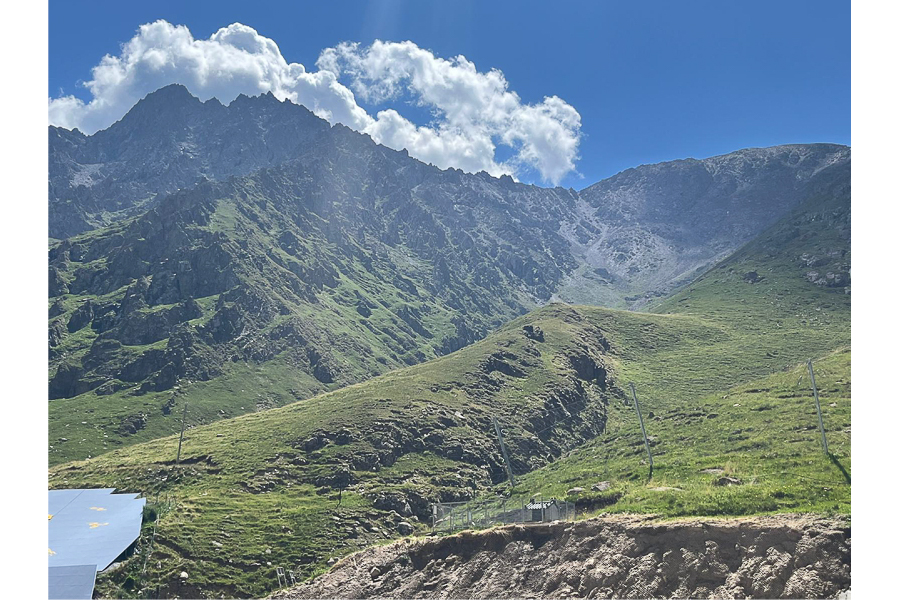
The topography was not unlike part of the Alps in Europe, ranging from rolling hills to sheer rick faces and jagged peaks, as well as the snow-like above which no trees would grow. There were a few mountain streams and rivers, and a couple of lakes formed by dam walls put it place during the construction.
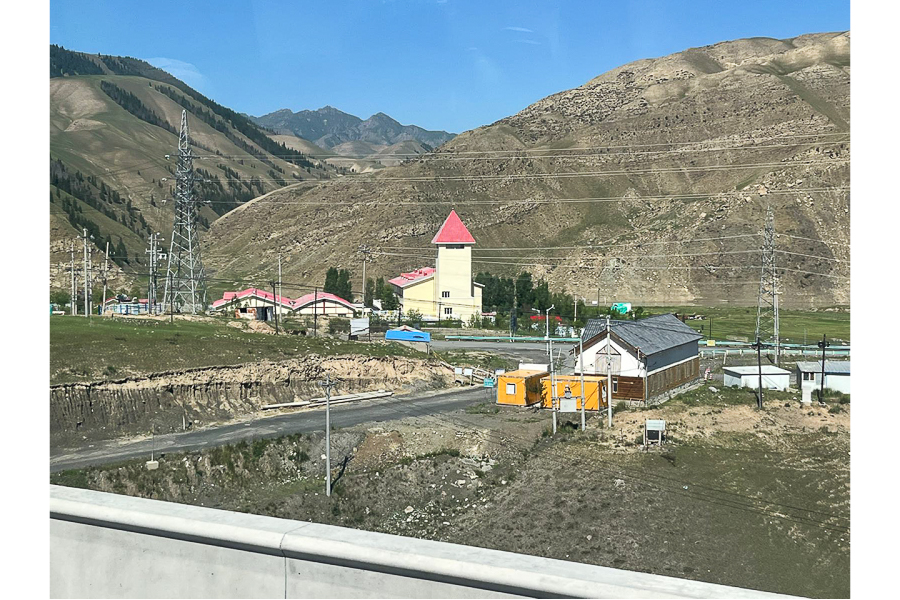
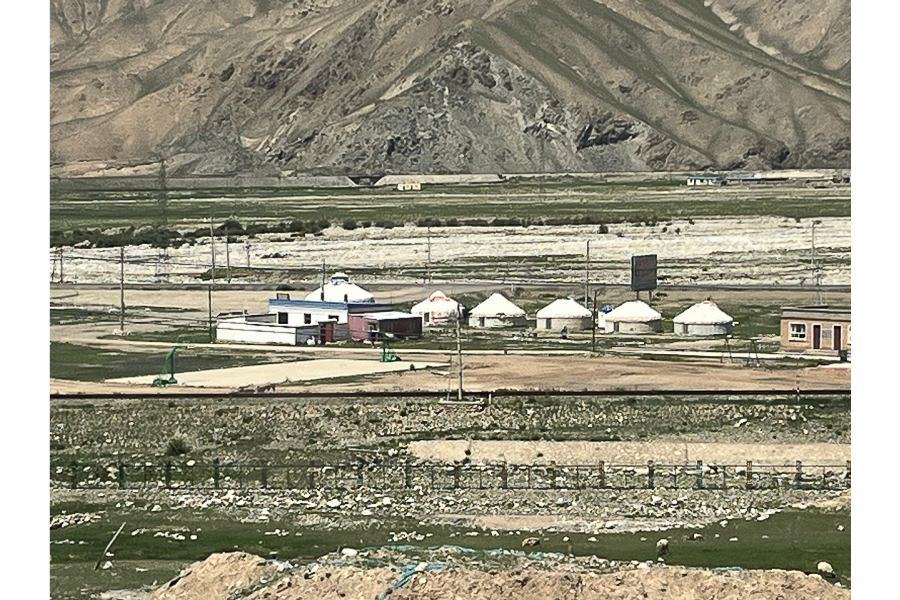
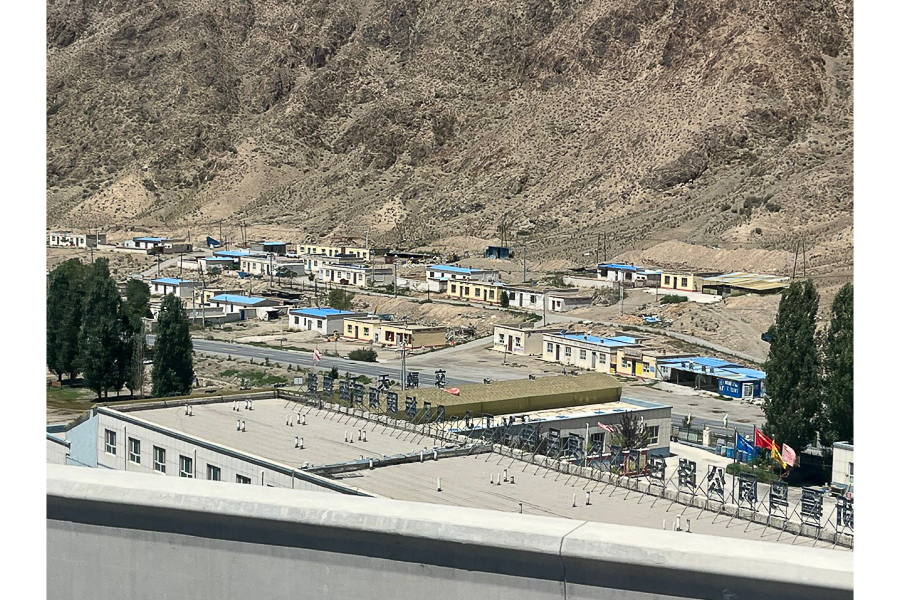
On the far (southern) side of the tunnel, the topography tuned more to plains and rolling hillsides, with a number of small farms and villages, some brick houses and some gurs (for nomadic people, named yurts in Kazakhstan), with some small herds of horses and cattle and flocks of sheep.
It took another almost two hours to get to Korla, with the only vegetation visible being trees along the river, until suddenly the arid hillsides gave way to a plain, the northern part of the Takramakan desert which we drive to get to Korla, a city built around an oasis situated on the shores of Bosten Lake.
Suddenly the land was fertile again, with fields of corn, beans, melons and chilli peppers protected by rows of trees, and grassland too with grazing horses. Tomatoes were being grown in the acres of rows of cloches, and I was later informed they also grew figs under cover due to the harsh winters. We crossed a wide and fast-flowing river of gushing white water, which would explain how farmers could irrigate the arid land. Standing together were a number of large rooves giving shelter from the searing sun to herds of cattle.
Suddenly again the terrain was back to sand and stones again, interspersed only by large parks of solar panels, tapping the sun’s energy.
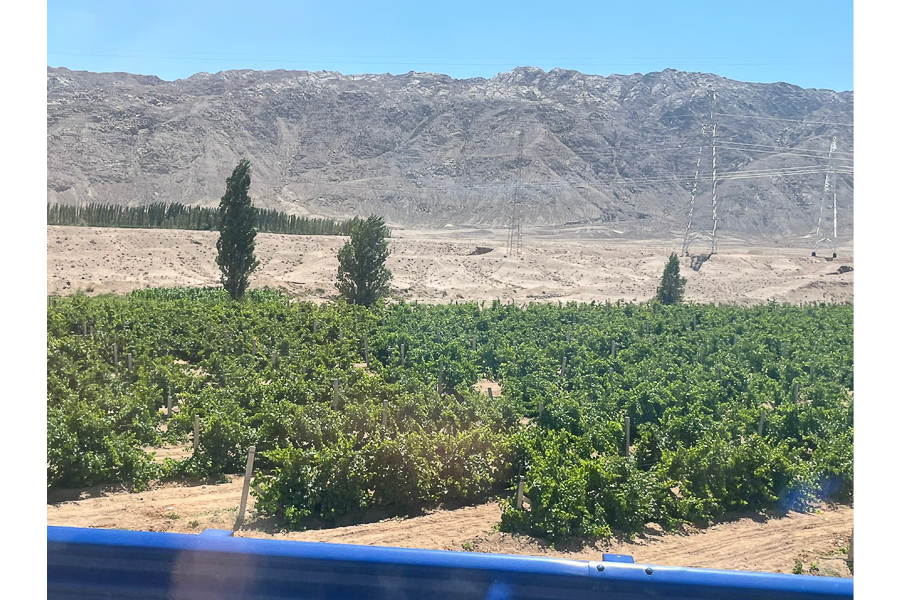
Approaching Korla, on one side of the road were the arid rugged hillsides devoid of vegetation, and the other had vineyards, plus orchards of pear trees, that had starred to appear, as well as farm buildings until we started to enter the city outskirts; later on, close to the lake, rice was being grown in paddy fields, in between fields of bamboo.
Tianshan Victory Tunnel
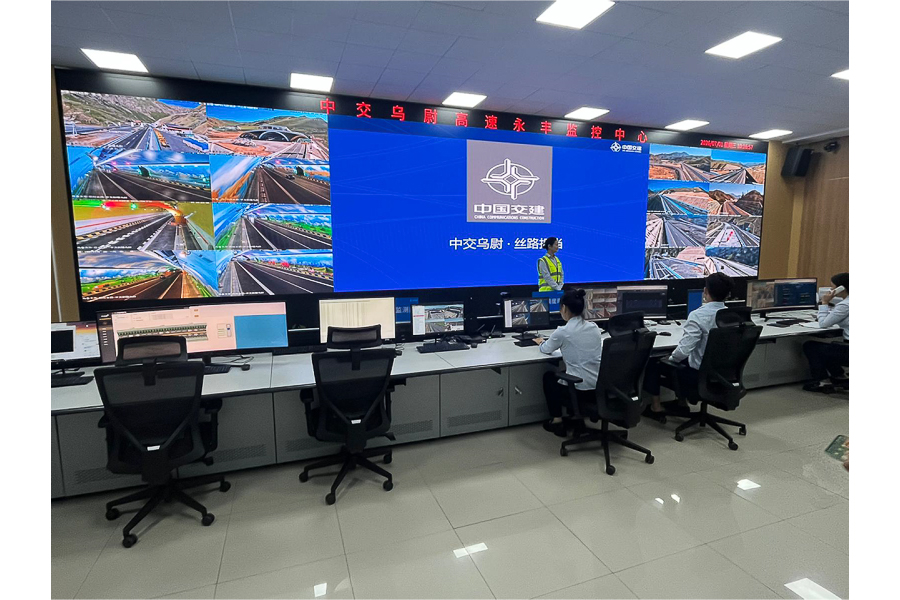
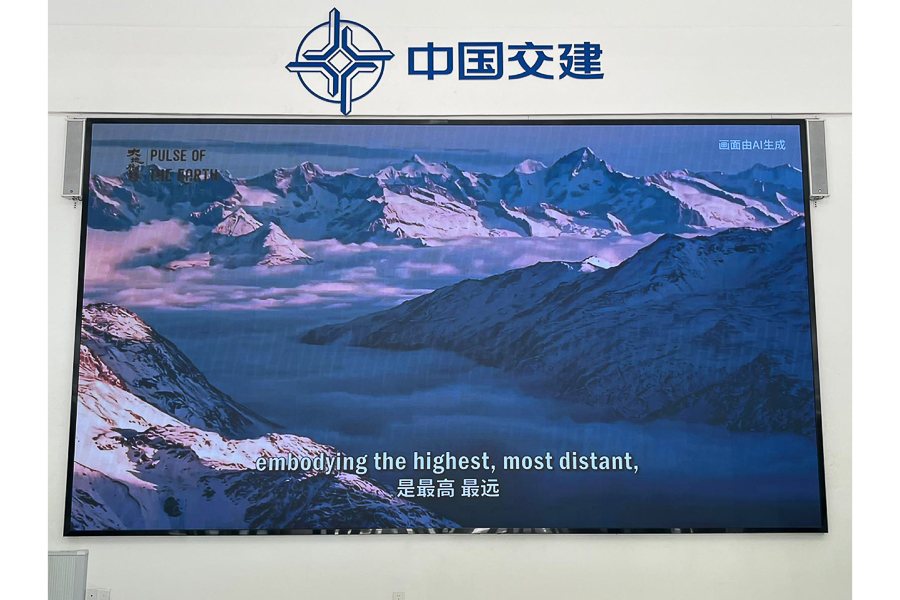
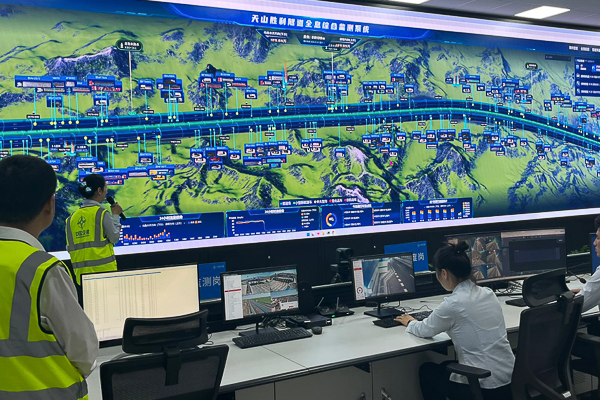
Just before we joined the toll road prior to the tunnel system, we stopped off at the China Communications Construction (CCC) tunnel monitoring centre at the southern entrance for a presentation in their main control room.
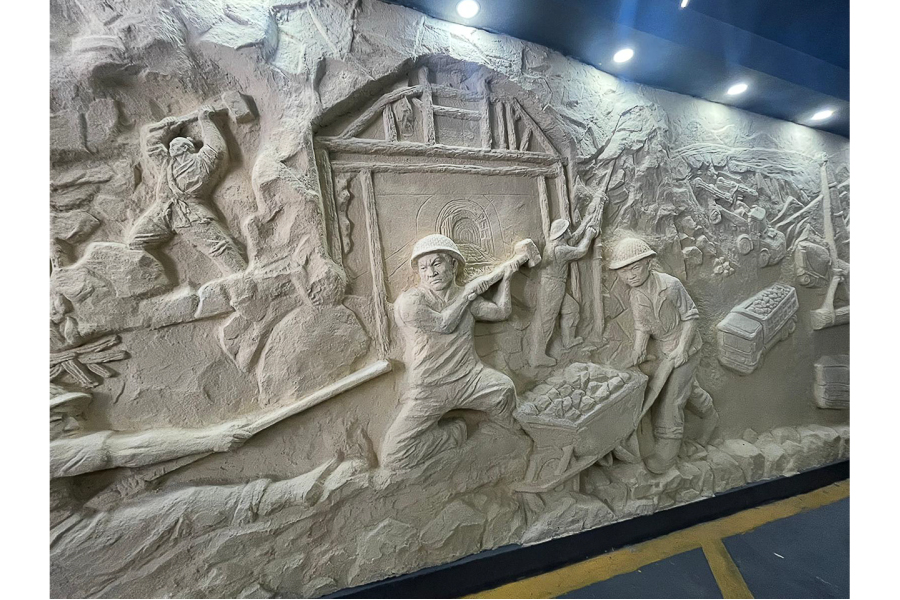
Construction on the 22.13km long tunnel started in April 2020 and was completed in 2025; beforehand, the journey from city to city (Urumqi - Korla) took 7 hours; now it takes half the time. For the actual trip through the mountains, the journey time fell by around just hours to 20 minutes.
The construction was challenging due to the mountain, with mainly granite rock, but also bauxite to bore through.
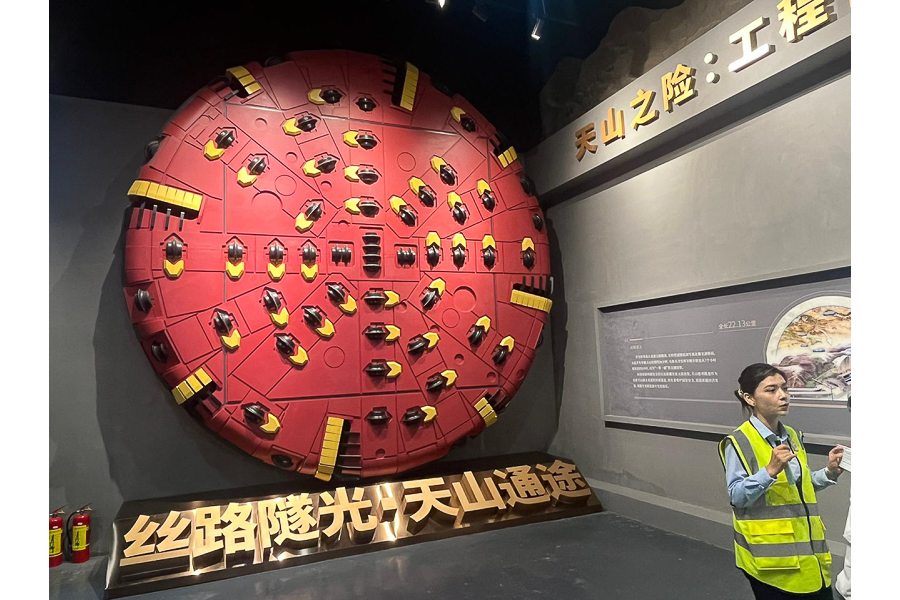
During construction, they bored from both sides; On average, each tunnel boring machine (TBM) machine could bore 51m/day (max 81m), enabling max 860m/month in total ti be achieved.
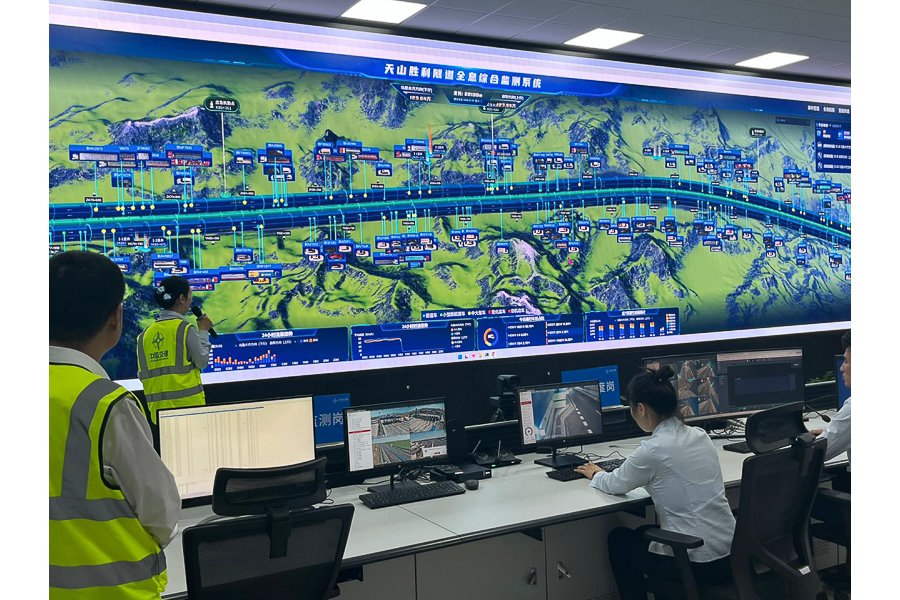
The control centre is supported by a control system which monitors and manages traffic flow and air/oxygen quality and flow with a ventilation system.
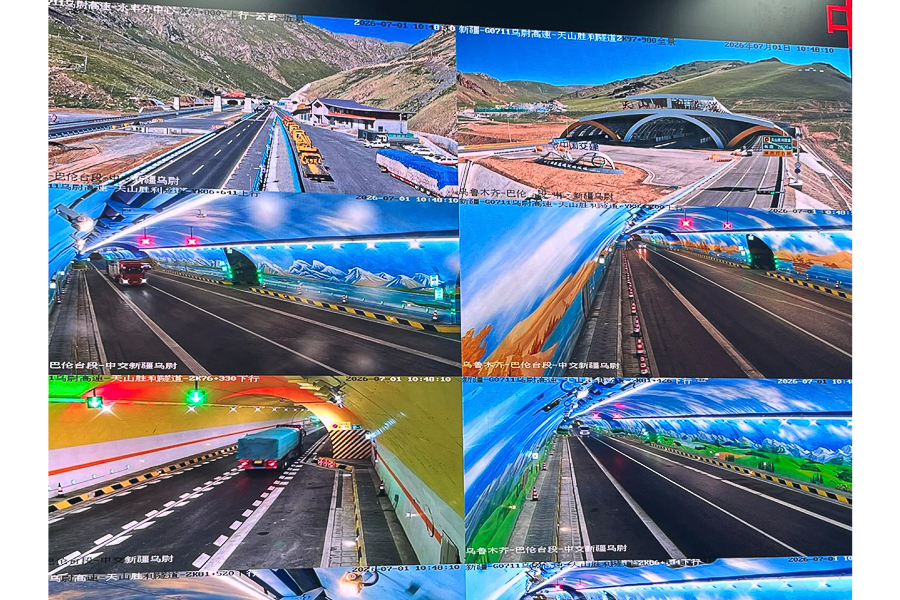
The control system comprises many components including CCTV as well as large screen hologram monitoring with different colour-coding to track each individual vehicle, including registration numbers, makes and models
When we were there, we could easily see that they were currently 76 southbound and 98 northbound vehicles in the tunnel, the sides of which have been painted with scenery murals in certain places, explained to prevent driver fatigue.
Apart from separate northbound and southbound traffic tunnels, there also a central emergency/relief tunnel, through which staff can move using motorcycles. An ambulance is stationed at the northern end of the tunnel.
At the exhibition space located at the northern entrance to the tunnel, we were shown a five-minute film showing how the tunnel was constructed, including vertical ventilation shafts.
We then posed for a group photo, the first of the trip, a stark difference to the recent Henan visit.
Bosten Lake in Yanqi County
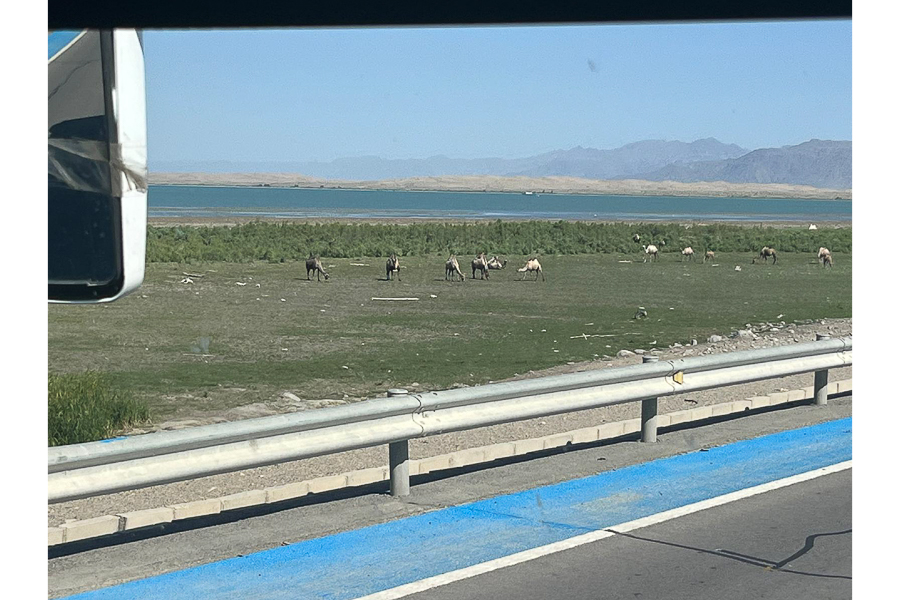
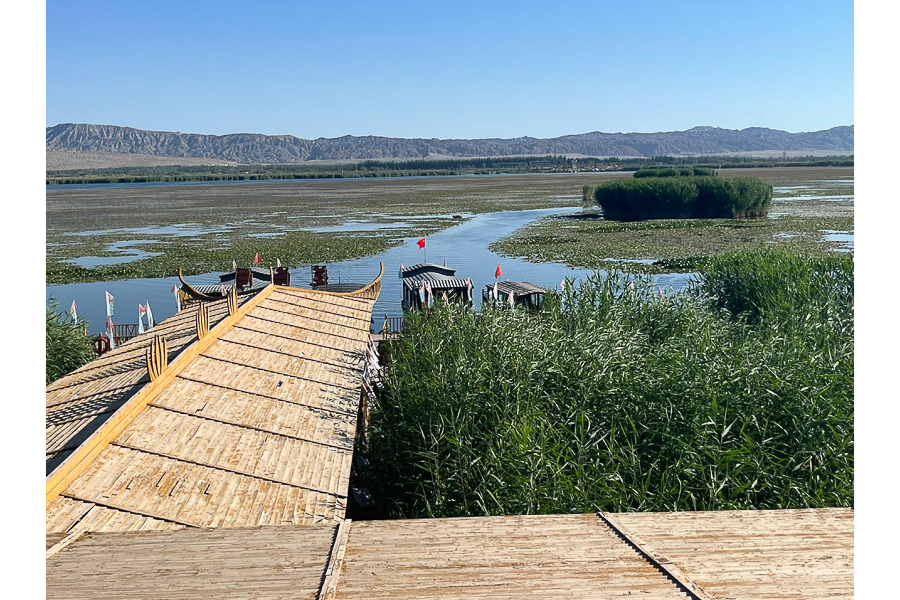
Approaching the lake, we noticed the water level was low, but we spotted lots of wildlife, including white herons and herds of horses and camels.
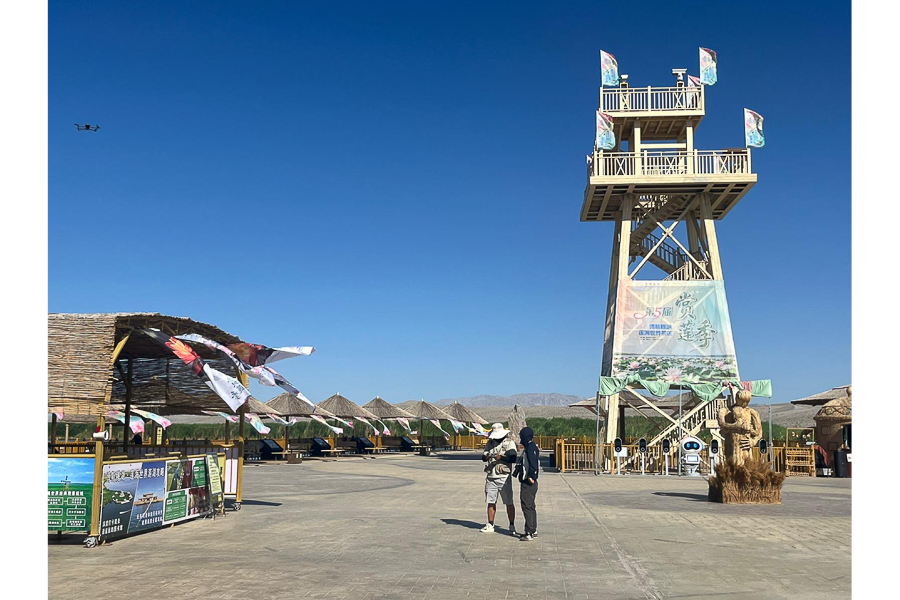
The area is developing its tourism and, while many people come the enjoy the mountains, the lakes are growing in popularity and there are other attractions locally, including a water park.
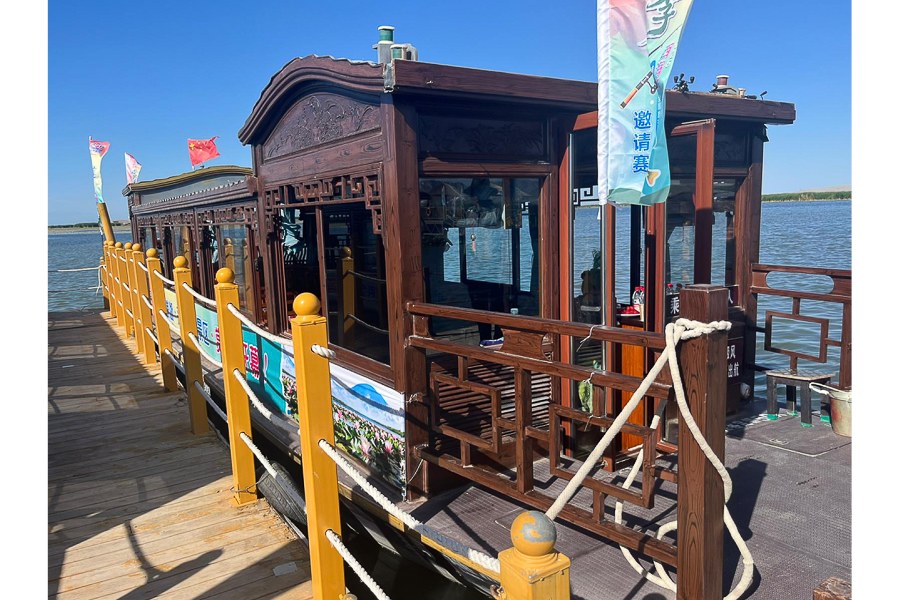
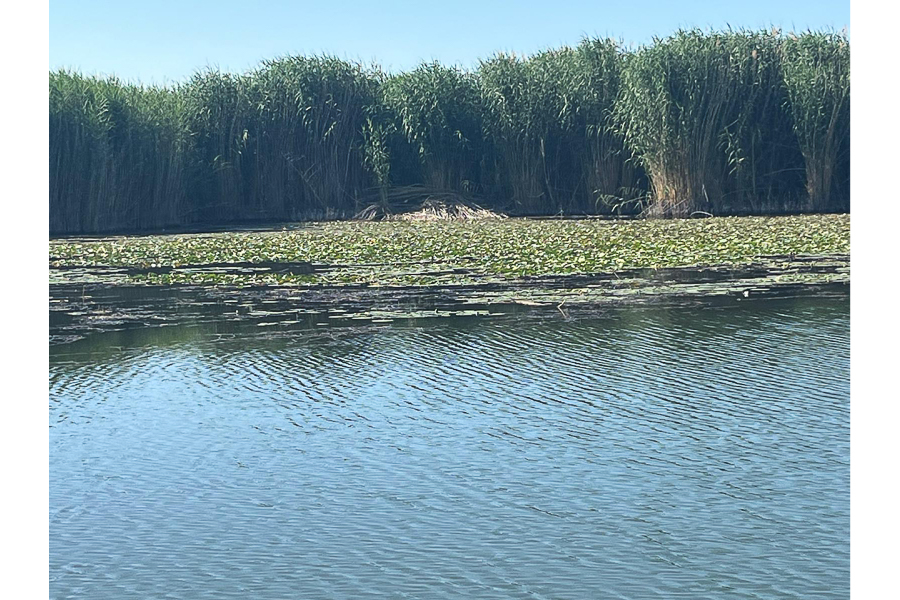
We arrived at the jetty to take a 25-minute boat ride to the centre of the the lake; we passed by masses of lily pads and flowers (red, pink, white, yellow). The journeys out and back included both information on environment and nature issues, as well as cultural artists - song, dance and musical performances.
The larger lake is 1,600 km2, with the smaller one a quarter of the size. It is a notional park for farming both weed and fish, with environmental protection a priority of the regional government.
A local industrial park houses organisations involved in environmental and ecological protection.
The fast-growing weed grows to more than 4m tall and purifies the water, and the roots can be used to make herbal tea.
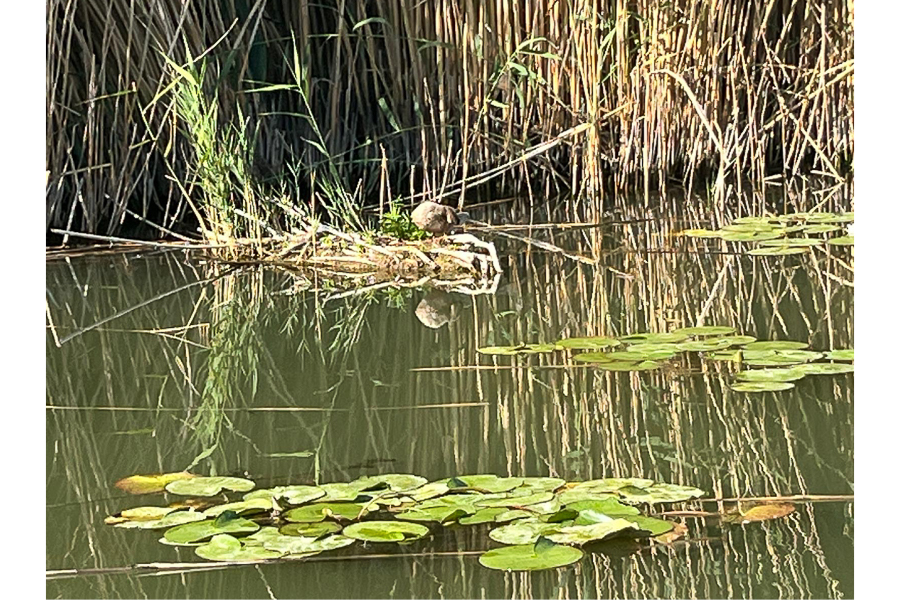
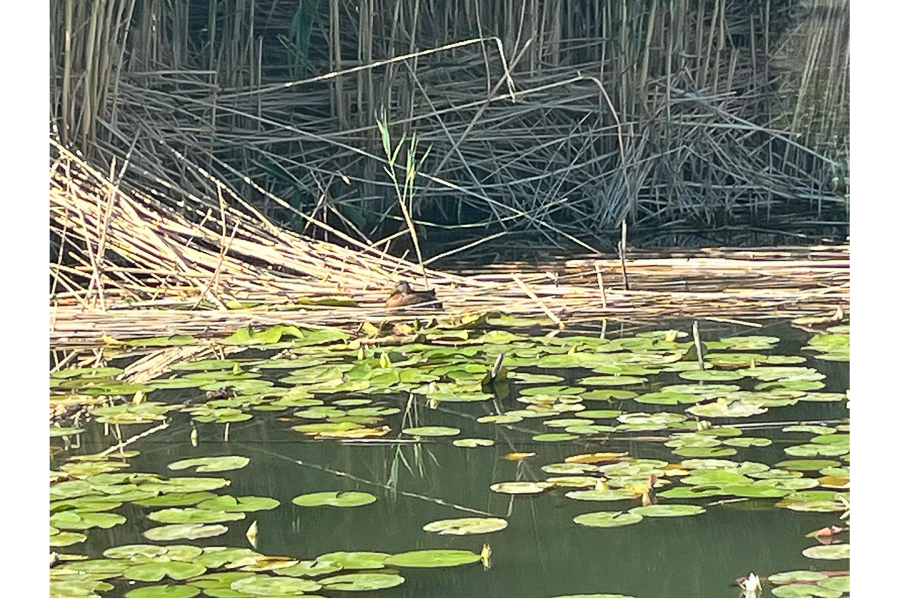
More and more varieties of birds (almost 200) live here, some resident and some migratory. These include black stork, peregrine falcon, herons and swans, with over 10,000 birds in total, the growth numbers helped by the improvement in water quality.
32 types of fish live in the lake, including grass carp, silver carp and perch (no, I couldn’t elicit further information than this).
Korla
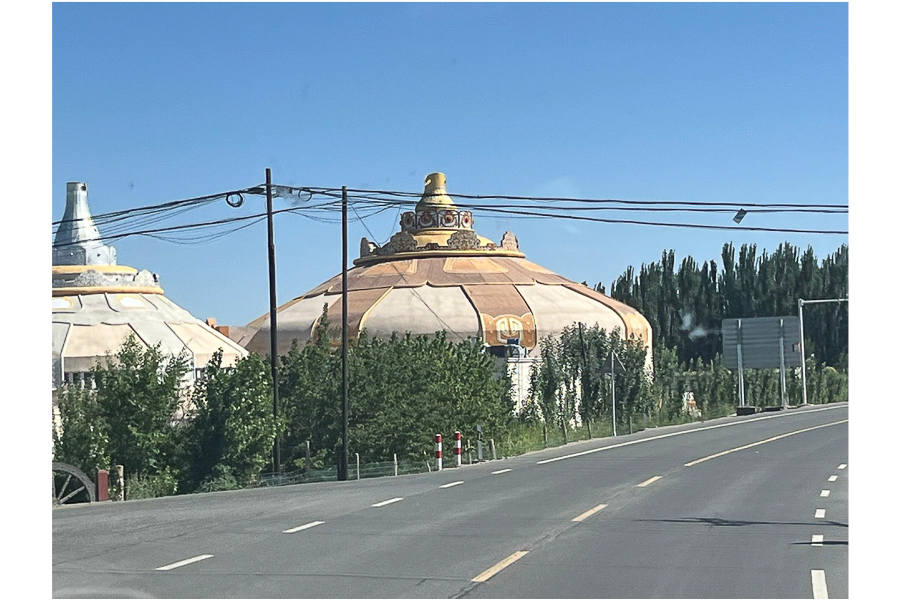
An hour’s bus ride to the city where we would spend a couple of days and nights… it is the capital of the Mongol Prefecture which retains its name despite the Uyghurs currently being the largest ethnic minority. The Mongolian influence is visible almost everywhere, from street names in both Mandarin Chinese and Mongolian, and many gurs (round tent-like structures which are called yurts in Kazakhstan) suiting their traditional lifestyle.
The Shanshui Licheng Hotel was a tremendous surprise - all good… Due to the bus travel we were quite a bit behind schedule, but the hotel kept the restaurant open for us for a late, and delicious, meal. Very large and comfortable bedrooms too...