Luxembourg's Ministry of Health presented recently the government's COVID-19 self-testing strategy, which is one of the steps towards a "new normal" in the Grand Duchy.
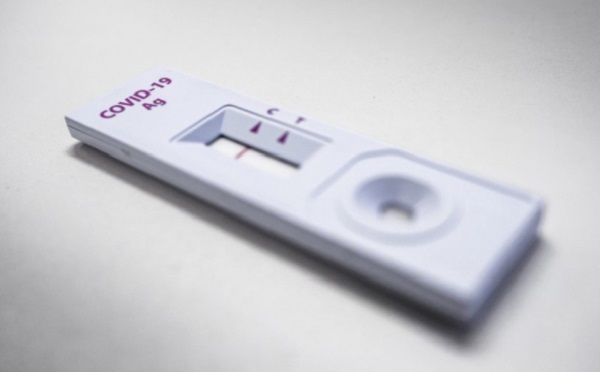
In addition to PCR tests carried out by medical analysis laboratories (doctor's prescription or via large-scale testing) and rapid antigen tests carried out by health professionals, the government's testing strategy also provides for a wide distribution of antigen self-tests. fast. This distribution is intended for the general public who can perform these self-tests themselves.
Self-tests make it possible to test the Luxembourg population even more widely and more often. Simple to use and recently made available over the counter in shops and pharmacies, these tests are easy to access.
The Health Ministry recalled that self-tests do not replace large-scale testing PCR tests, nor prescription PCR tests, due to their more moderate ability to detect infection. Rather, it is an additional tool to combat the spread of the virus. These tests should complement basic hygiene and barrier measures.
The distribution of rapid antigen self-tests is based on five pillars:
- a regular supply for the benefit of priority sectors in the fight against the virus, i.e. hospitals and specialised establishments, COPAS, FEDAS and other activities in the fields of the elderly and people with disabilities, the social sector and national and higher education. Rapid antigen tests have already been distributed regularly since October-November 2020 to hospitals and accommodation facilities for the elderly and people with disabilities.
- a "starter kit" will be made available to the professionally active population, which includes private companies, the self-employed, seasonal workers and public establishments, the civil service, the municipal civil service and the European and international civil service.
- distribution of vouchers to the rest of the population (per household), namely pensioners, beneficiaries of the social inclusion income (REVIS) and recipients of unemployment benefits. Self-tests will also be provided to senior clubs, senior activities and the "Repas sur roues" (meals on wheels" services. Each household concerned will receive a secure voucher allowing the beneficiary to collect a test box in one go, as well as an information flyer. Vouchers will be sent out over a two-week period (starting on 14 May 2021). The self-tests (Wondfo 2019-nCoV Antigen Test) can be collected upon presentation of the voucher in pharmacies in Luxembourg from now on.
Rapid antigen self-tests are also being distributed to the hospitality, cultural and sport sectors in the context of the gradual reopening of the economy.
- in order to be able to react on an ad hoc basis in the event of a rapid increase in infections, a national reserve of self-tests is foreseen. The aim of this pillar is to reduce the spread of the virus, if necessary, through rapid intervention on a large part of the population, instead of putting in place new restrictions.
To date, more than 17 million self-tests have been ordered. Test deliveries are underway and all orders should have been delivered around mid-May.