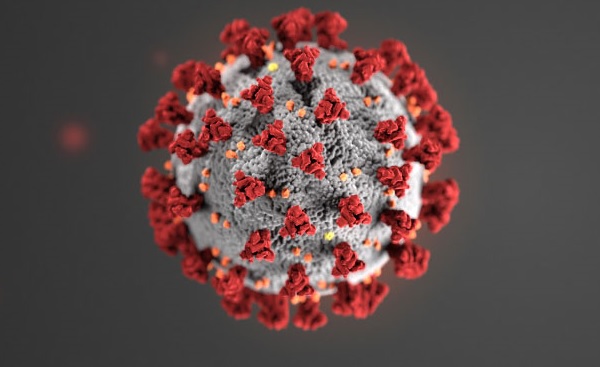
Luxembourg's Ministry of Health, together with the National Health Laboratory (LNS), have confirmed that a first case of the British coronavirus variant B.1.1.7 has been detected by the LNS during the sequencing of samples covering the period from 19 to 29 December.
An investigation into the origin of this case by the health inspectorate is underway.
This variant of Sars-CoV2 originated in the United Kingdom at the end of 2020. It has since been named Voc 202012/01, Vui 202012/01 or lineage B.1.1.7.
According to studies presented in the UK, the new strain is more contagious than the original strain with an estimated increased transmissibility of up to 70%. These figures need to be confirmed by further epidemiological and virological investigations.
There are no clinical reports on the virulence of the new variants, and there is no evidence at this stage that more severe forms of the disease result from it. Nevertheless, the European Centre for Disease Prevention and Control (ECDC) in Stockholm considers the risk that the recently identified variants of COVID-19 to be a source of additional pressure on health systems to be high. Their greater degree of contagion could have a greater impact on the number of hospitalisations and the number of deaths. In its report dated 31 December 2020, WHO recommends that national authorities continue to strengthen control measures in place.
Pending further scientific studies, the Ministry of Health has stressed the importance of respecting the preventive measures in place to reduce transmission, such as wearing a mask, practicing hand hygiene and cough etiquette, maintaining physical distance, ensuring good ventilation and avoiding crowded places.
Several countries have reported sporadic cases caused by the new variant in Europe (Germany, Belgium, Denmark, Spain, France, Ireland, Iceland, Italy, Norway, Netherlands, Portugal and Sweden) and globally (Australia, Canada, South Korea, Hong Kong, Israel, Japan, Jordan, Lebanon, Switzerland, Singapore).