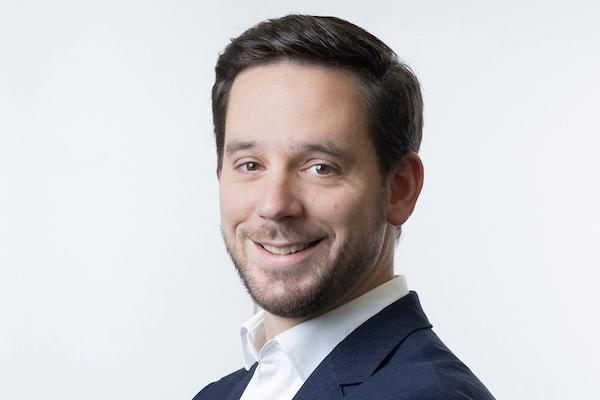
 Sammy Wagner, Mayor of Steinfort;
Credit: BlitzAgency/Laurent Antonelli
Sammy Wagner, Mayor of Steinfort;
Credit: BlitzAgency/Laurent Antonelli
The Grand Duchy of Luxembourg consists of twelve cantons made up of 100 municipalities. Each municipal council is elected directly by its residents in municipal elections held every six years. The municipality’s mayor is then appointed from among the elected members of the municipal council.
In this series, Chronicle.lu spoke to a selection of the country’s mayors to discuss the challenges within their municipality, their daily activities, how projects are prioritised and how they communicate with residents.
The eleventh in this series features Mayor Sammy Wagner, who represents the municipality of Steinfort.
Chronicle.lu: What is the size of your municipality, in population and number of nationalities?
Sammy Wagner: The municipality of Steinfort counts (as of 10 July 2026) 6,155 inhabitants from 96 different nationalities as well as one person without a nationality.
Chronicle.lu: What are the main challenges currently facing the municipality (housing, mobility, infrastructure, environment, demographic growth, etc.) and how is the administration working to address them?
Sammy Wagner: Like many municipalities in Luxembourg, Steinfort is experiencing sustained demographic growth. Our challenge is to ensure that housing, schools, childcare facilities, mobility and public infrastructure keep pace with this growth while preserving the quality of life that defines our municipality.
Education is one of our highest priorities. We are planning our school infrastructure with a 30- to 40-year perspective, maintaining two strong school campuses in Steinfort and Kleinbettingen to provide modern learning environments, reduce traffic and preserve the vitality of both villages.
Mobility is another key focus. We continue to invest in safer cycling and pedestrian infrastructure, traffic calming and better regional connectivity, including the cross-border cycling route linking Belgium, Steinfort and Luxembourg City.
Although housing is largely a national challenge, we work closely with partners such as the SNHBM (Société Nationale des Habitations à Bon Marché) and the Fonds du Logement to support affordable housing and ensure that new developments fit into a coherent and sustainable urban vision.
Sustainability is embedded in all our projects. Through the Climate Pact and Nature Pact, we invest in energy-efficient buildings, biodiversity and climate adaptation. We are also actively de-sealing public spaces to create greener, more permeable environments. As part of the Ministry of the Environment, Climate and Biodiversity's "Méi Gréngs an eise Stied an Dierfer" ("More greenery in our cities and villages") initiative, we have proposed transforming one of our school playgrounds into a greener, nature-based space for children.
To deliver these increasingly complex projects, we have also strengthened our municipal administration through organisational reforms, specialised technical services and enhanced project management.
Chronicle.lu: Please describe the daily activities undertaken by you, as mayor of the municipality of Steinfort and how you work in conjunction with the other members of your administration.
Sammy Wagner: Being mayor is an incredibly diverse role and no two days are ever the same.
My work combines political leadership, strategic planning and close collaboration with both residents and the municipal administration. On any given day, I may meet department heads, architects, engineers, government ministries, developers, local associations or citizens.
Together with the College of Aldermen, we define political priorities and monitor the progress of projects to ensure they remain on schedule, within budget and fully compliant with legal requirements. While each alderman oversees specific policy areas, we work collectively and make decisions as a team.
Beyond the municipality itself, I also chair two intermunicipal syndicates: the Hôpital Intercommunal de Steinfort (HIS) and ZARO, the syndicate responsible for the regional business park, which allows us to cooperate effectively with neighbouring municipalities on issues that extend beyond our local borders.
Chronicle.lu: Please describe the challenges of being mayor of Steinfort and what makes your municipality unique in Luxembourg.
Sammy Wagner: The greatest challenge is balancing today's needs with tomorrow's opportunities. Many of the decisions we take today - whether on schools, mobility or urban development - will shape Steinfort for decades to come.
A mayor must constantly balance financial realities, legal constraints, environmental responsibility and the expectations of residents, while building consensus around important decisions.
What makes Steinfort unique is its combination of strong economic activity, its strategic location on the Belgian border and an exceptional community spirit. Despite its growth, the municipality has preserved a vibrant network of sports clubs, cultural organisations and volunteers. Maintaining that sense of belonging while preparing for future growth is one of our most important responsibilities.
Chronicle.lu: As mayor, how do you select and prioritise which projects the municipality will undertake?
Sammy Wagner: Prioritising projects means making choices that create the greatest long-term value for the municipality.
Rather than reacting to short-term pressures, we follow a strategic roadmap based on demographic trends, infrastructure needs, legal obligations, financial sustainability and environmental considerations. We also seek to maximise every public euro by securing state subsidies and other external funding whenever possible.
At the same time, priorities are not decided in isolation. Regular dialogue with residents helps us understand local needs and ensures that our investments respond to the realities of everyday life.
Chronicle.lu: What are the key projects, developments and upcoming events that will shape life in Steinfort over the coming months and years?
Sammy Wagner: One of our most important priorities is the long-term development of our educational infrastructure, ensuring that future generations benefit from modern schools adapted to the municipality's demographic growth.
2027 will also be a landmark year for our community. We will inaugurate our new "Centre Culturel", which will become a central meeting place for cultural events, associations and community life. At the same time, we will complete the second phase of our new sports complex. The first phase, including a new swimming pool and a first small sports hall, has already been delivered. In 2027, we will open a new three-court sports hall, providing our sports clubs with modern facilities that reflect their remarkable contribution to community life in Steinfort.
Alongside these flagship projects, we will continue investing in safer mobility, greener public spaces and recreational areas, ensuring that Steinfort remains an attractive and sustainable place to live for people of all ages.
Chronicle.lu: How does the municipality communicate with residents and encourage them to become involved in local life and decision-making? Do you use English in such communications?
Sammy Wagner: Good communication is essential to building trust. And yes, we do use English!
We keep residents informed through a combination of digital and traditional channels, including our website, social media, newsletters, public meetings and the municipal magazine.
For major projects, we organise information evenings where residents can ask questions and contribute their views before important decisions are taken.
As Steinfort becomes increasingly international, we also recognise the importance of communicating in English whenever possible, particularly for practical information that helps newcomers integrate more easily into local life.
Chronicle.lu: Please describe any initiatives / projects the municipality has in place to strengthen community relations, integration and volunteering.
Sammy Wagner: Strengthening community life is one of our key priorities. Beyond supporting our many sports clubs, cultural associations and volunteers, Steinfort has signed Luxembourg's "Pacte du Vivre-Ensemble Interculturel", which promotes integration, citizen participation and social cohesion.
One of the first projects emerging from this process is the Bierger*Haus, a new community space inspired by residents' ideas. It is a place where people of all ages and backgrounds can meet, exchange and organise activities together.
We also encourage civic engagement from an early age. For example, all pupils in the final years of fundamental school receive certified first-aid training, helping them develop a sense of responsibility and active citizenship.
We actually run a project called Colourful Encounters during the summer, which aims to build bridges between generations and cultures by encouraging residents of our municipality to design and decorate unique public benches together. People of different ages and backgrounds come together to create something that is intended to become a true symbol of dialogue, respect and cohesion.