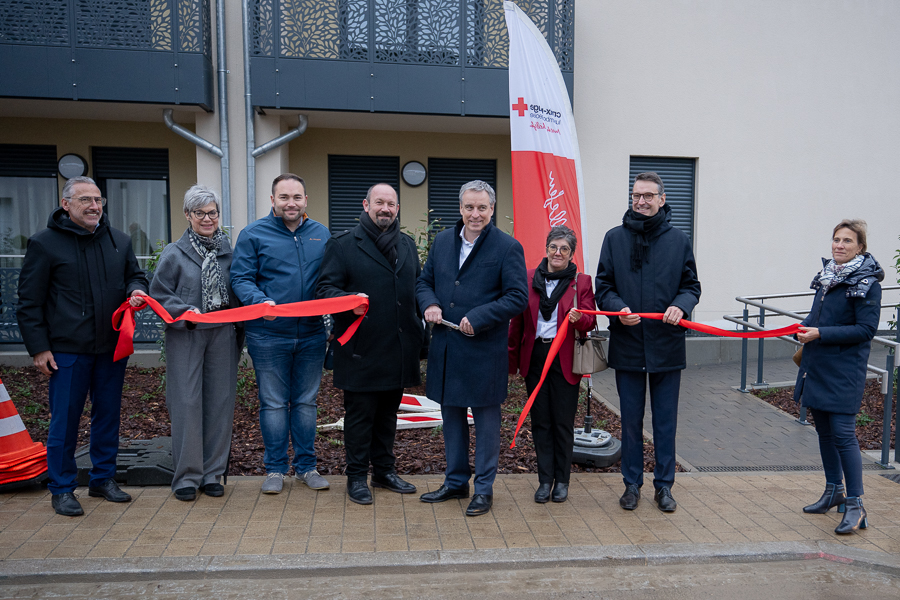
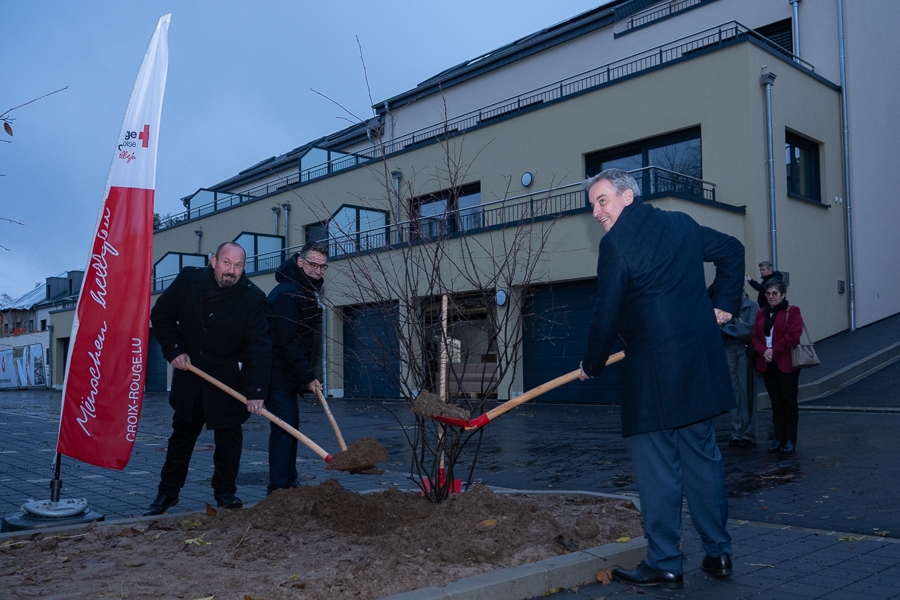
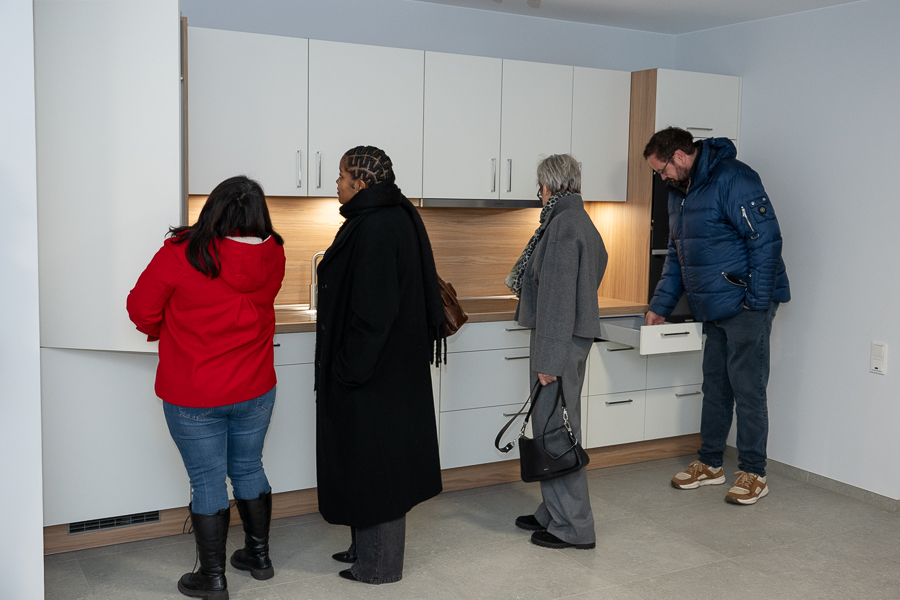
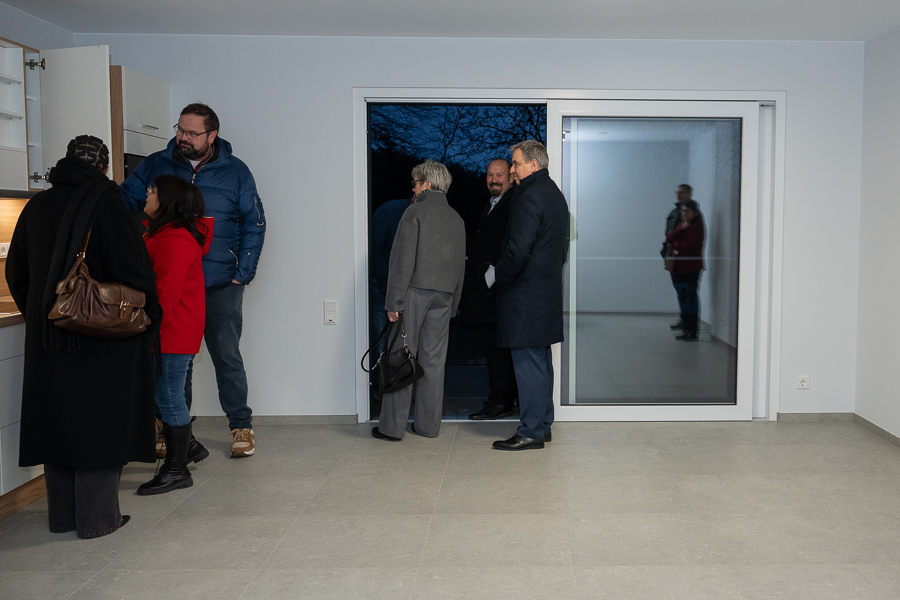
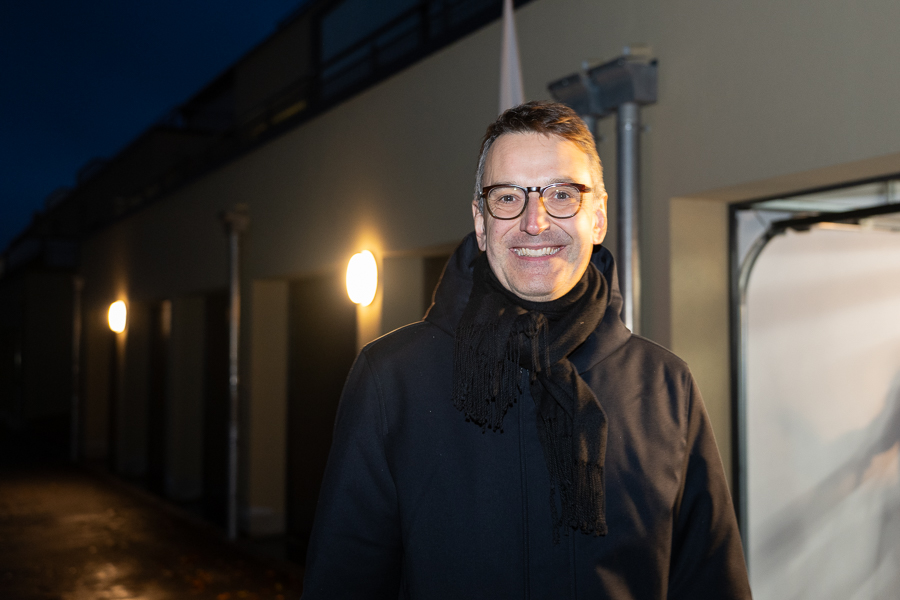
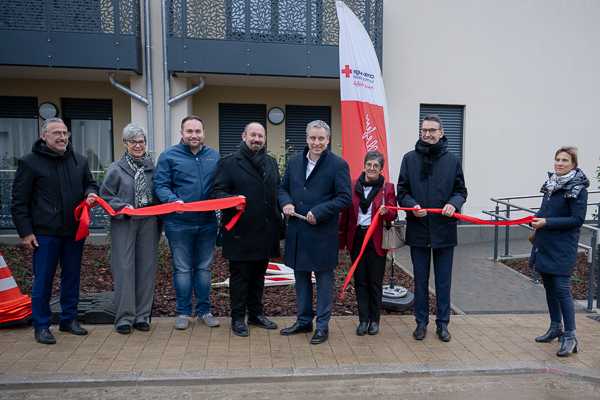
 Claude Meisch (centre), Lucien Brosius and Marc Wagener, along with members of the CLES and Red Cross Luxembourg at the affordable housing development in Schoos;
Credit: Ali Sahib, Chronicle.lu
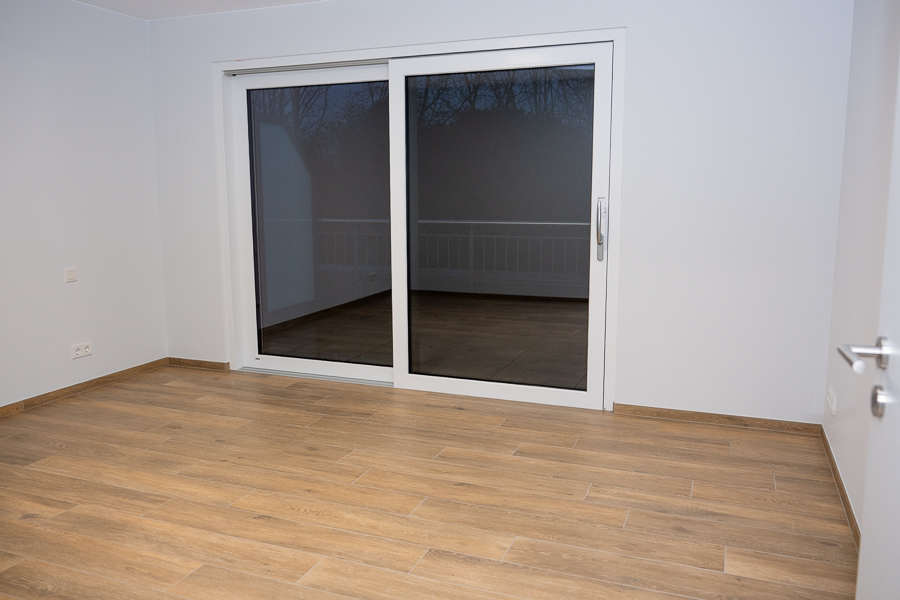
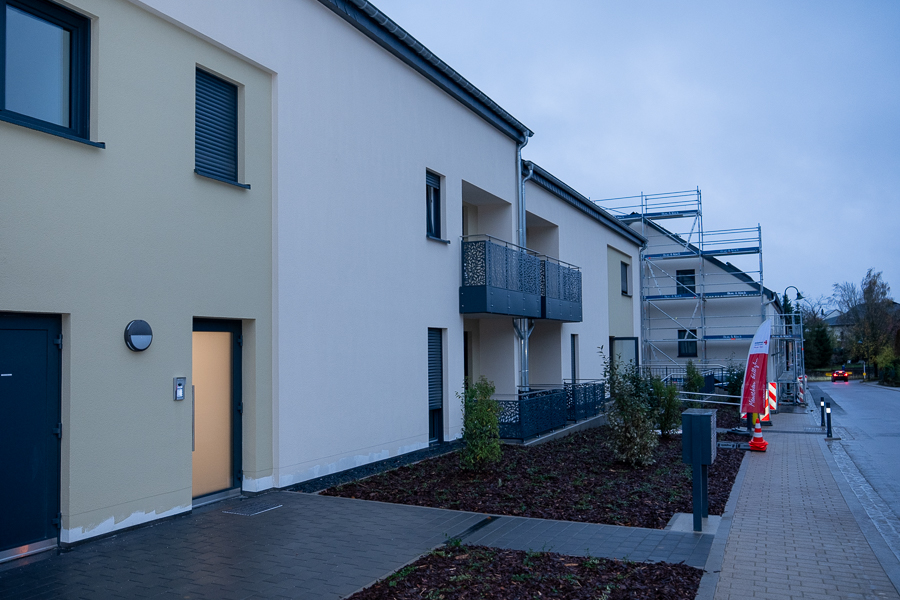
On Monday 16 November 2026, the Luxembourg Red Cross presented its major housing development in Schoos.
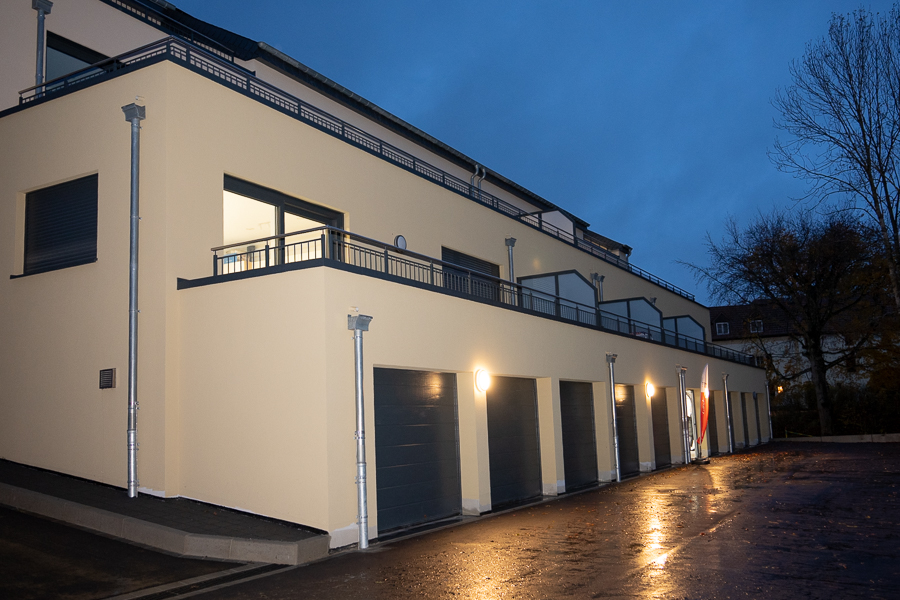
The presentation, which took place in the presence of Luxembourg’s Minister for Housing and Spatial Planning, Claude Meisch, and the Mayor of the Municipality of Fischbach, Lucien Brosius, saw the Luxembourg Red Cross present five residential buildings and a total of 25 rental homes, marking another step forward in implementing its strategy to promote affordable housing and support people in vulnerable situations.
According to the Luxembourg Red Cross, the first four buildings were handed over at the end of October 2026 and are now complete. The fifth and final building is expected to be completed in spring 2027.
Housing: A Pillar of the 2030 Strategy
The Luxembourg Red Cross emphasised that access to stable and affordable housing is a particularly important issue for individuals and families facing social difficulties. In this context, it has made housing one of the priority areas of its 2030 Strategy. It aims to develop suitable, secure and stable housing options to meet the specific needs of particularly vulnerable groups.
Speaking to Chronicle.lu, Marc Wagener, Director-General / Secretary-General of the Luxembourg Red Cross, talked of the association’s ongoing awareness of the growing problem of affordable housing in the Grand Duchy, and said: “At a certain point in time we were more and more aware that the Luxembourg housing crisis, as you can really talk about it as a crisis, requires not one but multiple solutions. So the Red Cross has for a couple of years been active in not only in helping people living in apartments and flats but also building construction like this one..”
The Schoos project, located within the Municipality of Fischbach, comprises five residential buildings containing 25 housing units, with capacity to accommodate up to 100 people. The project was made possible through proceeds from the Schuman Fund bequest to the Luxembourg Red Cross and support from the Ministry of Housing and Spatial Planning, which is providing 75% co-financing. The Luxembourg Red Cross developed the project through an off-plan property acquisition agreement (VEFA), with construction carried out by IBB Baugesellschaft.
“It is a rental apartment, and the Red Cross not only made it happen to build this project together with the construction companies that were involved but also we are doing the legwork behind helping the families, helping in the social aspect and really helping on an everyday basis these people to take roots here and to find sustainable solutions because housing is really the basic of having an autonomous life, of being socially included in a society,” highlighted Marc Wagener.
Suitable Housing Combined with Social Support
Beyond providing affordable housing, the Luxembourg Red Cross said it adopts a comprehensive approach that combines access to accommodation with close, individualised social support.
This work is carried out in particular by the Cellule Logement Encadrement Solidaire (CLES), which supports individuals and families experiencing difficulties accessing housing. Beneficiaries come from a range of backgrounds and may face complex circumstances requiring regular social and educational support tailored to their needs.
This social support is defined according to the needs and circumstances of each beneficiary, with the aim of promoting stability and independence.
Beyond access to affordable housing, this approach provides individuals and families with a secure living environment conducive to developing longer-term plans. Housing therefore serves as an important foundation for promoting independence and supporting social, professional and educational integration.
“You need housing and housing is really at the centre of an integration mechanism and so that is why we want to help these vulnerable populations because these are vulnerable populations, the families which have social needs and requirements that are being helped,” stressed Marc Wagener.