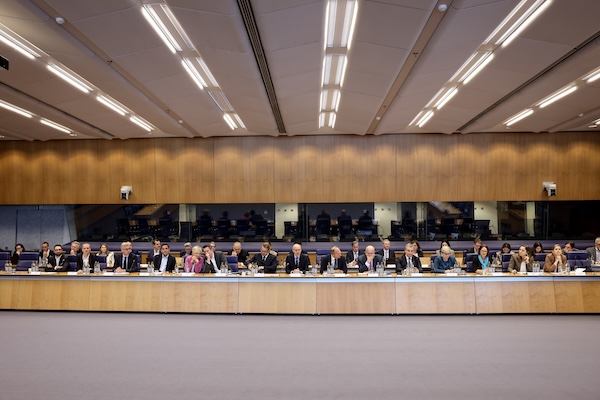
 The first meeting of the Tripartite Coordination Committee, 12 May 2026;
Credit: © SIP / Sophie Margue
The first meeting of the Tripartite Coordination Committee, 12 May 2026;
Credit: © SIP / Sophie Margue
Luxembourg’s Ministry of State has released additional documents related to the first meeting of the Tripartite Coordination Committee, highlighting concerns over slowing productivity, purchasing power, housing costs and Luxembourg’s vulnerability to energy price shocks.
The first tripartite meeting, held on Tuesday 12 May 2026, focused on the economic and social repercussions of the war in Iran, particularly its impact on energy markets and inflation. The newly released material further develops these themes through additional economic, labour market and social data.
Among the newly released material were documents linked to the Union des Entreprises Luxembourgeoises (UEL), the OGBL-LCGB trade unions and additional statistical data prepared for the tripartite discussions, including figures from Luxembourg’s national statistics office, STATEC.
Figures presented in the UEL-related material indicated that Luxembourg experienced a general decline in productivity between 2015 and 2025, while labour costs continued to rise. The documents also showed that annual employment growth slowed from more than 3% in 2022 to around 1% in 2025, with particular pressure affecting construction, commerce, transport and horeca sectors.
The employer-related material further warned that Luxembourg remains highly exposed to energy market volatility because of its dependence on imported energy. Previous documents presented during the tripartite discussions noted that oil still accounts for nearly 60% of the country’s total energy consumption. The material also highlighted increased uncertainty linked to tensions surrounding the Strait of Hormuz and the potential consequences of further energy price shocks.
Material linked to the OGBL-LCGB trade unions focused more strongly on purchasing power and social conditions. According to the figures presented, Luxembourg’s social minimum wage, measured in purchasing power standards, is now below Germany’s. The documents also stated that nearly 15% of Luxembourg’s population was considered at risk of poverty in 2025, while around 10% of employed people also faced poverty risks despite being in work.
Housing-related costs were identified as one of the main pressures on household finances. According to figures presented during the discussions, housing expenses account on average for more than 40% of household income, with tenants remaining significantly more exposed to poverty risks than homeowners.
The trade union-related material also highlighted commuting pressures, noting that 46% of residents spend more than 30 minutes travelling to work each day. In addition, around 22% of residents reported difficulties making ends meet.
Additional statistical annexes released following the meeting included data relating to tax credits, salaries, pensions and commuting expenses. One table indicated that Luxembourg’s median net monthly salary exceeded €4,300 in 2025, while the number of beneficiaries of certain tax-credit measures has continued to increase in recent years.
Several of the documents warned that a prolonged energy shock linked to tensions in the Strait of Hormuz could further increase inflationary pressure, weaken growth prospects and intensify existing concerns surrounding purchasing power, housing affordability and business competitiveness in Luxembourg.