 Credit: BGA Linkedin / Neumann Jérôme Photography
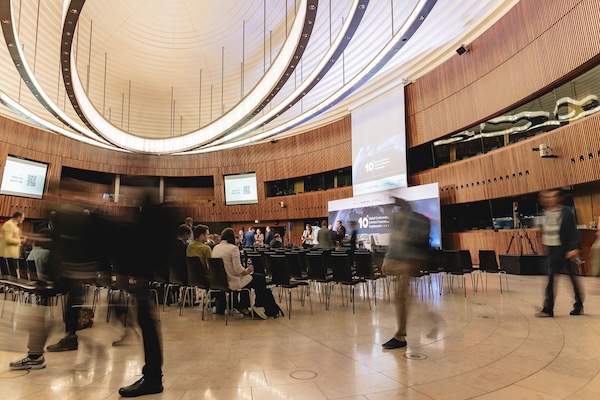
On Friday 18 September 2026, Luxembourg's Asset Management Office (Bureau de gestion des avoirs - BGA) announced that recently it has hosted the tenth edition of the Global Conference on Criminal Finances and Cryptoassets, bringing together more than 450 practitioners and experts from 90 countries.
Held from Tuesday 15 to Wednesday 16 September 2026 at the European Convention Center Luxembourg, the conference was organised in collaboration with the Basel Institute on Governance, Europol and the United Nations Office on Drugs and Crime (UNODC).
More than 50 speakers shared their experiences, perspectives and practical approaches to tackling the criminal exploitation of cryptoassets. The venue reached its maximum capacity for in-person attendance, more than 2,000 additional participants followed the conference online.
According to the BGA, while the criminal use of cryptoassets continues to grow, cases presented during the conference demonstrated how the methods and tools used by authorities and practitioners are also evolving. Discussions highlighted the importance of strengthening transnational networks and developing common standards to address cryptoasset-related crime.
The first day focused on public-private cooperation, emerging risks and case studies, alongside two practical workshops addressing suspicious transaction reporting involving cryptoassets and the development of common baseline standards for blockchain intelligence.
The next day, around 300 representatives of public authorities took part in sessions reserved for law enforcement agencies, financial intelligence units, judicial and prosecution authorities, asset management offices and supervisory authorities.
The conference was followed on Thursday 17 September 2026 by a Cryptoasset Management Roundtable, organised by the BGA in collaboration with the Basel Institute on Governance. Around 50 experts in the detection, tracing and management of virtual assets exchanged best practices, with discussions expected to contribute to the drafting of a practical guide.
Separate events held on the sidelines also brought together around 40 professionals from eighteen African countries and approximately 30 practitioners from Latin America, providing opportunities to exchange views on typologies, case studies and practical approaches.