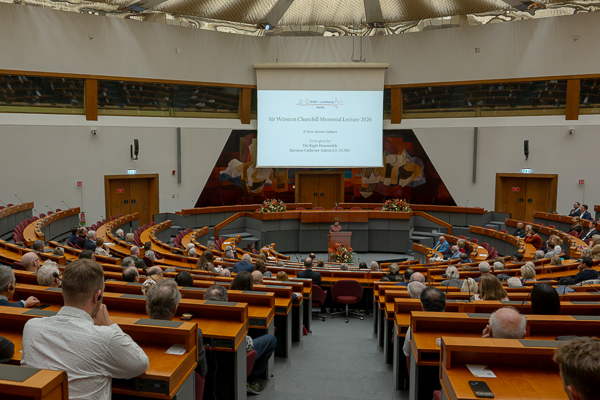
 Credit: Ali Sahib, Chronicle.lu
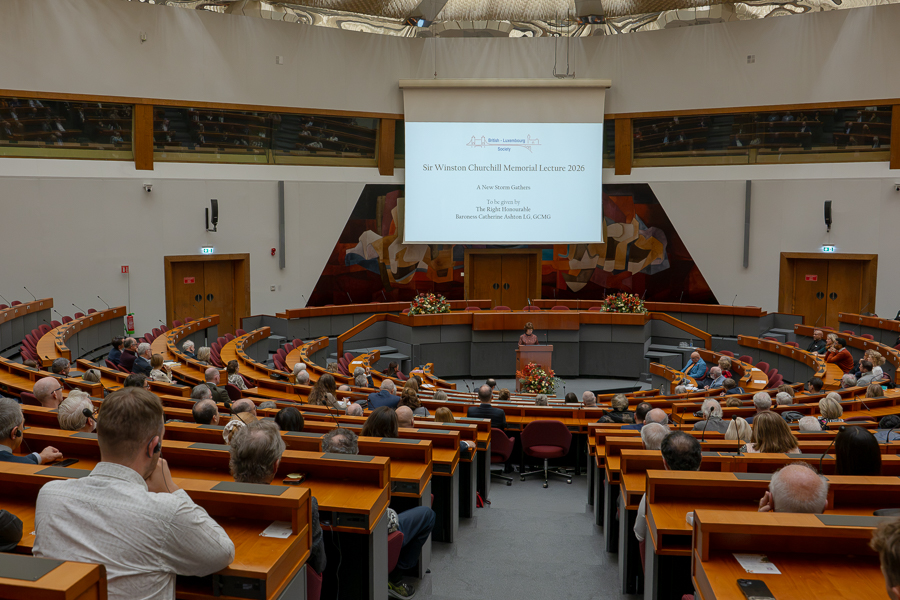
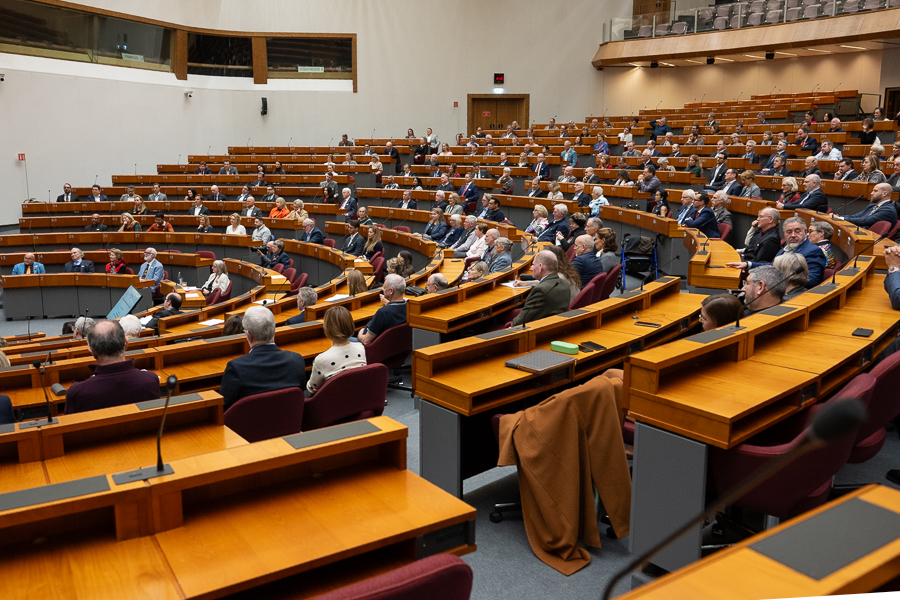
On Thursday 29 October 2026, the British-Luxembourg Society (BLS), together with the Fondation Nationale de la Résistance (FONARES), hosted the 2026 Sir Winston Churchill Memorial Lecture, titled "A New Storm Gathers", at the Hémicycle of the European Convention Centre Luxembourg (ECCL) in Luxembourg-Kirchberg. The event attracted around 300 guests and featured a lecture by Baroness Catherine Ashton.
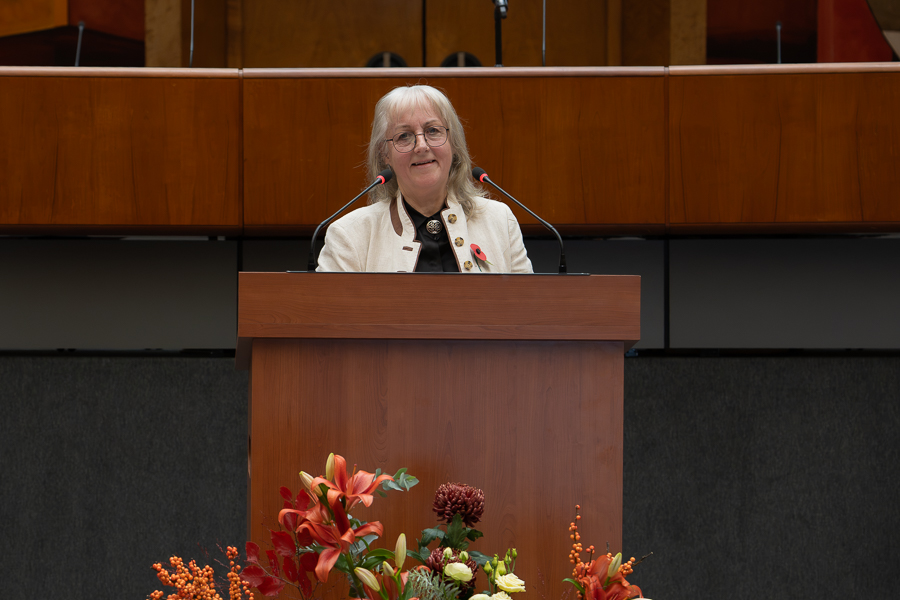
Fiona Urquhart Johnstone, Co-President of the BLS, opened the evening by welcoming attendees and thanking the event's sponsors for their support.
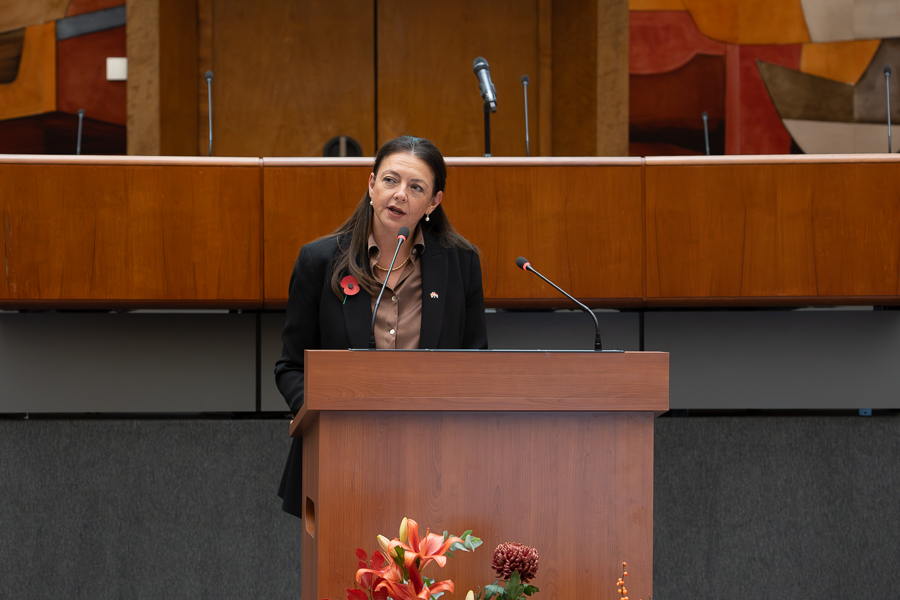
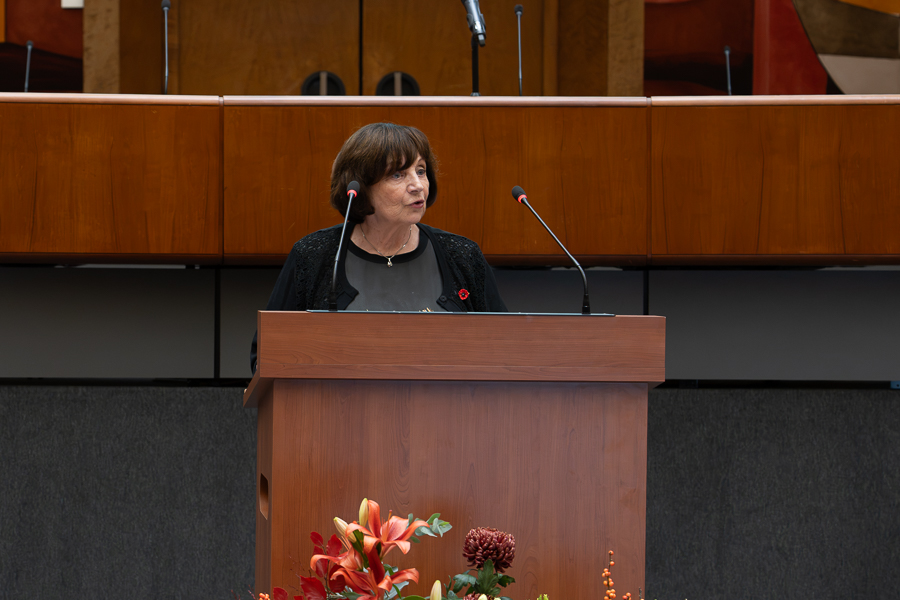
British Ambassador to Luxembourg Joanne Olivier then addressed the audience, recalling the BLS's founding in 1947 and the annual Churchill Memorial Lecture's role as a forum for international debate since 1977. She highlighted growing geopolitical tensions, European security challenges and the importance of international cooperation: "His words and actions remind us that when the international order comes under pressure, clarity of thought, political courage and willingness to work with others become even more important."
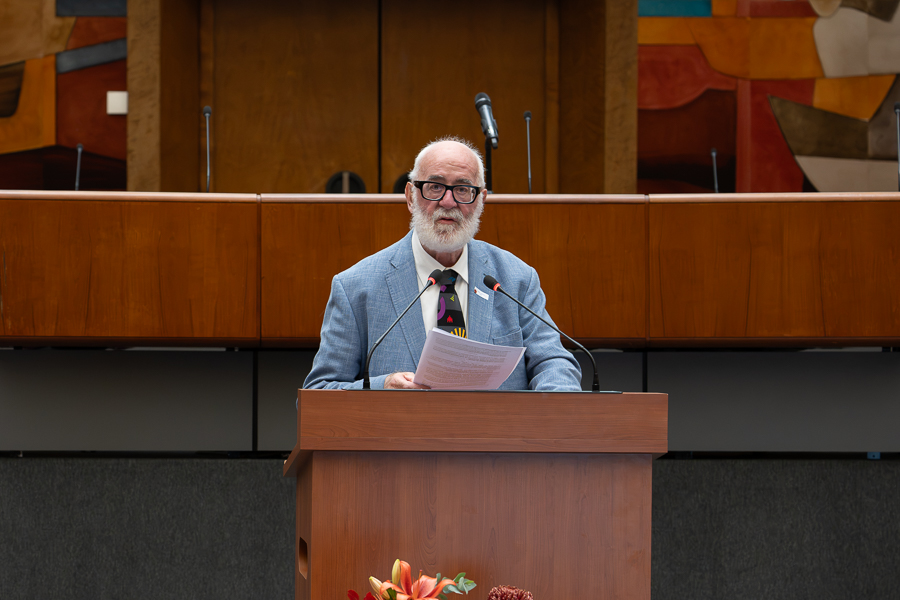
Guy Dockendorf, Vice-President of FONARES and Honorary Member of the BLS, thanked the United Kingdom for its role during the Second World War and stressed the importance of preserving the memory of victims of Nazi persecution. He also warned about threats to democratic values, including misinformation and declining public engagement, and emphasised the need to defend the truth.
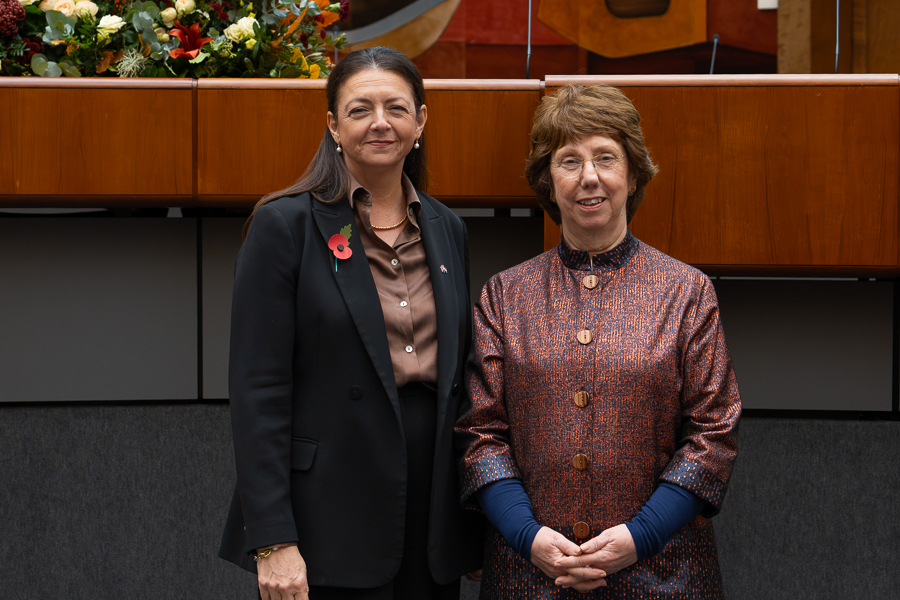
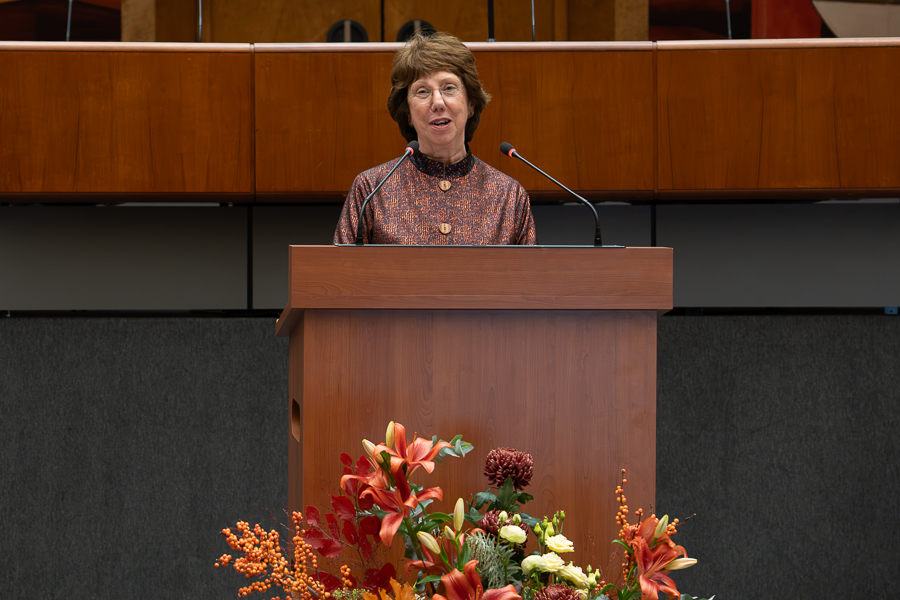
Jacqui Spence-Willis, Vice-President of the BLS, then introduced Baroness Catherine Ashton, recalling her diplomatic career as the European Union's first High Representative for Foreign Affairs and Security Policy and her involvement in negotiations concerning Iran, Serbia and Kosovo, and the emerging crisis in Ukraine. She also noted that Baroness Catherine Ashton was only the fourth woman to deliver the Churchill Memorial Lecture.
Baroness Catherine Ashton delivers Churchill Memorial Lecture
Baroness Catherine Ashton began her lecture, "A New Storm Gathers", by referring to Winston Churchill's book The Gathering Storm, drawing parallels between the warnings he issued about the events leading to the Second World War and the challenges facing the international community today. She emphasised the importance of recognising threats early, maintaining political determination and ensuring that democratic countries work together to address long-term challenges.
Turning to current conflicts, Baroness Catherine Ashton discussed Russia's war against Ukraine and the continuing conflict in the Middle East. Recalling a recent visit to Warsaw, where she had heard Ukrainian President Volodymyr Zelensky and other European leaders speak, she expressed concern about Ukraine's ability to sustain its defence through the coming winter amid diminishing financial and military resources. She also addressed the consequences of the war involving Iran, including rising energy prices and inflation, and questioned the lack of clear objectives needed to achieve a negotiated resolution.
Baroness Catherine Ashton also highlighted the humanitarian consequences of conflicts beyond Ukraine and the Middle East, particularly the crisis in Sudan and continuing violence across Africa. She warned that the effects of wars were increasingly being felt globally, while economic pressures and political uncertainty were contributing to public disillusionment and the spread of misinformation.
Discussing Europe's position in the international order, Baroness Catherine Ashton identified Russia, China and the United States as three major powers capable of affecting European security and economic stability. She argued that Europe needed a more coherent long-term approach to relations with China, while expressing concern about Russia's intentions towards Ukraine and uncertainty surrounding American support for European security.
A significant part of the lecture focused on international institutions, including the United Nations, NATO and the European Union. Baroness Catherine Ashton stressed that challenges such as war, climate change, migration, economic growth and pandemics could not be resolved by individual countries acting alone: "There are no issues that any nation can solve alone." Drawing on her experience leading negotiations over Iran's nuclear programme, she recalled how cooperation between the five permanent members of the UN Security Council had contributed to the Joint Comprehensive Plan of Action (JCPOA).
She compared established international organisations to large tankers, capable of maintaining long-term commitments despite their complexity and slow pace, while describing temporary coalitions as smaller vessels able to respond quickly to immediate crises. She argued that both approaches had their place, but that lasting solutions required strong institutions capable of sustaining cooperation over time.
Baroness Catherine Ashton also questioned whether the European Union was making full use of its economic and diplomatic influence. She suggested that closer cooperation between the EU and partners including the United Kingdom, Norway, Switzerland, Japan, South Korea, Australia and Canada could strengthen their collective position in an increasingly uncertain international environment.
Reflecting on her diplomatic experience, Baroness Catherine Ashton stressed that resolving international disputes required sustained engagement over many years, often beyond the electoral cycles of democratic governments. She cited negotiations between Serbia and Kosovo, discussions over Iran's nuclear programme and the challenges of addressing instability in countries such as Somalia as examples of problems whose historical roots and long-term consequences could not be resolved quickly.
The lecture also addressed climate change, migration and international development assistance. Baroness Catherine Ashton warned that reducing support for countries hosting refugees could have wider consequences, citing Chad's efforts to accommodate people fleeing the conflict in Sudan. She emphasised the connection between international cooperation and national interests: "Foreign policy is domestic policy. It's simply the means by which you do your domestic policy priorities."
In the concluding part of her lecture, Baroness Catherine Ashton reflected on growing public dissatisfaction with traditional politics, particularly among younger generations facing difficulties accessing housing, employment and economic opportunities. She warned that disillusionment and misinformation could encourage support for simplistic political solutions, while emphasising the need to defend democratic values and maintain international cooperation.
"Standing for the values we believe in is not a weakness, but the heart of our strength," Baroness Catherine Ashton said towards the end of her lecture, invoking Winston Churchill's determination in the face of difficult circumstances.
The lecture concluded with a question-and-answer session with the audience.