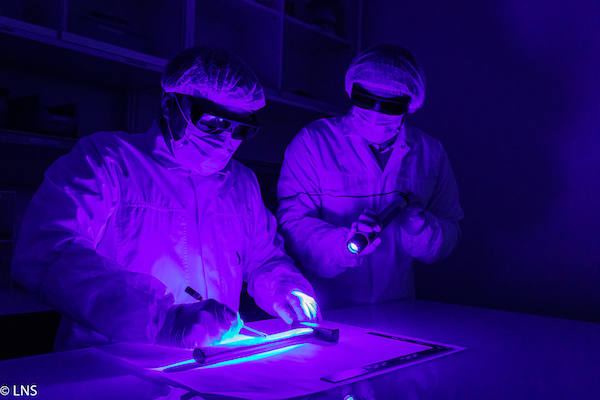
 Credit: LNS
On Tuesday 15 September 2026, the Forensic Genetic Identification Service of the National Health Laboratory (LNS) issued a press release in recognition of its fifteenth anniversary, which takes place this month.
Since its creation in 2011, the service has placed its scientific expertise and molecular biology skills at the service of the Luxembourg justice system, providing objective evidence for investigations and judicial proceedings.
The LNS said that the work of the service is based on one essential principle: “To provide objective and impartial scientific evidence that can be used as evidence in proceedings and to assist the judicial authorities in establishing the facts.” This requirement is part of a rigorous quality-management approach which ensures that LNS activities comply with the requirements applicable to testing laboratories and guarantees the traceability and reliability of analyses.
“Beyond equipment and technologies, it is above all the skills of scientists and experts that make it possible to transform a biological trace into useful information for an investigation.”
From biological trace to genetic profile
The Forensic Genetic Identification Service analyses biological traces, such as blood, saliva or other materials that may contain DNA, in order to establish a genetic profile. This profile can then be compared with that of a person to determine whether they may be the source of the trace found.
Experts intervene in different types of situations as part of judicial investigations. They can analyse traces found at an investigation scene, compare them with samples taken from individuals, or contribute to the national database.
The identification of living or deceased persons, the performance of paternity tests and the identification of biological fluids are among the service's missions.
Analyses can be carried out from sometimes very small quantities or degraded traces. Scientists continuously develop and improve their methods in order to obtain reliable results, including in the most complex situations.
The work of the service does not stop at the laboratory. Scientists interpret the results in the context of investigations and prepare expert reports for the judicial authorities.
Experts are regularly required to present and explain their conclusions before the courts. Their role is to provide, in a neutral and impartial manner, the scientific evidence necessary to help the justice system understand technical facts and make its decisions.
Fifteen years of development in the service of justice
Over fifteen years, the Forensic Genetic Identification Service has kept pace with the rapid development of molecular biology and forensic genetics technologies. Created on 1 September 2011, the service handled its first case in January 2012. Since then, its activities have continued to expand to meet the growing needs of the Luxembourg judicial authorities.
Approximately 29,000 expert assessments have been carried out since the service was established. This development has also been accompanied by significant growth in the team: from four employees at the beginning, the service now has seventeen people, including highly qualified experts, scientists, technicians and administrative staff.
This capacity is also based on strong operational availability. The service is available 24 hours a day, seven days a week and, when circumstances require, can respond to certain requests within 24 hours. All these elements demonstrate the importance that genetic expertise has acquired in forensic investigations and the need to be able to provide reliable scientific evidence to the justice system quickly.
“Our role is to put our scientific expertise at the service of justice in order to contribute to establishing the truth. Behind these figures are, above all, cases, victims and families waiting for answers. By providing objective and reliable evidence, we contribute to establishing the facts, exonerating innocent people, combating recidivism and recognising the rights of victims,” said Dr Sc. Elizabet Petkovski, Head of the Forensic Genetic Identification Service.
“I am proud of all the LNS employees, and this anniversary clearly illustrates the commitment and importance of our institution to Luxembourg. Day after day, the LNS serves the people of Luxembourg. Our Genetic Identification Service is a concrete example of this: accredited according to ISO 17025, it puts its expertise in molecular biology exclusively at the service of the judicial authorities, whether for DNA profiling, kinship testing or the identification of unidentified deceased persons. It is this diversity of missions, supported by highly specialised teams recognised internationally, that is the strength of the LNS,” said Dr Thomas Dentzer, Director of the LNS.
A specialised team
The LNS noted that the stability and commitment of several long-standing members of the service have made a significant contribution to its development. Since its creation, Dr Sc. Elizabet Petkovski and M Sc. Angela Marques-Pereira have overseen not only the quality of the activities and the development of the team's skills, but also the transmission of a culture of excellence and public service that is now one of the service's strengths.
The Forensic Genetic Identification Service now comprises a team of sworn experts specialising in the interpretation of genetic data and its application to forensic investigations. They rely on a multidisciplinary unit made up of molecular biology laboratory technicians, forensic engineers and highly qualified administrative staff. Together, they guarantee the quality of the analyses as well as rigorous traceability of samples and data throughout the evidence chain of custody. The service is part of the LNS Department of Forensic Medicine, alongside, among others, the Forensic Medical Service, the Forensic Toxicology Service and the Analytical Chemistry Service.
The LNS stated: “This anniversary is an opportunity to highlight the work of forensic genetics experts and to recall the role of science in the search for judicial truth.”