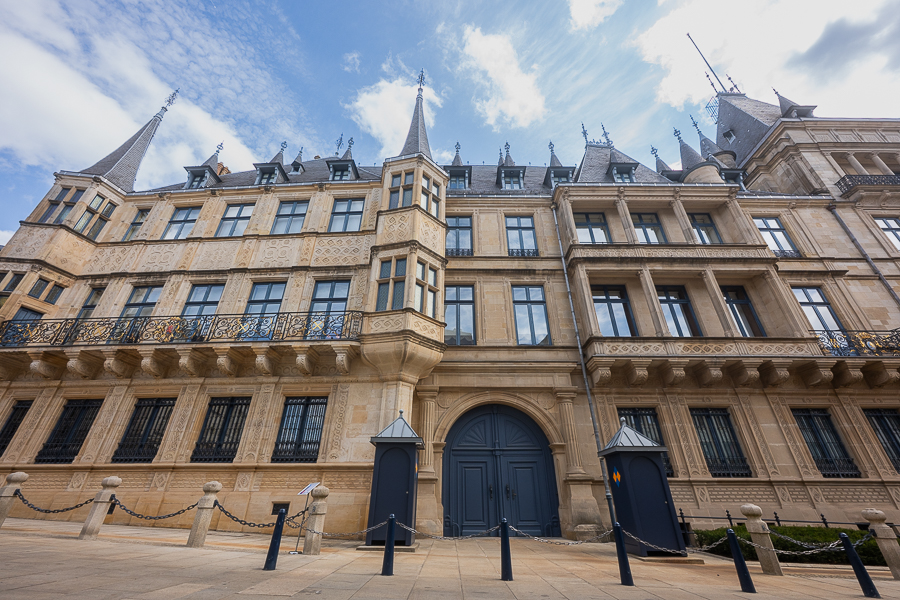
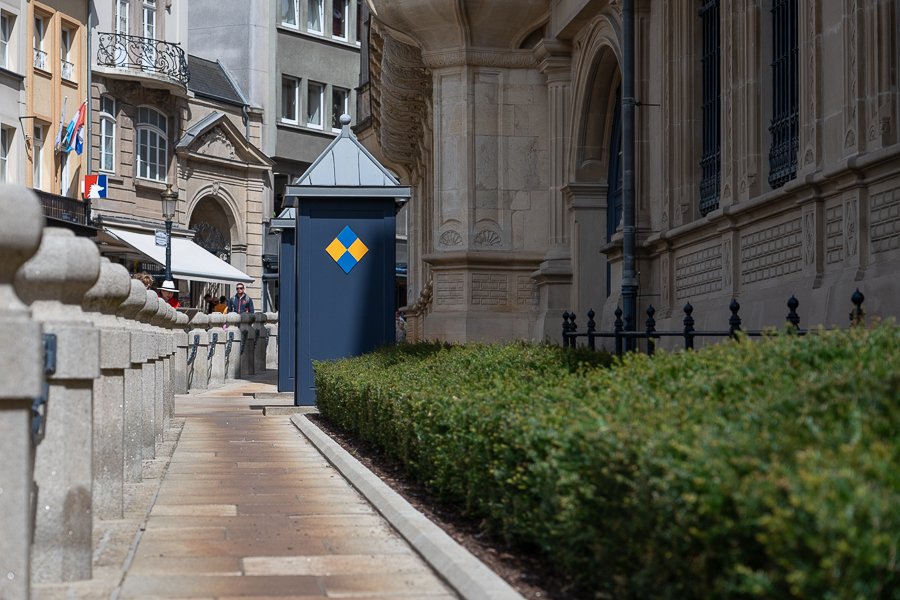
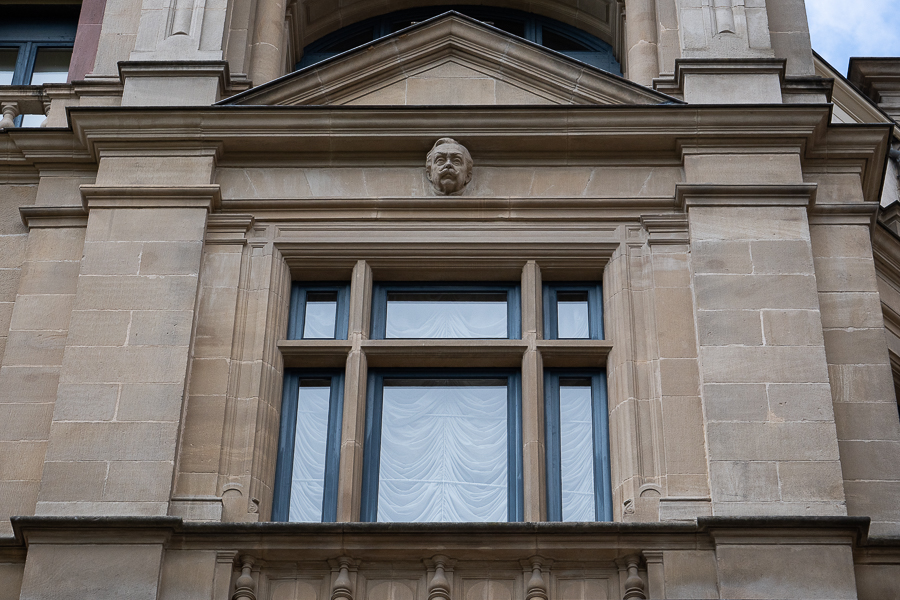
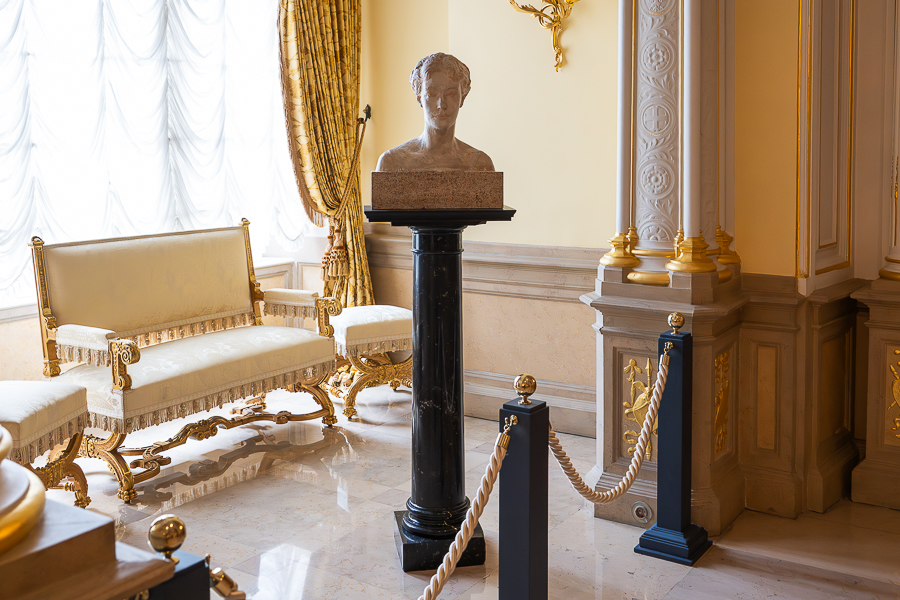
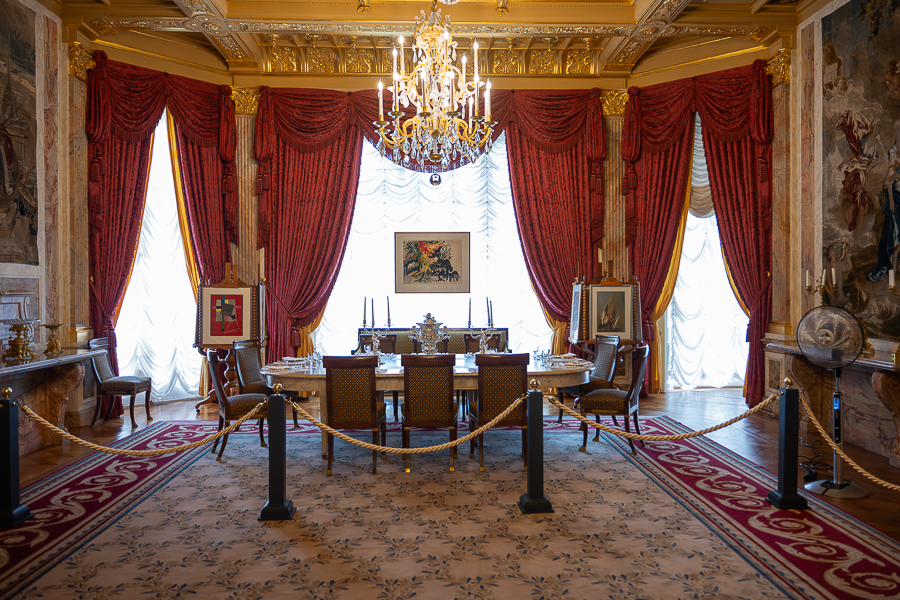
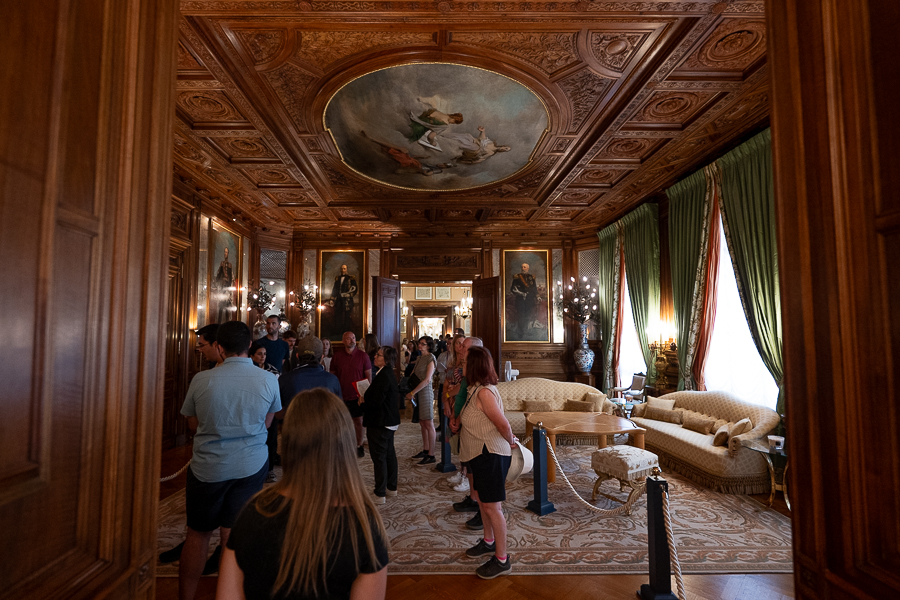
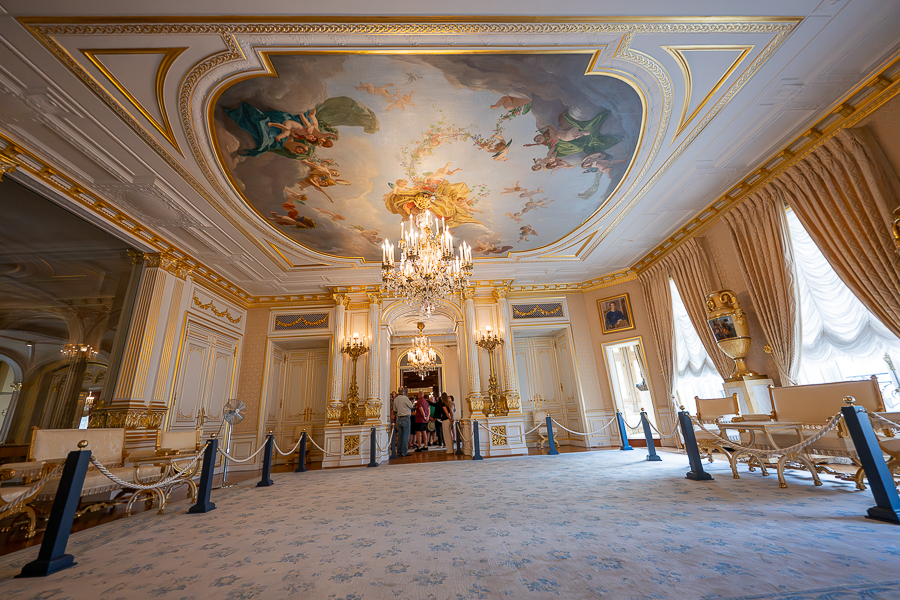
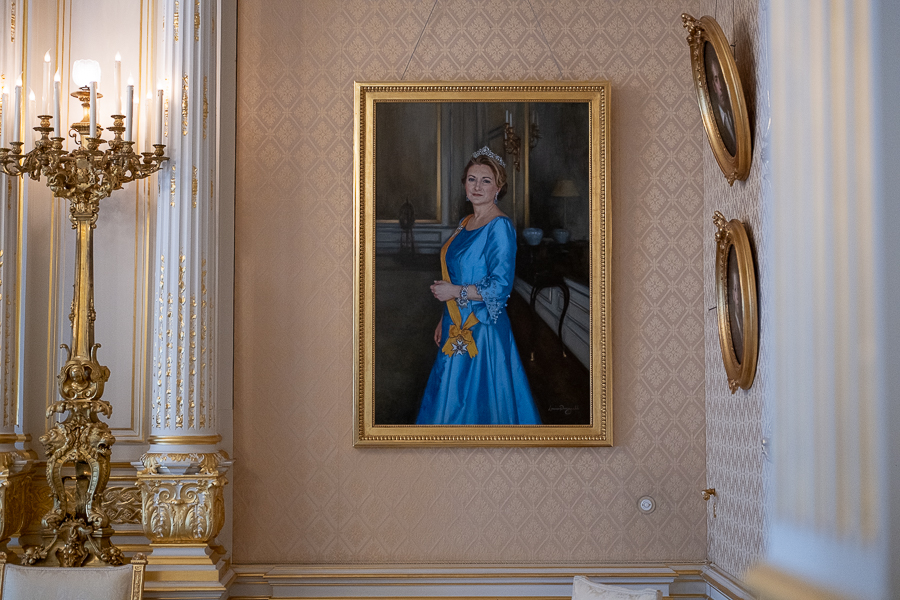
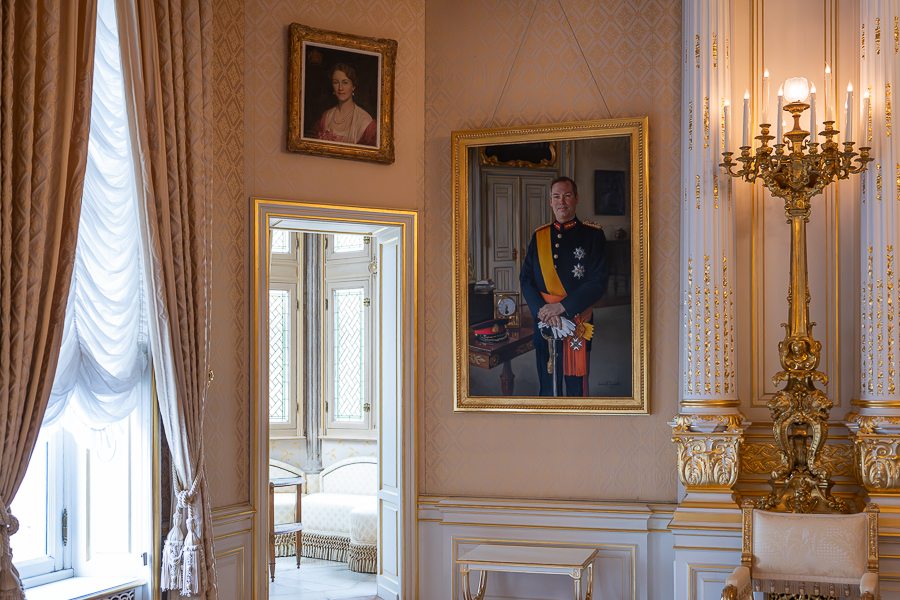
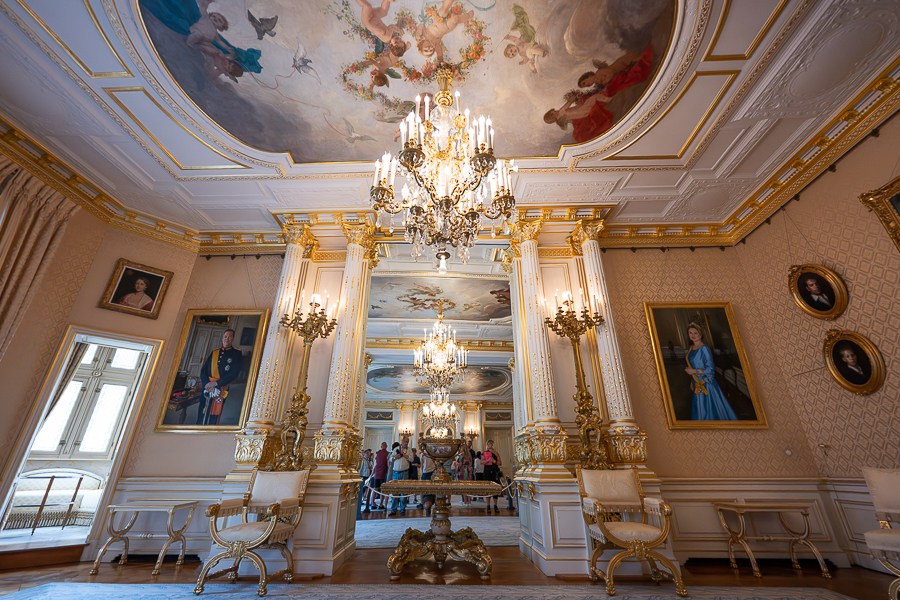
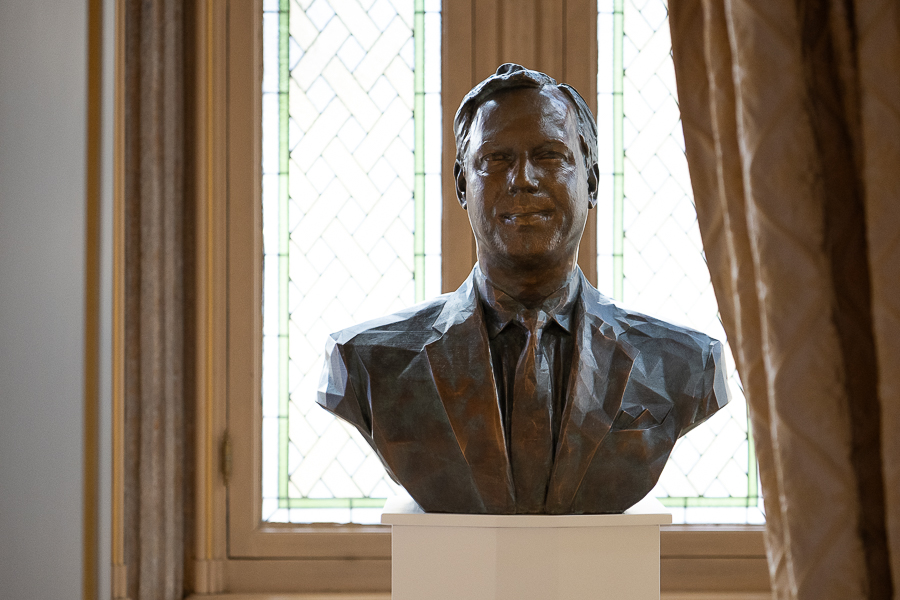
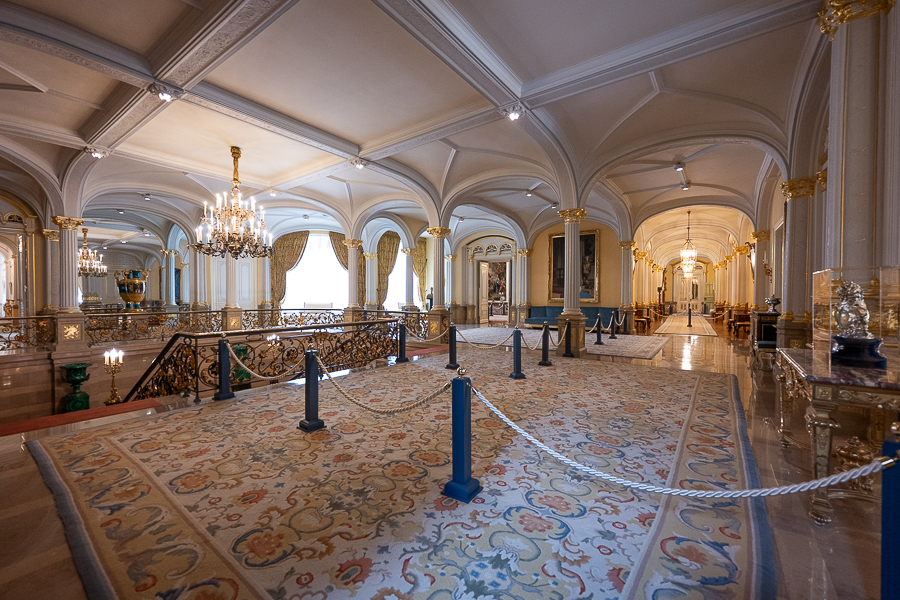
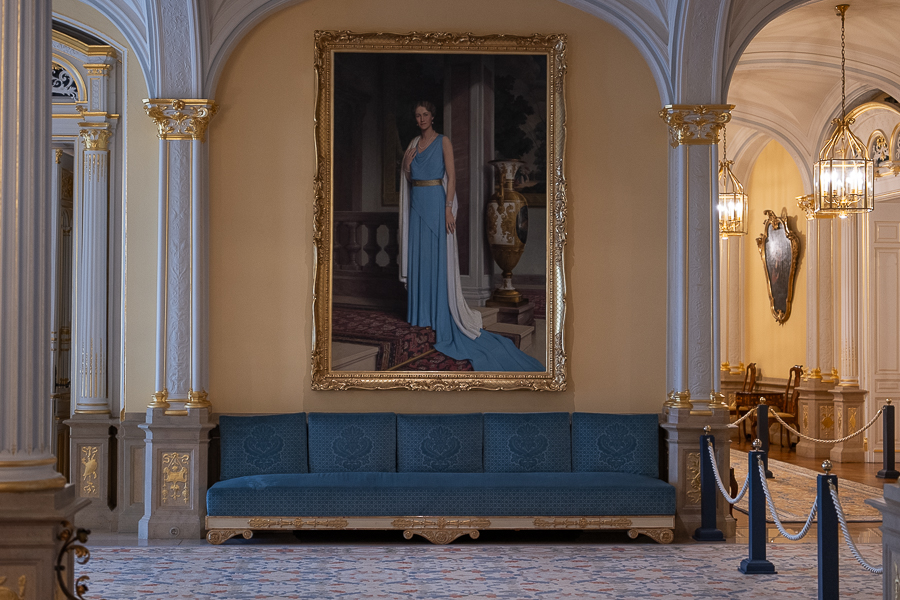
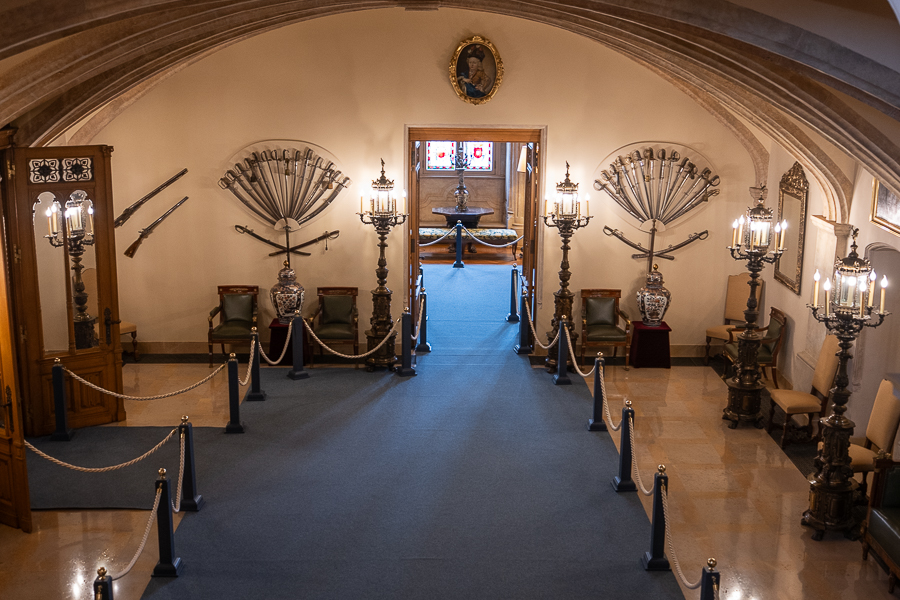
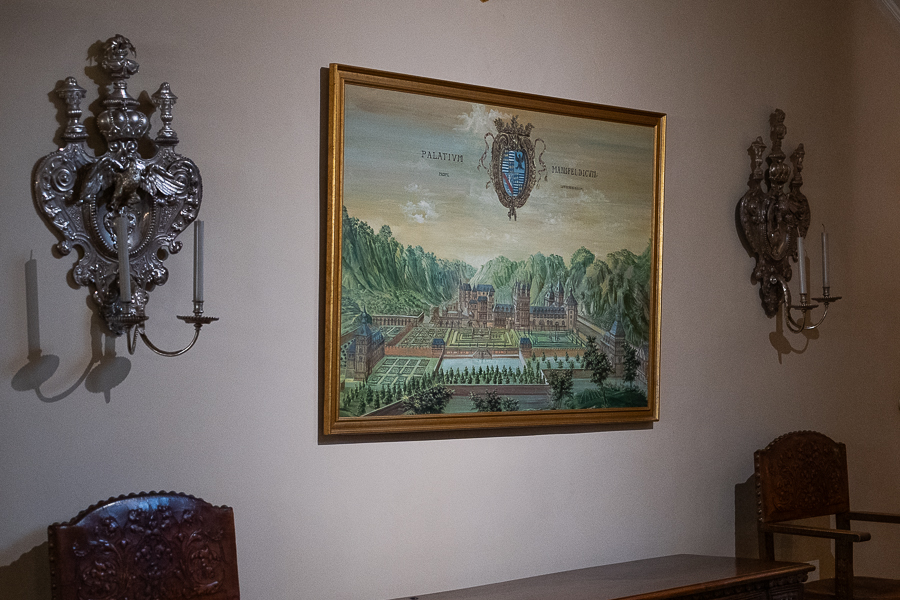
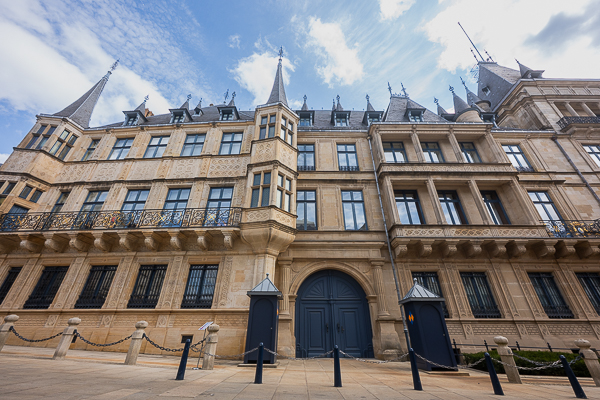
 Grand Ducal Palace, Luxembourg-Ville;
Credit: Ali Sahib, Chronicle.lu
Grand Ducal Palace, Luxembourg-Ville;
Credit: Ali Sahib, Chronicle.lu
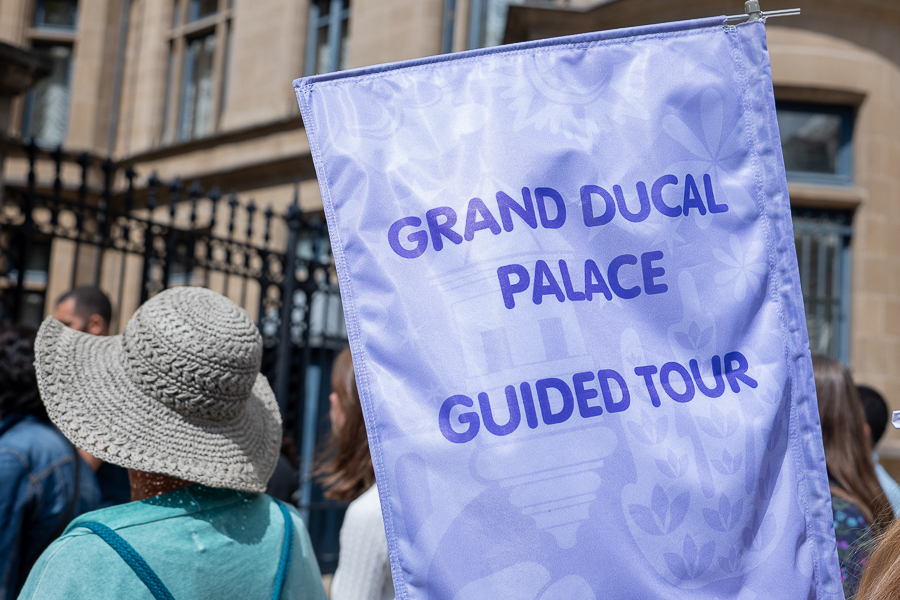
On Monday 20 July 2026, Chronicle.lu was invited to participate in a guided tour of the Grand Ducal Palace.
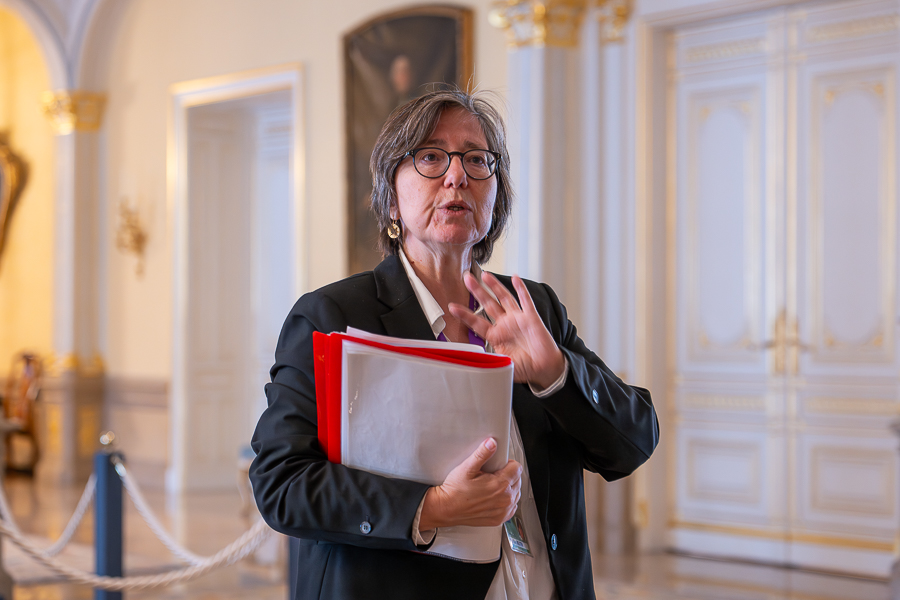
The tour, organised by the City of Luxembourg Tourist Office and hosted by official tour guide Martine Reuter, begins with an explanation that the money raised from tickets for the tour (minus the costs of the Luxembourg Tourist Office) are donated to the Fondation du Grand‑Duc et de la Grande‑Duchesse, which supports vulnerable groups in Luxembourg and abroad and prioritises inclusion, aiding people with learning disabilities, single mothers and victims of social exclusion or sexual violence.
We then begin in front of the equestrian statue to former Grand Duke William II on Place Guillaume II (Knuedler), with Ms Reuter providing a brief history of the establishment of Luxembourg and the establishment of the country’s first constitution under William II.
The tour then moved on to the exterior of the Grand Ducal Palace, where Ms Reuter explained how building was developed in four stages, from its original purpose as a city hall in 1572, through to 1740 - where the central part of the palace stands today - to the addition of the ‘tower’ section in 1790 and then the inclusion of the Chambre des Deputies, built on the site of the former St Nicholas Church (demolished in 1779).
We then approached the security gates at the rear of the palace and were escorted inside to undertake a brief security check, with visitors’ bags left securely at the palace entrance and visitors reminded that photos inside the palace are not permitted during the tour.
Ms Reuter began the internal tour of the palace in the entrance courtyard, revealing that underfoot are not traditional cobblestones but special wooden bricks installed at the request of Grand Duke Adolphe to reduce the noise of the Grand Duke’s horses and carriage as they entered the palace.
We then moved to the entrance hall, which was formerly used as a weighing room for merchants bringing their goods to the city to sell on the market square. The goods were measured to evaluate a sales tax which would be levied against the items being sold.
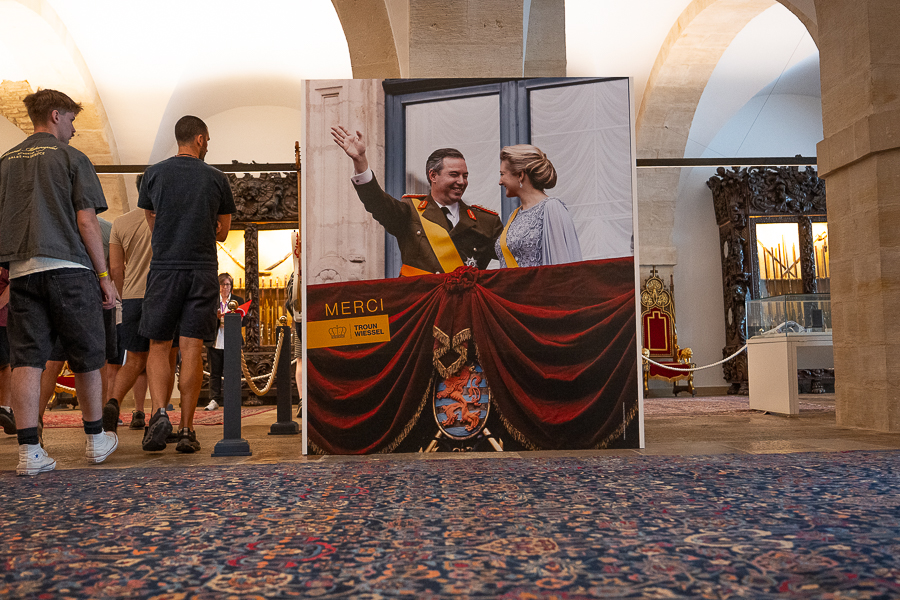
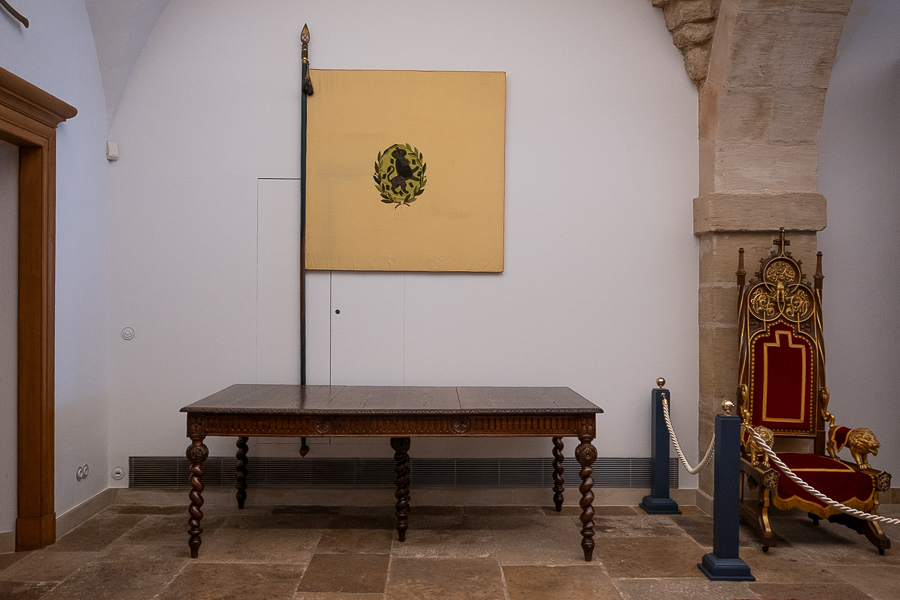
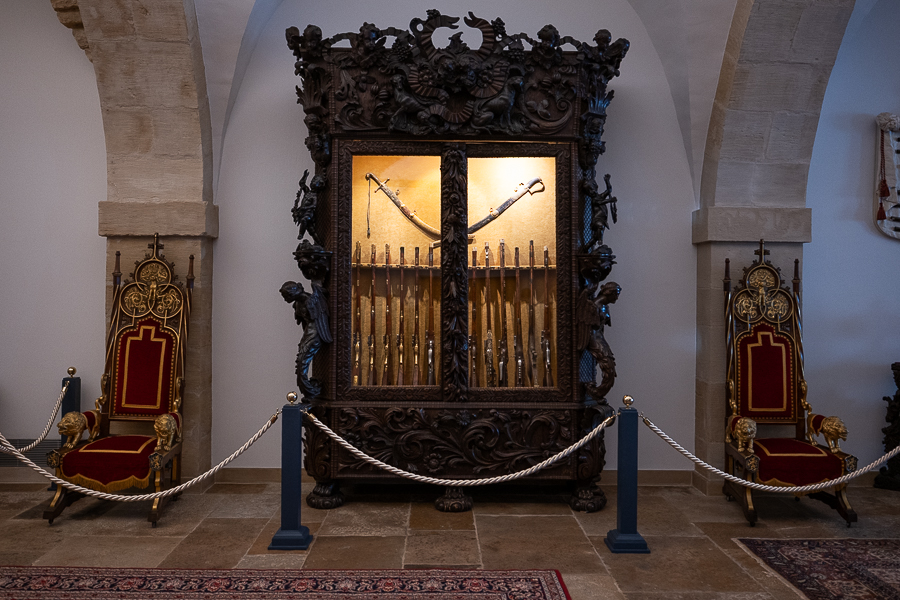
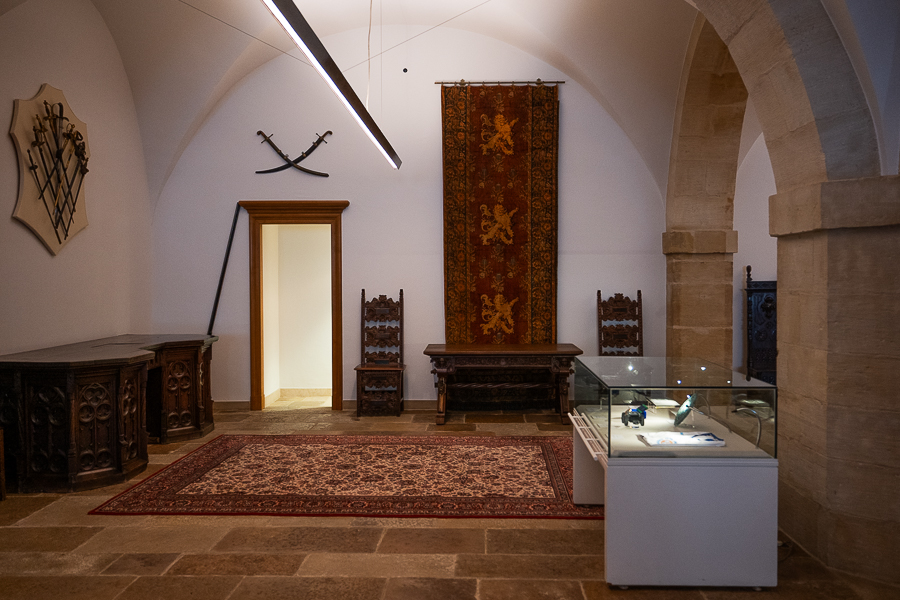
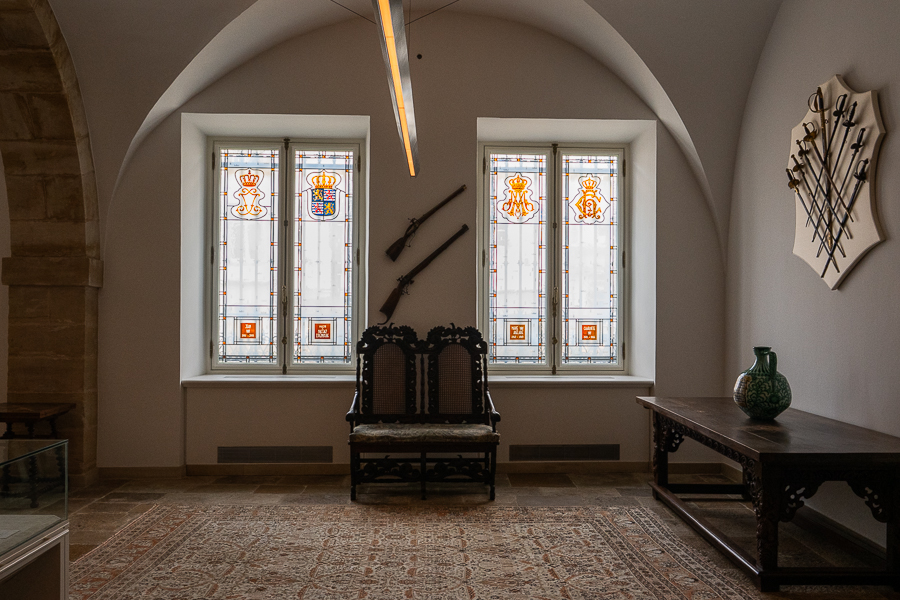
The hall currently holds a display in celebration of the recent accession to the throne of Grand Duke Guillaume and is surrounded by a selection of weapons, including crossbows and rifles, one of which was gifted by Napoleon Bonaparte, as well as examples of the thrones used during the accession ceremonies of various Grand Dukes.
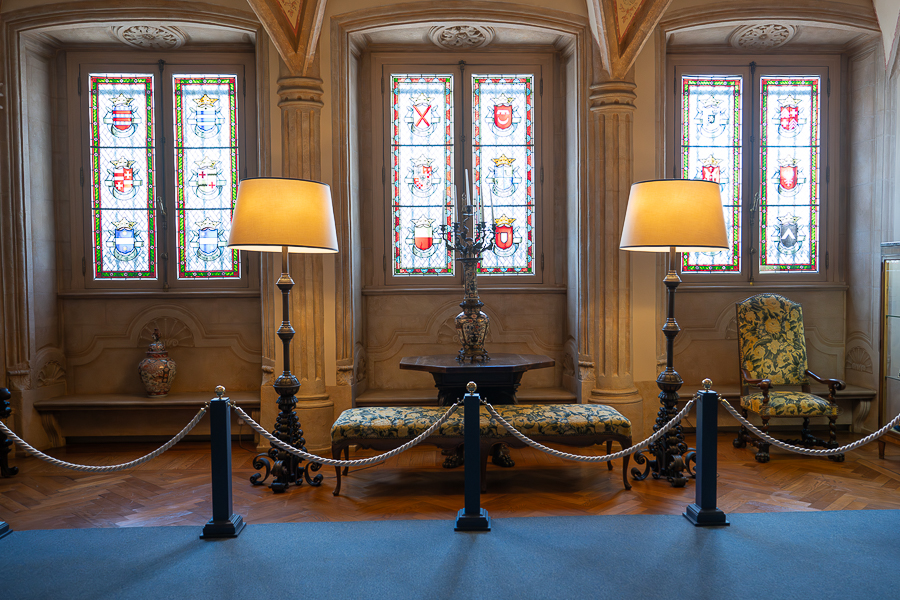
We then moved into the main building of the palace, containing the ornate stairway to the palace’s upper levels. In an adjacent room we are shown where guests wait before being invited upstairs to meet the Grand Duke. Inside are ornate stained-glass windows showing the coat of arms from the families who resided in the castles of Luxembourg. There are also portraits of members of the Grand Ducal family, including Prince Felix and Grand Duchess Charlotte.
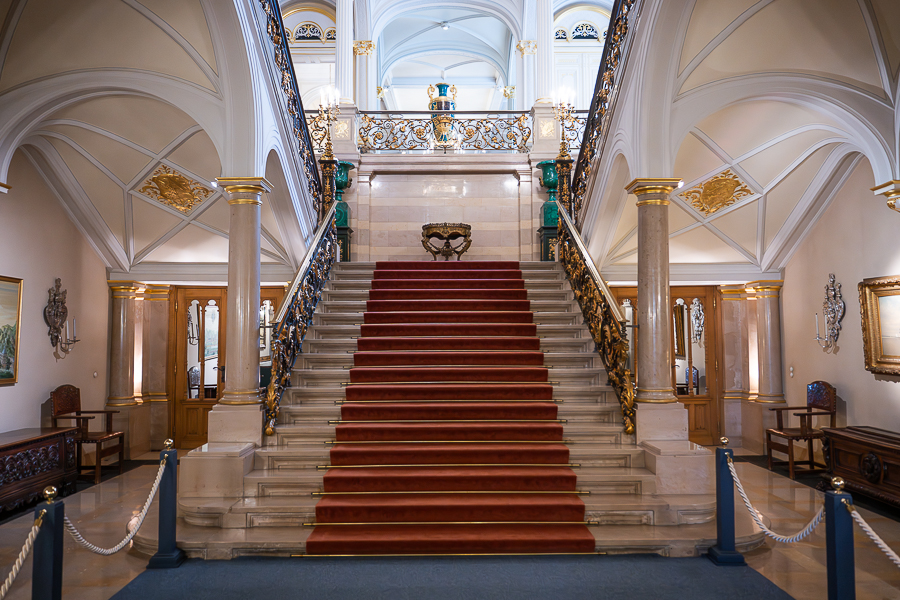
We then climb the grand staircase, which features prominently on photographs of visiting guests, and is decorated on each side with ornate floral bronze and ironwork from Belgium. On the mezzanine resides two large vases made of malachite, which came from Russia. Their intense turquoise bluish green colour standing in contrast to the sandstone, gold and burgundy which adorns the inside of the palace.
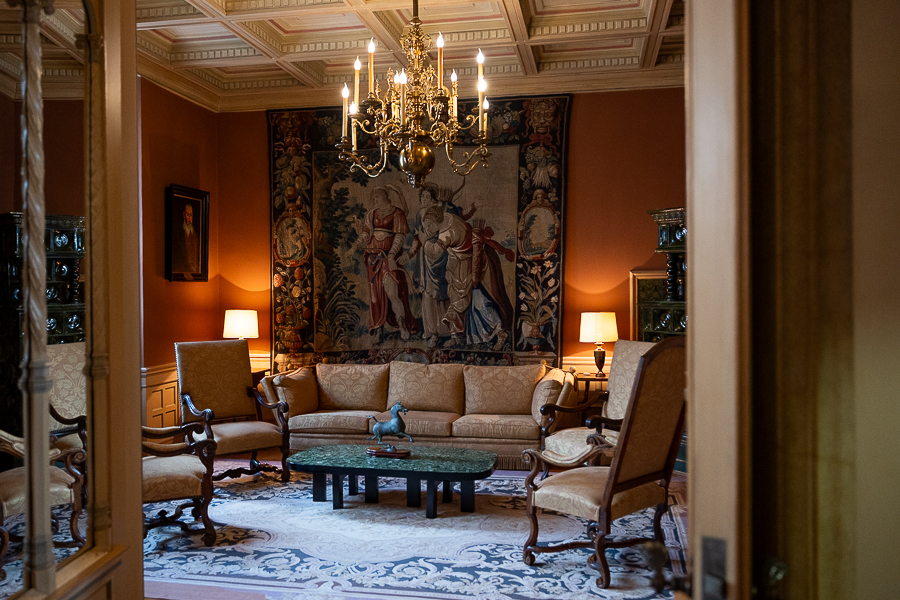
On the first floor we are guided through a series of rooms, including the dining hall - with its tapestries gifted by Napoleon, bronze and crystal chandeliers and a ceiling bearing the coat of arms of each of Luxembourg’s twelve cantons - the “map room” – which features a variety of cartographic representations of both the Grand Duchy and the city of Luxembourg across the centuries - and then the King’s Room, with its luxurious wooden panelling and portraits of Grand Duke Adolphe, William II, William III and William IV.
Lastly, we are guided through the reception hall, which gives access to the balcony at the front of the palace and is utilised by the Grand Ducal Palace on occasions such as National Day and the Trounwiessel (throne transition). The hall is wide and spacious and adorned with grand mirrors, gold detailing and the recent additions of the official portraits of Grand Duke Guillaume and Grand Duchess Stéphanie.
The tour concludes with a visit to two private apartment areas, which provide an intimate perspective into what living in the Grand Ducal Palace must have felt like in past years.
The guided tours of the Grand Ducal Palace run until Sunday 30 August and have a duration of approximately 75 minutes, with up to ten tours in various languages taking place each day. The tours begin in front of the LCTO Reception Office on the Knuedler.
In 2025, 439 guided tours were undertaken by the LCTO, welcoming more than 9,000 visitors from around the world. By mid-August, the season was fully booked, reaching a 100% occupancy rate.
Tickets are available both online and directly from the LCTO Reception Office. Prices are €18 for adults and €9 for children ages four to twelve. Children under four are admitted free of charge. Visitors with special needs are advised to contact the LCTO via tel: (00352) 22 28 09.
Further information can be found at: https://monarchie.lu/en/visit-grand-ducal-palace