 Credit: MAE Luxembourg
On Sunday 6 July 2026, Luxembourg's Ministry of Foreign and European Affairs, Defence, Development Cooperation and Foreign Trade announced the launch of nine Global Citizenship Education (GCE) programmes for the 2026-2030 period as part of the reform of the sector.
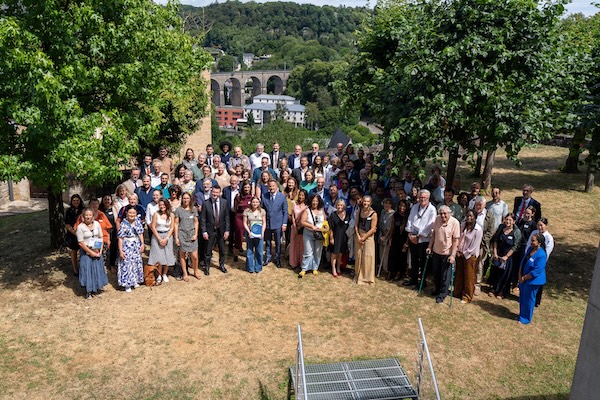
According to the ministry, Luxembourg's Deputy Prime Minister and Minister for Development Cooperation and Humanitarian Affairs, Xavier Bettel, attended the launch event, where the ministry officially presented the nine programmes selected following an evaluation process involving proposals from 21 development non-governmental organisations (NGOs).
The ministry noted that the launch marks a major milestone in implementing the 2024-2026 reform of the Global Citizenship Education sector. It reflects the sector's ability to come together around a shared vision and confirms the ongoing shift towards an approach focused more strongly on desired outcomes and the impact of the actions undertaken.
The reform, launched by Minister Bettel in March 2024, aims to strengthen cooperation between NGOs active in Global Citizenship Education, further structure the sector and provide it with tools to measure the impact of its activities. In April 2024, the ministry approved a new methodology for the sector, developed in close consultation with the participating NGOs.
NGOs active in the sector are now united under a Shared Sector Framework (Cadre Sectoriel Partagé – CSP), which establishes a common vision and shared strategic objectives. Adherence to this framework has become a condition for receiving Global Citizenship Education funding from the ministry. NGOs benefiting from this funding commit to contributing to the sector's shared strategic objectives and to providing data for jointly defined impact indicators. These requirements are set out in the new General Conditions for Global Citizenship Education, published on the ministry's website as part of the sector's new governance framework.
The ministry also highlighted several initiatives introduced as part of the reform. In 2025, pilot projects fully funded by the ministry tested new tools, approaches and themes, including public policy advocacy, the social and environmental impacts of artificial intelligence and civic resistance and resilience. The ministry noted that the projects underwent an extensive evaluation process, with the lessons learned helping to shape future programmes and the sector's new architecture.
The reform has also led to the creation of new sector-wide tools. In March 2026, the ministry and Luxembourg's Ministry of Education, Children and Youth launched eduact.lu, a platform bringing together all educational activities offered by accredited NGOs for schools. The ministry added that the Maison des ONGD, currently under development in Luxembourg-Gare district, is expected to open later this year as a civic meeting and exchange space for organisations active in the sector and the general public.
According to the ministry, Global Citizenship Education is an educational approach that helps people develop a critical understanding of the world and their place within it. It enables citizens to better understand today's major global challenges, exercise critical thinking, counter disinformation, imagine alternatives and contribute to a more just, peaceful, sustainable and inclusive world.
The ministry stressed that Luxembourg's development is closely linked to developments elsewhere in the world, with the development trajectories of countries in the Global South directly influencing the Grand Duchy's prosperity, security and ability to address future challenges, just as Luxembourg's own choices have effects far beyond its borders. It added that, by supporting Global Citizenship Education, Luxembourg Cooperation is investing in citizens' ability to understand an increasingly complex world and participate in it in an informed and responsible way, while viewing international solidarity as an investment in Luxembourg's own resilience and future.