Inform, prevent, clean up: this is the goal of the first Luxembourg National Action Plan on Radon, which the Minister of Health, Lydia Mutsch, adopted on 21 November 2017.
This plan responds to the Directive 2013/59 to put in place various actions to deal with the long-term risks from radon exposure in dwellings, buildings open to the public and workplaces.
Radon is a radioactive, inert, colourless and odourless gas that can seep into buildings from the ground and accumulate in large quantities in poorly ventilated rooms. It is the second leading cause of lung cancer after smoking.
"In order to reduce the risk of developing lung cancer, we aim to reduce radon exposure, first by sensitizing the public and by advising sometimes simple techniques to reduce the concentrations of this gas," said Minister Mutsch.
The radon action plan extends in a first phase from 2017 to 2020. Its implementation includes three main axes:
- Axis 1: Information and awareness
- Axis 2: Radon potential in buildings and prevention
- Axis 3: Remediation measures
With the adoption of the action plan, the Ministry of Health has developed an information leaflet that will be distributed in all letterboxes across the Grand Duchy in order to raise awareness. This campaign will be launched first in the north of the country. Indeed, according to the 2016 radon mapping in Luxembourg homes, the north of the country is located in an area more concerned by radon. Thus, during the winters of 2017-2018 and 2018-2019, all households in the five northern cantons of the country will be contacted.
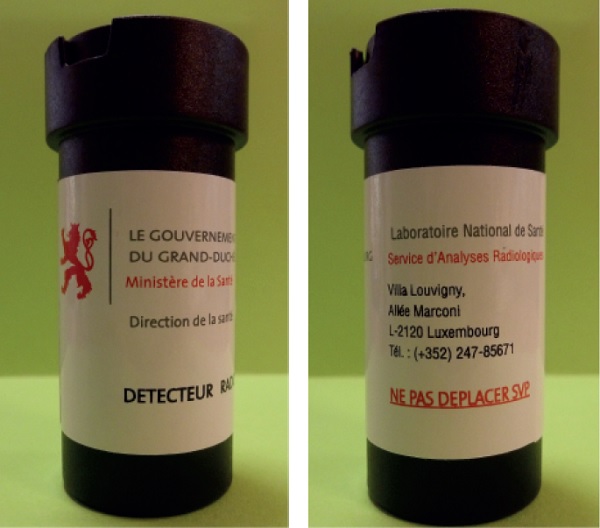
In general, for any private dwelling, the measurement of radon in the air can be requested from the Radiation Protection Division by completing the form available on the website www.radioprotection.lu. A kit consisting of two exposure meters, a questionnaire and a user manual will be sent early 2018. It is important to note that radon measurements are made exclusively between early October and early May for a period of 3 months. Only requests made before 1 February will be processed during the current winter period (email: laboratoire.radioprotection@ms.etat.lu).
In most cases, it is possible to reduce the concentration of radon below the reference level without starting work that is too substantial and costly. For buildings with radon levels greater than 600 Bq / m3, it is however essential to have this work carried out on the basis of a specific pre-established advice.
The action plan can be consulted in its entirety on www.radon-info.lu