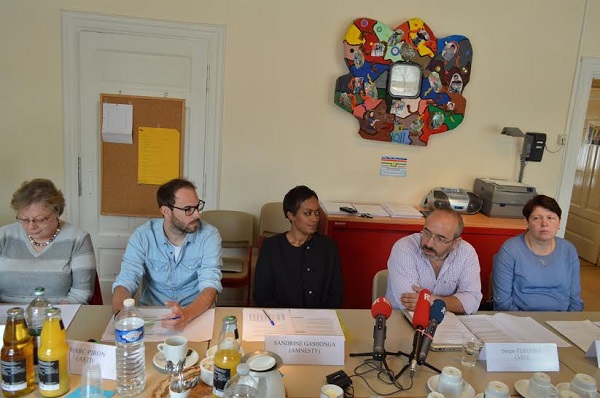
In recognition of World Refugee Day, the Collectif Réfugiées Luxembourg (LFR) has highlighted the importance of integration and offered guidelines to improve the conditions for refugees in the Grand Duchy.
Luxembourg, as in the rest of Europe, has been confronted with a significant number of arrivals seeking international protection since summer 2015. The reception needs of these newcomers has been largely met without the need for temporary structures such as campsite or open tents.
However, as time has passed needs have gone far beyong emergency care, with Luxembourg society now facing the challenge of integration. According to LFR, this is only possible through the contribution of all, civil society included, with the increased responsibility of the state and government undeniable. The LFR has therefore issued guidelines to issues which require urgent solutions:
The Supply of Food and Hygiene Products
The LFR has previously called for greater autonomy for asylum seekers, welcoming the initiative from several housing facilities to provide access to a kitchen and food stamps. It stated that the access for refugees to local businesses and discount supermarkets must be promoted, rather tahn reserving food supplies o wheels only for accommodation facilities established in remote locations not served by regular public transport.
Hosting Structures
Whilst welcoming the fact that national authorities mobilised the necessary resources to provide an adequate number of beds rather than campsites and tents, the LFR highlighted the quality of housing conditions as a top priority, with more and more applicants complaining of overcrowding and lack of privacy, or even the poor conditions of the rooms or quality of the food. Instead, the LFR called for all housing to be supervised by enough qualified staff to support all residents.
Internet Access
There are still reception centres where residents cannot connect to the Internet and therefore have only limited means of contacting their families or lawyers. The LFR claimed that access to the Internet should be possible from rooms and not just in public areas, thus respecting the right to privacy for residents.
Detection of Vulnerability
A significant amount of asylum seekers who have come to Luxembourg are from countries at war, whilst others seek refuge because they have been persecuted. Some individuals therefore exhibit signs of vulnerability related to psychological or physical trauma, chronic illness or sexual orientation. Whilst specific provisions exist for vulnerable people, implementing appropriate detection mechanisms remains a challenge, as is the case for unaccompanies minors who do not routinely receive psychological care or LGBTI refugees who are sometimes victims of homophobic acts in accommodation facilities.
The LFR has insisted that vulnerabilities, whether physical, psychological or other, be detected as soon as possible by trained personnel according to international standards. When a vulnerability is determined, this should be taken into account when allocating accommodation, integration measures offered and the asylum procedure.
Length of Procedure
Echoing the recent sentiments of Iraqi asylum seekers, the LFR stated that the maximum procedure time introduced through the Act of 18 December 2015 is often being far exceeded and is the source of anxiety and tension for many applicants. The LFR therefore called for the consistent reinforcement of the staff charged with the processing of applications, especially as the influx of people seeking refuge in Europe does not look set to abate.
Integration
Seeing as almost half of the residents of the Grand Duchy do not hold Luxembourgish nationality, the integration of foreigners in general is vital for social cohesion. The LFR has expressed its willingness to work with the Ministry of Family to help facilitate integration, and suggested that the procedure for requesting and granting Authorisation for a Temporary Occupation (AOT) be simplified to ease the access of applicants to the labour market. Recognition devices for academic and professional qualifications could also be simplified.
Photo by LFR