In response to the European steel crisis, the Commission adopted Wednesday an action plan aimed at boosting the competitiveness of the sector.
The burgeoning steel crisis has culminated in several plant closures and multiple job losses, with ArcelorMittal Europe reporting its first operating loss in 7 quarters in November 2015.
Later that month, Luxembourg Deputy Prime Minister and Minister of the Economy, Étienne Schneider, convened an extraordinary meeting of European Economy Ministers under the Luxembourg Presidency of the Council of the EU to take stock of the difficulties facing the steel industry, such as the significant global overcapacity of production, to take necessary decisions.
Wednesday's action plan involves new short-term measures to enable the EU to better defend its markets against unfair commercial practices, with more actions for the long-term planned, including investment in advanced technology and labour skills. This will aim to re-establish Europe's position in global steel production, its share of which has dropped 12% since 2001 whilst that of China has risen from 12% to 50% since 1999.
"Our efforts, begun under the Luxembourg Presidency with the European Commission to support the steel sector, are bearing fruit," commented Étienne Schneider. "Through the new action plan, the Commission is demonstrating its willingness to maintain a competitive and diversified industrial base in Europe."
The Deputy PM continued by citing it as crucial that anti-dumping procedures be made more effective and that actions with partners such as China, India and Russia be initiated to address the origins of the global oversupply which is weighing on steel market prices. To this end, Étienne Schneider led an economic mission earlier this month to India in a bid to strengthen trade relations between the two countries.
The European steel industry sees a turnover of around €180 billion, providing close to 360,000 direct jobs to oversee the 170 million tonnes of steel produced every year.
"The steel industry plays a strategic role in the majority of industrial value chains, such as automotive and construction," continued Étienne Schneider. "Accordingly, we must quickly implement the action plan."
"We must do more to help the steel sector and other energy-intensive industries adapt, innovate and compete on the basis of quality, cutting-edge technology, efficient production and a highly skilled workforce," concluded Commission Vice-President, Jyrki Katainen. "We now have a record level of anti-dumping measures on steel products in place and the Commission is determined to restore a global level playing field. We will take steps to further streamline our procedures but Member States must also act together and urgently adopt our legislative proposal to modernise EU trade defence instruments and make fairer trade a reality."
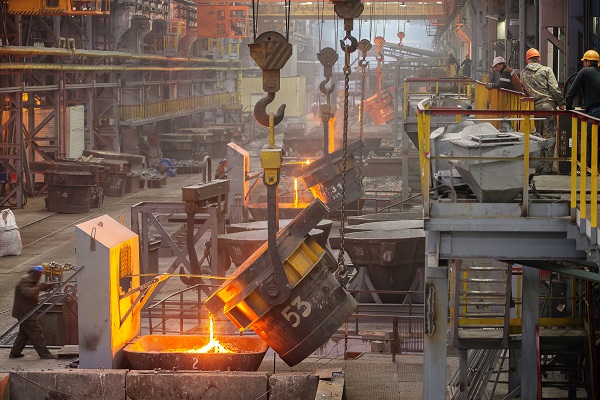
Photo by Shutterstock