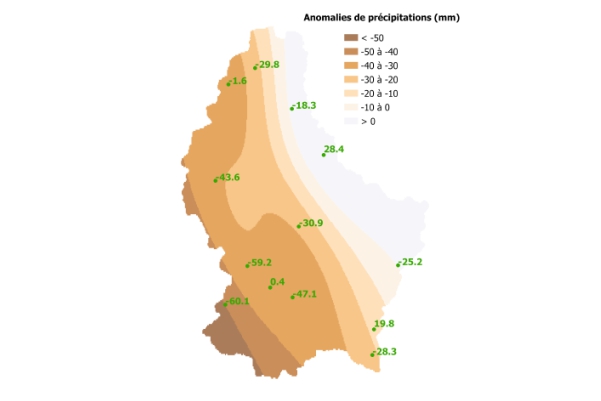
 Credit: ASTA
On Tuesday 1 March 2022, the ASTA weather bulletin has revealed that the winter in Luxembourg was too hot, too dry in the southwest and too wet in the northeast.
As the 2021 - 2022 winter draws to a close, AgriMeteo, the national meteorological service of the ASTA (Administration des services techniques de l'agriculture) of the Ministry of Agriculture, Viticulture and Rural Development, published its weather analysis for the period from 1 December 2021 to 28 February 2022.
The analysis looked at the network of 36 automatic weather stations across the Grand Duchy. The three-month values of four representative stations, i.e. Asselborn (north), Clemency (south-west), Remich (Mosel) and Grevenmacher (Mosel), were compared with the averages of the reference period 1991-2020.
On the whole, the average temperatures in winter were up 1.3°C compared to the multiannual seasonal reference period (1991-2020). In terms of rainfall, generally a deficit of rain was recorded in the southwest and a surplus in the northeast. However, the winter agricultural crops are in good condition at the end of the winter season.
December 2021: too hot and too dry
December 2021 saw freezing temperatures a few days before the Christmas holidays before rising to temperatures well above average by the end of the year. Rainfall levels were below the multi-year average across the country.
January 2022: near normal temperatures and precipitation
Temperatures were slightly above seasonal averages. In most of the country, with the exception of the Moselle, the level of rain was slightly below normal.
February 2022: too hot and marked by storms
February temperatures were well above baseline averages. The third week was marked by storms Dudley, Eunice and Franklin. The maximum gusts recorded on 17 February were 97.3 km/h at Reuler.
Agriculture: A satisfactory start to the season
At the end of winter, the cultivated plants are in good condition. Most winter cereals were planted under ideal conditions. Due to the higher temperatures in December, even the late plantings, which followed those of maize, became well established. Lower temperatures in January hardly affected winter crops, so very little winter damage is reported.
All the data recorded by ASTA's 36 meteorological stations is published on www.agrimeteo.lu.