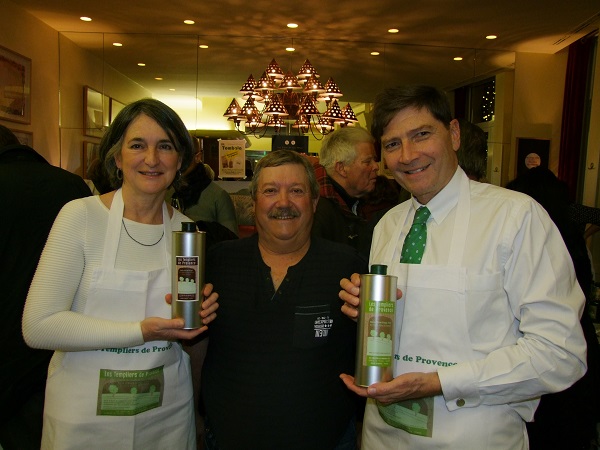
On Thursday early evening, Les Templiers de Provence held a Vernissage at the Brasserie Guillaume on Place Guillaume II in Luxembourg city centre, following the recent harvest and pressing from 4-16 November.
Tom Seale (also CEO of European Fund Administrators (EFA) in Luxembourg), has culivated a plot in Provence and started planting olive trees a number of years ago. 2008 saw the first harvest from the then young trees, approximately 600 in number, with a total of 300 litres of olive oil being produced. Now the young trees are larger and more mature, counting around 3,000 over 11 hectares. While the 2016 harvest was around 5% down on 2015 when around 4,000 litres of olive oil was produced, Tome Seale talked with The Luxembourg Chronicle and explained that, due to this year's drought during the growing season, the olives were around 30% smaller than usual. So, while the overall number of olives was up significantly, the size discrepancy more than cancelled this out in the harvest volume.
Last year, due to proper husbandry and management of the trees, they bucked the trend in the region when other olive grover were hit by disease due to wet weather; this year, the weather also affected the crop, but in the other extreme.
Tom Seale also explained that the trees should reach full maturity in 3-4 years' time which should see the harvest increase to 7-10,000 litres in total.
This year, Les Templiers de Provence have introduced a second olive oil product to their growing range. While the classic process involves the olives being pressed immediately after being picked, resulting in a fruity and peppery taste, this year they have, alongside the classic variety, created a Fruite Noir - this is where the olives have been kept in an airtight box for 6 days for a controlled fermentation: the result is an oil without any bitterness.
This year there is also honey from the same producers, who started managing on-site aviaries in 2014.
For further details, including ordering, see www.lestempliersdeprovence.com
Photo: Sophie and Tom Seale with their on-site farmer