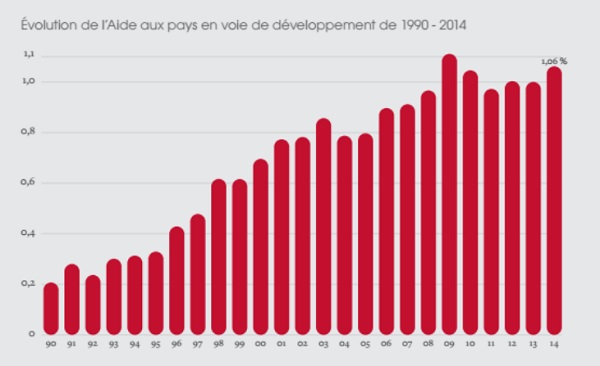
In response to the call from United Nations Secretary-General Ban Ki-moon for 'Better Data for a Better Life' in the context of World Statistics Day, the Luxembourg Cooperation yesterday published key figures to provide an overview of its main activities in the field of development.
Authorities of the Grand Duchy, in the capacity of the Luxembourg Presidency of the Council of the European Union and the European Year for Development 2015, joined other UN Member States and international organisations in providing clear information to its population.
As transparency and mutual accountability form part of the Global Partnership principles for effective development cooperation, defined in Busan in 2011 and developed in Mexico in 2014, the Luxembourg government has made its statistics available on the website of the Luxembourg cooperation, in the standard format defined by the Development Assistance Committee of the Organisation for Economic Co-operation and Development (OECD).
These figures show Luxembourg's contribution to overseas development aid, including 1% of its Gross National Income (GNI); 512 projects managed by Luxembourg NGOs, of which 47 were humanitarian; 92 certified Luxembourg NGOs; 45% of its bilateral aid to Africa; and 180,00 recipients of professional training between 2001 and 2014.
In September 2015, the international community adopted a set of 17 targets, in the form of Sustainable Development Goals (SDGs), to eradicate poverty, protect the planet and ensure prosperity for all. These SDGs will be analysed through an array of 169 targets which will measure the progress and guide the actions of countries involved towards development. These statistics therefore become of import as they will be increasingly drawn upon for quality testimony in the measurement of outcomes to guide policy development and poverty reduction.
The first World Statistics Day was celebrated in 2010, recognising the work of statisticians who produce and disseminate the data needed to meet societal challenges and measure progress.
"Statistics are crucial to economic development, including in our efforts to achieve the Millenium Development Goals," stated UN Secretary-General, Ban Ki-moon in 2010. "In order for development activities to produce results, statistical data on poverty, access to education and the incidence of disease must first of all be collected and analysed".
Photo by Luxembourg Cooperation