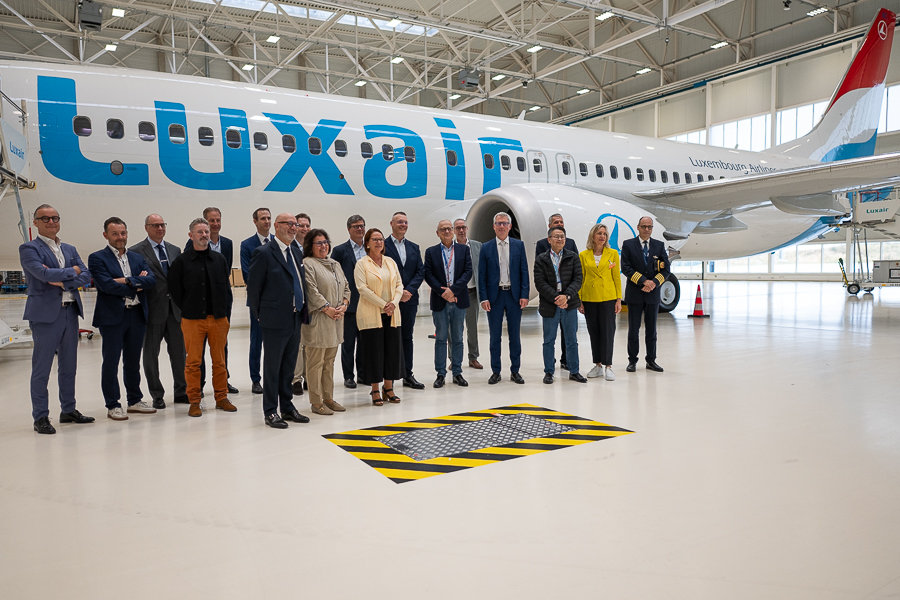
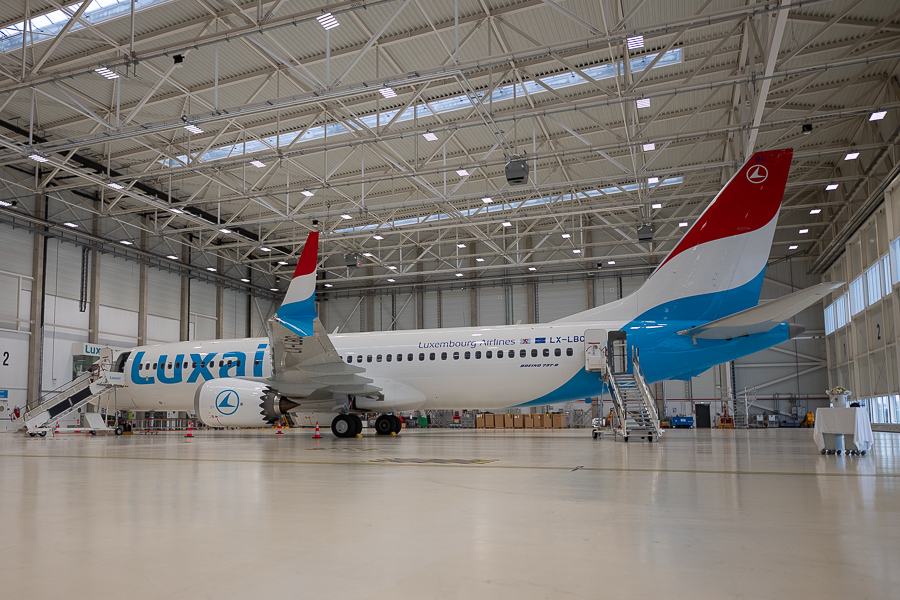
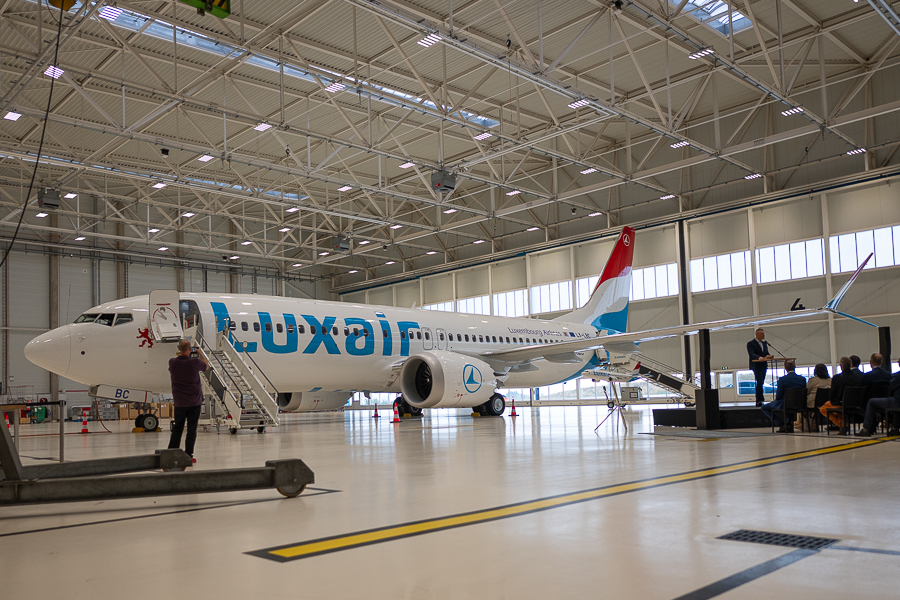
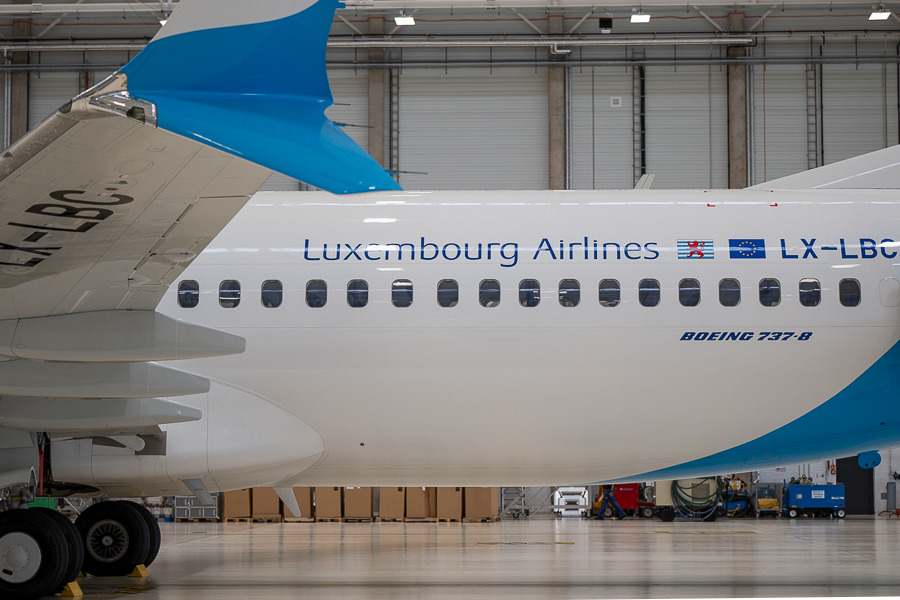
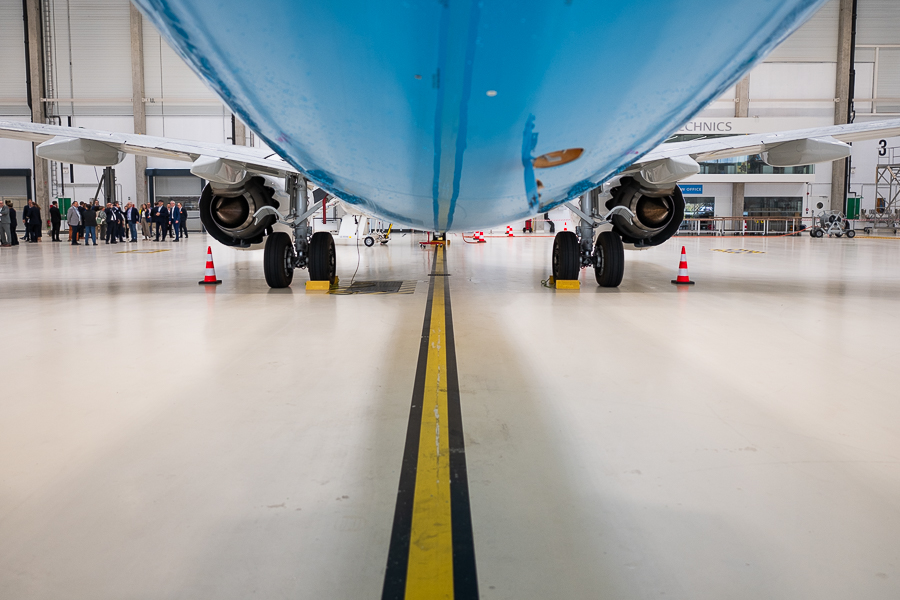
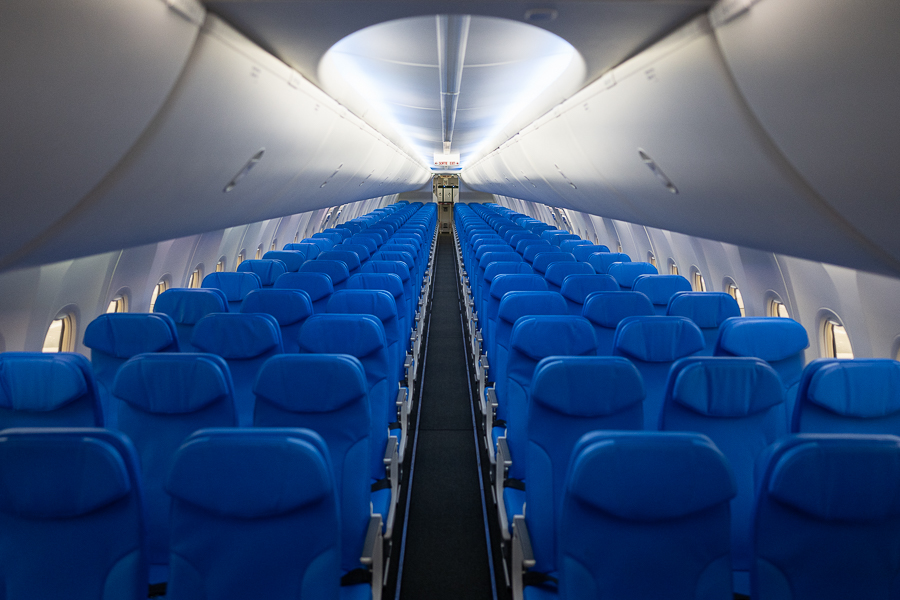
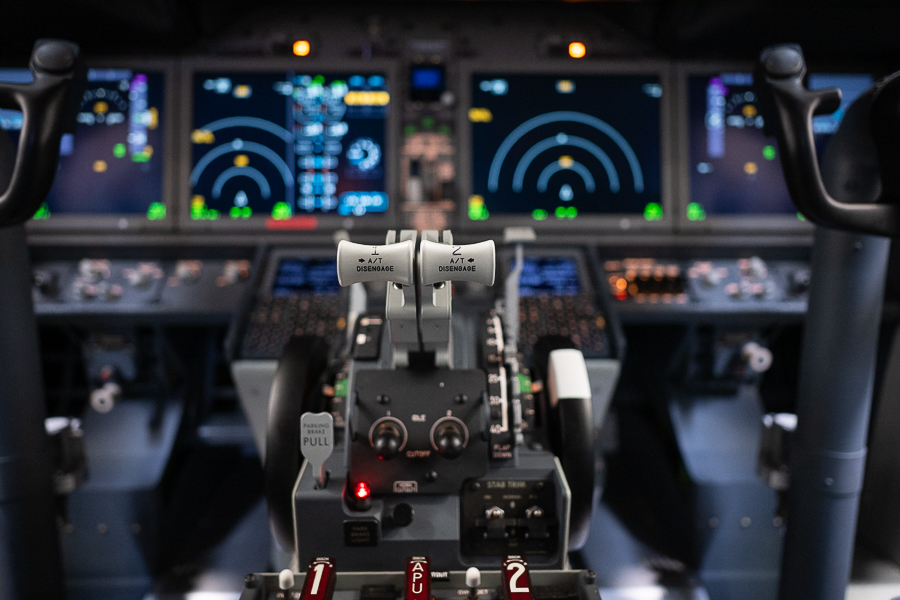
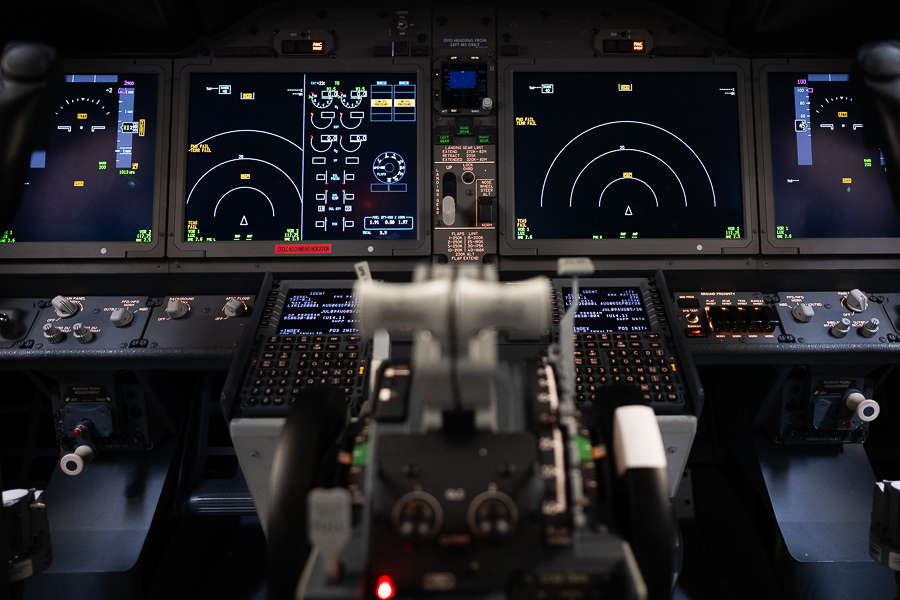
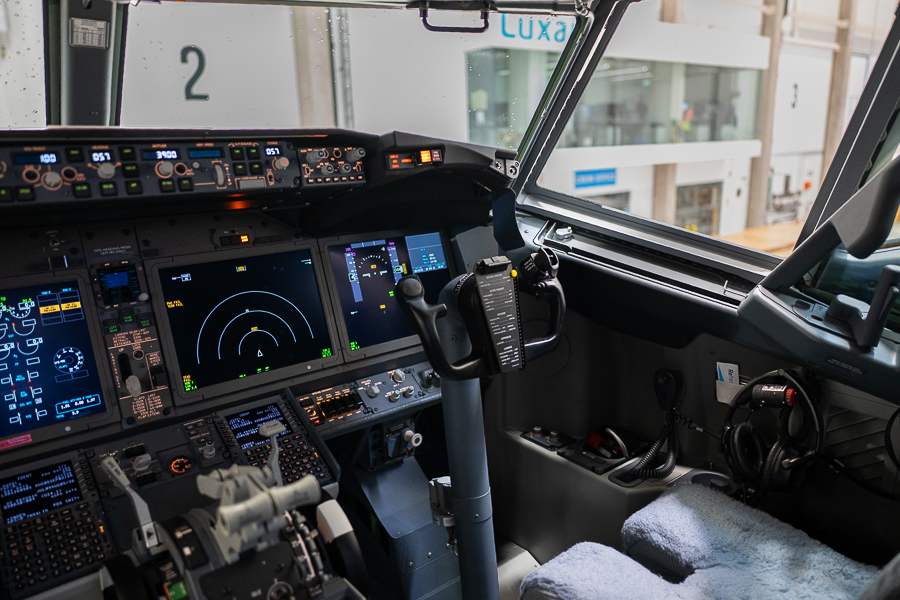
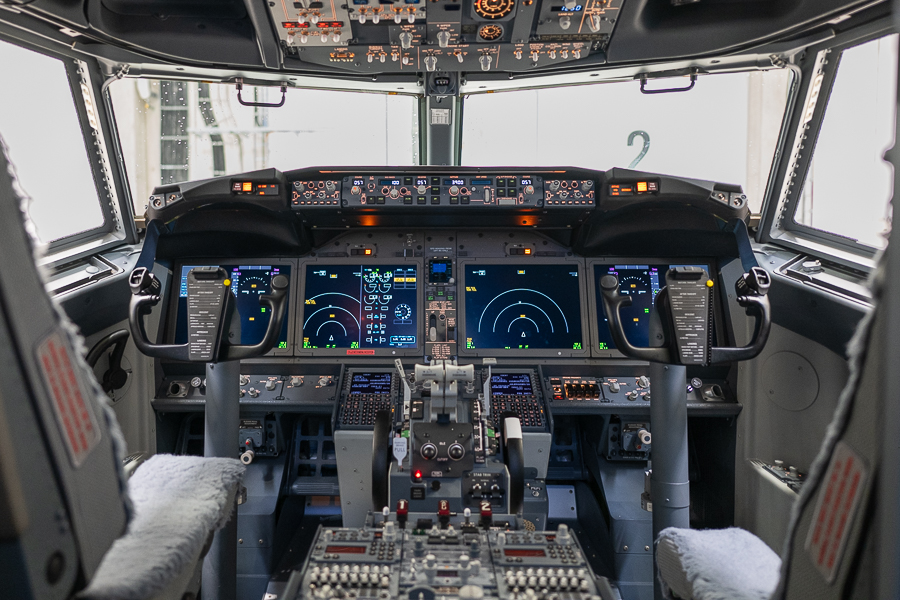
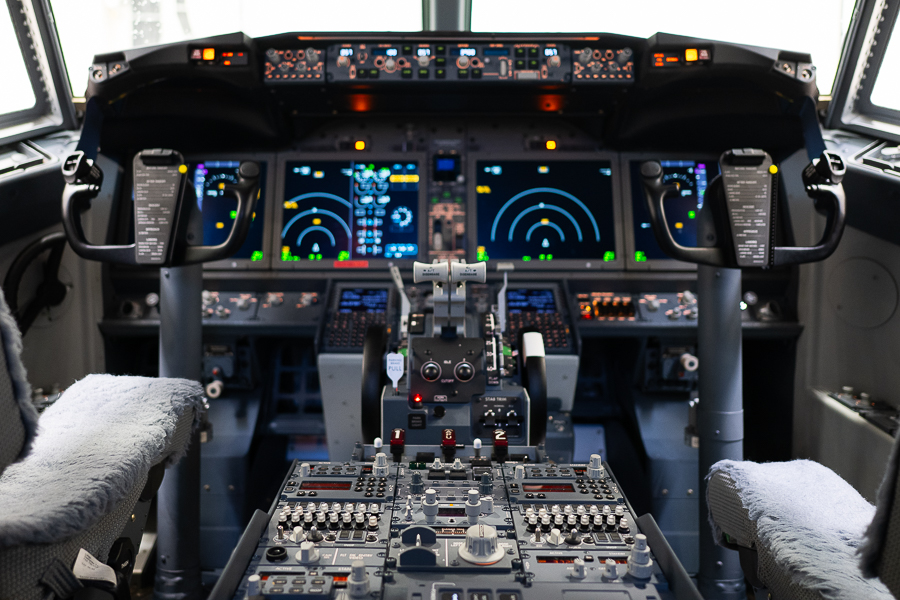
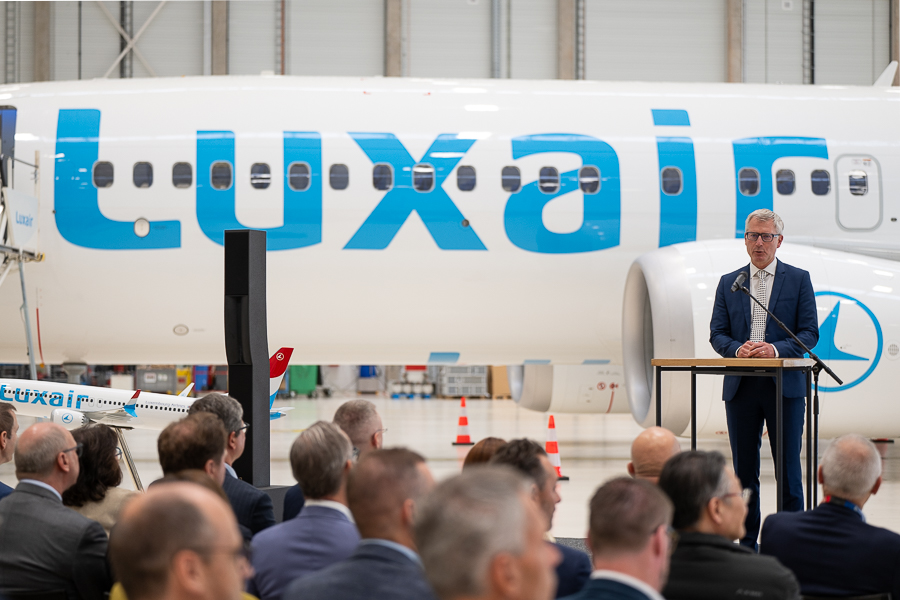
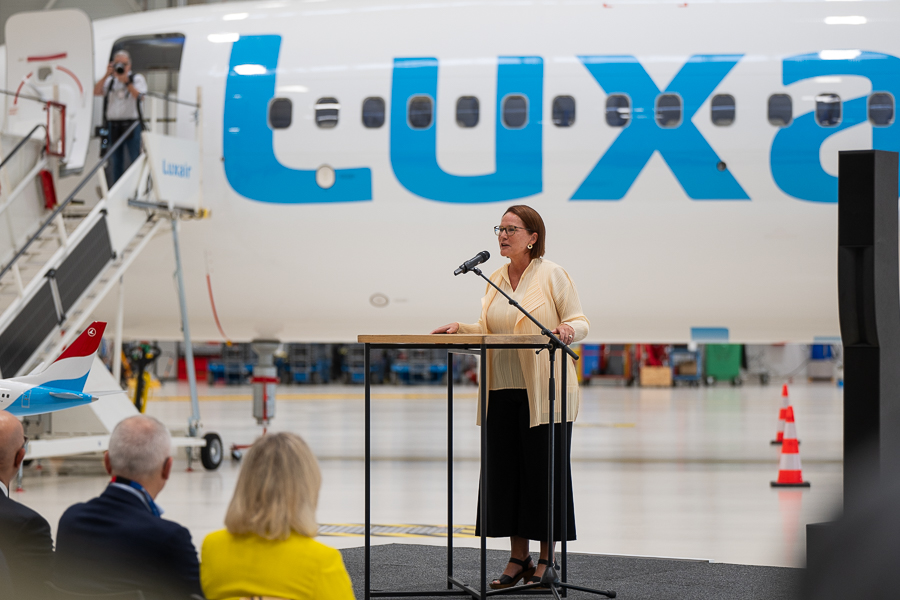
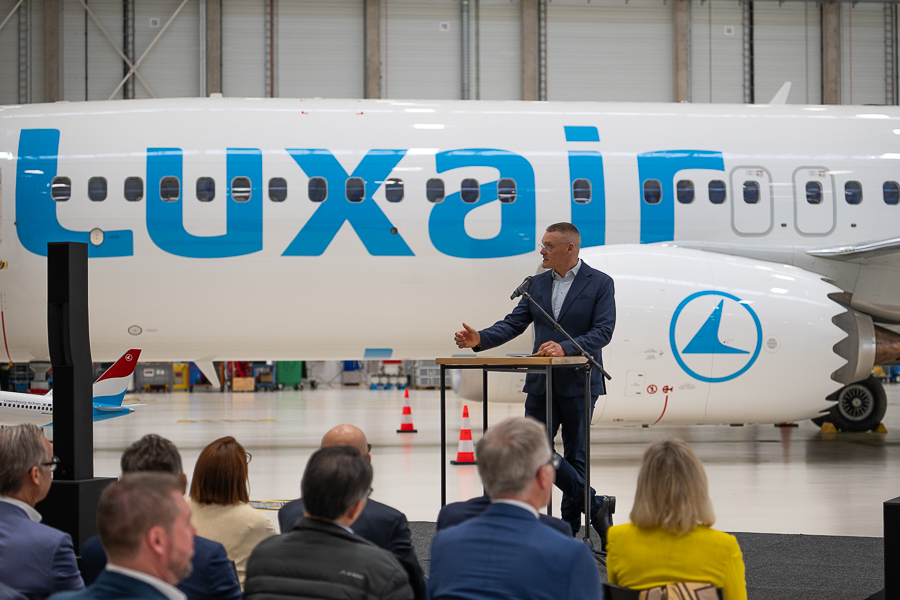
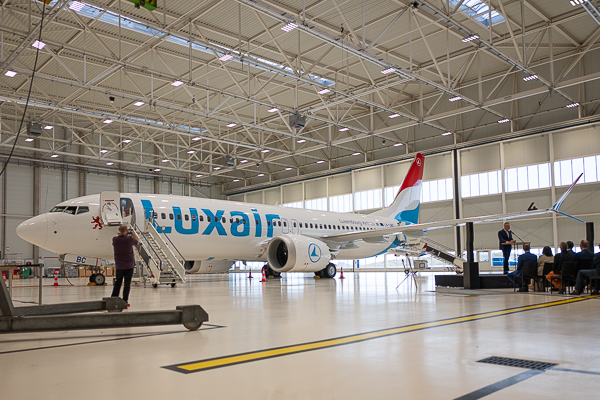
 Luxair Boeing 737-8 aircraft;
Credit: Ali Sahib, Chronicle.lu
Luxair Boeing 737-8 aircraft;
Credit: Ali Sahib, Chronicle.lu
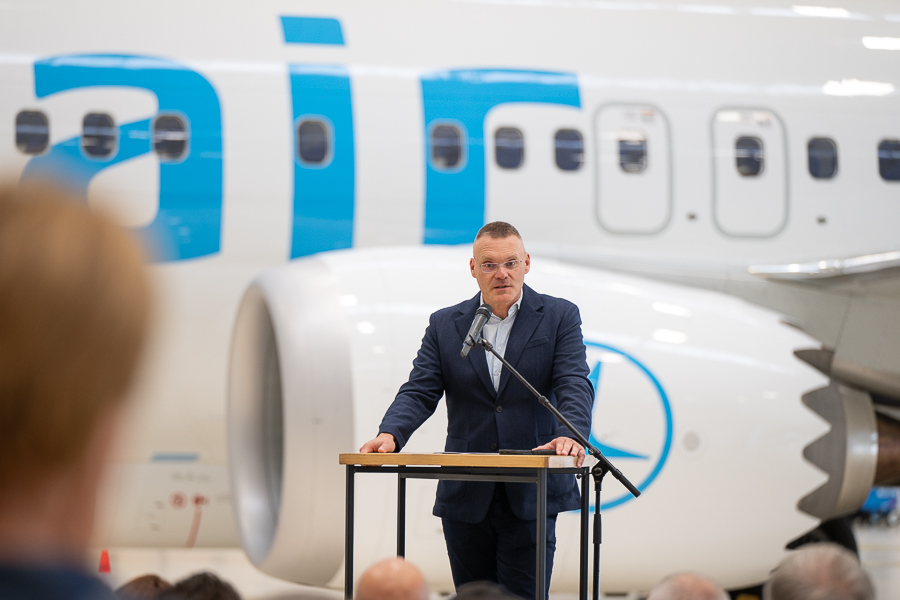
On Friday 28 August 2026, Luxair officially presented its first two company-owned Boeing 737-8 aircraft at its Maintenance Hangar at Luxembourg Airport, in the presence of Luxembourg's Minister for Mobility and Public Works Yuriko Backes, representatives of Boeing and members of the aviation sector.
The two aircraft are the first Boeing 737-8s owned by Luxair as part of its current fleet renewal programme.
During the ceremony, Luxair CEO Gilles Feith said the airline's current Boeing programme covers twelve new-generation 737 family aircraft, with options for two more. The 737-8 has 186 seats and can serve longer routes, including destinations such as Cabo Verde and Senegal.
Luxair said the new aircraft consume around 20% less fuel than conventional aircraft of this type, while their noise footprint is around 50% lower than that of a conventional Boeing 737. The airline expects its wider fleet renewal programme to result in all aircraft currently operating, apart from the new arrivals, being replaced by the mid-2030s. More than €1 billion is being invested in Luxair's future as part of this process.
Minister Backes described the fleet renewal as a major investment and “a sign of trust and confidence into the future”, highlighting Luxair's importance for Luxembourg's connectivity and economy. She also welcomed the reduced noise and carbon footprint of the new aircraft.
The event also highlighted the longstanding relationship between Luxair and Boeing, which is set to mark its 50th anniversary next year.
Speaking with Chronicle.lu, Gilles Feith said: “For us what is super important is the economical efficiency of the aircraft. So here we have about 20% less fuel burn which gives us less CO2 and which gives us a lot of economy also because that fuel does not need to be paid. So we have about 1.4 million euros on the same seat capacity compared to an actual plane which we would save.”
He added that Luxair had also considered operational compatibility and noise levels when selecting the aircraft: “We have an airport which is very close to the city so that this aircraft has the least noise possible for the future and the communities around it and then of course they need to fit to our network and that they fit perfectly to what we do today.”