 Credit: EIB
On Thursday 5 November 2026, the European Investment Bank (EIB) published the eighth edition of its Climate Survey, revealing that Luxembourg is the only European Union (EU) country where slowing climate change has overtaken energy autonomy as the leading expected benefit of the energy transition since 2022.
According to the EIB, the survey, conducted by Ipsos bva among 23,000 people across all 27 EU Member States, found that 26% of Luxembourg residents now rank slowing climate change first (EU: 21%), just ahead of reducing dependence on oil and gas imports (23%), which ranked first in 2022.
The EIB noted that the trend has moved in the opposite direction across most of Europe. Reducing dependence on oil and gas imports now ranks first in sixteen Member States, while energy prices rank first in eight. Luxembourg is among three Member States, alongside Sweden and Malta, where climate action ranks first.
The survey also found that 76% of Luxembourg residents consider it urgent for the country to carry out the energy transition (EU: 75%), while 77% cite slowing climate change among the expected benefits of the transition.
Impact of energy prices
According to the survey, increases in gas, fuel, heating oil and electricity prices have strongly reduced the purchasing power of 52% of Luxembourg residents over the past twelve months. Among them, 13% reported a very strong reduction in their purchasing power.
To make ends meet amid rising prices, 33% of Luxembourg residents reported lowering their heating, while 32% reduced their everyday spending on food or healthcare. In some cases, the impact went beyond reduced spending, with 23% reporting that they had gone into debt, sought financial assistance or postponed paying an energy bill (EU: 16%).
The survey also found that 62% of Luxembourg residents said rising prices had changed their car travel habits (EU: 60%). In particular, 33% replaced journeys by private car with carpooling, public transport or cycling (EU: 22%), the highest proportion in the EU.
Readiness for the energy transition
According to the EIB, Luxembourg residents are also among the best prepared for the energy transition in Europe. One-third (33%) reported already using an electric car (EU: 13%), while 70% had purchased one or were considering doing so within the next three years (EU: 47%), the highest proportions in the EU in both cases.
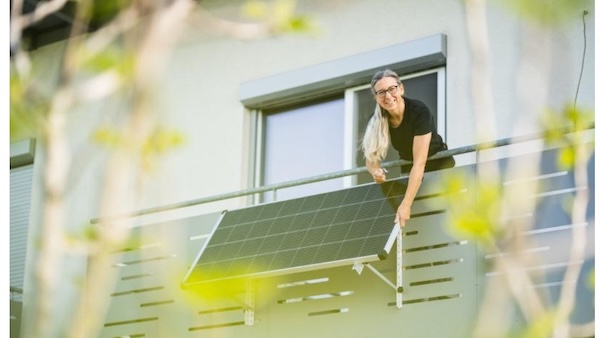
More than one-third of respondents reported having installed solar panels (36%; EU: 20%) or purchased an electric bicycle (35%; EU: 18%), while one-quarter had a heat pump (25%; EU: 17%).
The survey further found that 84% of Luxembourg residents want priority to be given to low-carbon energy (EU: 87%). Solar energy ranks first (52%; EU: 52%), followed by wind energy (35%; EU: 37%).
European cooperation
When asked which approach the EU should prioritise to carry out the energy transition, 56% of Luxembourg residents preferred developing a competitive European clean technology industry, even if this takes longer (EU: 55%), while 32% favoured accelerating the deployment of clean technologies using imported equipment (EU: 29%).
According to the EIB, Luxembourg residents favour joint action over individual action, with 75% wanting their country to cooperate more closely with others (EU: 68%). Meanwhile, 57% would prefer EU countries to finance the necessary investments through pooled resources.
The eighth EIB Climate Survey was conducted by Ipsos bva between 3 and 25 August 2026, involving 23,000 respondents aged sixteen and over across all 27 EU Member States, including 500 in Luxembourg.
The EIB noted that the questions concerning the main benefits of moving away from fossil fuels in 2022 and the benefits of the energy transition in 2026 were worded differently. The results therefore allow comparisons of which benefit ranked first in each country, but not of the proportions citing each benefit.
For further information, visit the EIB website.