On Wednesday, Luxembourg's Minister of Finance, Pierre Gramegna, presented his 2017 budget to parliament at the Chambre des Deputés.
In addressing the chamber, Minister Gramegna set out the government's finanial strategy for the 4 years from 2017 to 2020, which he described as one of quality, solidarity and competitiveness, with a deficit of €984 million for 2017, based on economic growth of 4.1% of GDP, according to Statec, Luxembourg's national statistical office.
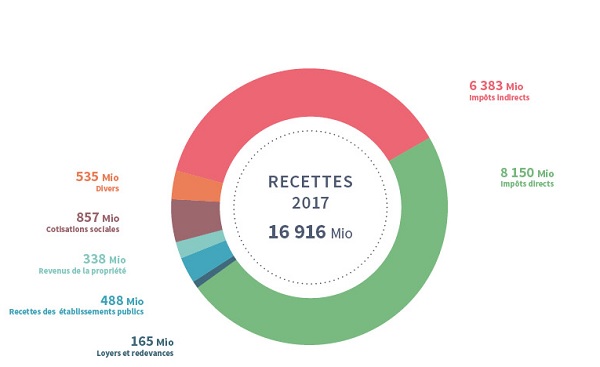
With revenues expected to come in at €16.916 billion, expenses are being budgeted at €17.899 million, of which €227 million is in interest repayments on money borrowed.
Minister Gramegna stressed that while the budget is still running at a deficit, the state has not needed to issue any government bonds since 2014. He said that the State continues to increase investment in housing, as well as in teaching and research, which are the keys to competitiveness in the medium and long term.
Some key points:
- €617 million will be made on environmental and climate investments (more than doubling since 2013)
- €8.3 billion, the bulk of government expenditure, consists of social benefits, transfers to social security, subsidies and other income transfers
- The most significant increases are in family allowances (€49 million), parental leave (€42.9 million), cheques services (€26.4 million) and multilingual education (€22.6 million).
- Around 1,044 state jobs are expected to be created in 2017, including 544 in education and 100 in the police.
- Public investment will increase to €2.3 billion due to the continued need to modernise the country's infrastructure.
- Development aid of 1% of gross national income.
"Luxembourg is the only country to comply consistently with EU rules on the Stability and Growth Pact (SGP). Throughout the period from 2017 to 2020, the structural balance will remain positive and well above the medium term target of 0.5% of GDP. Public debt is well under control over the entire period from 2017 to 2020 with a stabilized debt ratio around 23.6% of GDP, well below the 30% target set by the government, or even the 60% limit set by the PSC."