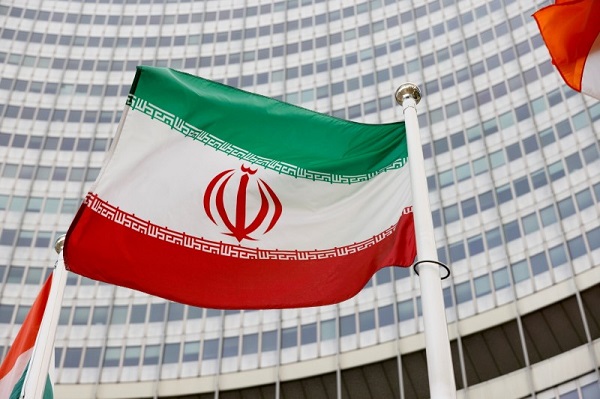
 The Iranian flag flies in front of the International Atomic Energy Agency (IAEA) headquarters in Vienna, Austria, 23 May 2021;
Credit: Reuters / Leonhard Foeger / File Photo
The Iranian flag flies in front of the International Atomic Energy Agency (IAEA) headquarters in Vienna, Austria, 23 May 2021;
Credit: Reuters / Leonhard Foeger / File Photo
DUBAI (Reuters) - Talks in Vienna (Austria) on reviving the 2015 nuclear deal between Iran and world powers have made "significant progress", Iranian foreign ministry spokesman Saeed Khatibzadeh said on Monday 21 February 2022.
Separately, Iran's top security official Ali Shamkhani said talks with European negotiators were ongoing and would continue while negotiations with the United States (US) were not on the agenda because they would not be the source of "any breakthroughs".
Indirect talks between Tehran and Washington have been held in Vienna since April 2021 amid fears about Tehran’s nuclear advances, seen by Western powers as irreversible unless agreement is struck soon.
While Saeed Khatibzadeh said significant progress was made, he also noted that "nothing is agreed until everything is agreed" in the Vienna talks. "The remaining issues are the hardest", he told a weekly press briefing.
Mr Khatibzadeh said that Iran’s top security body, the Supreme National Security Council, handles the Vienna talks. It reports directly to Supreme Leader Ayatollah Ali Khamenei, Iran's top authority.
Reuters reported last week that a US-Iranian deal is taking shape in Vienna after months of indirect talks to revive the nuclear pact, which Washington abandoned in 2018 under then-president Donald Trump.
The draft text of the agreement also alluded to other issues, including unfreezing billions of dollars in Iranian funds in South Korean banks, and the release of Western prisoners held in Iran.
Iran is ready to swap prisoners with the US, Iran's foreign minister said on Saturday 19 February 2022, adding that talks to revive the nuclear deal could succeed "at the earliest possible time" if the US made the necessary political decisions.
The 2015 deal between Iran and major powers limited Iran’s enrichment of uranium to make it harder for Tehran to develop material for nuclear weapons, in return for a lifting of international sanctions against Tehran.
Iran has violated some of the deal's nuclear limits since the US withdrew from it and reimposed sanctions under Donald Trump.