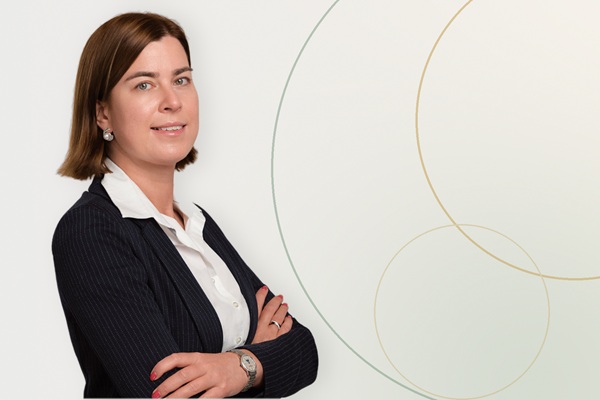
 Svetlana Grishankova;
In a country where 70-75% of Luxembourg nationals normally end of working in the civil service, and most of the jobs in the country's largest business sector (the finance sector) are held by members of the international community, the innovation sector has been driven government initiatives and funding programmes such as Fit 4 Start through the national innovation agency, Luxinnovation which connects startups, researchers and enterprises; Also, ADEM, the national unemnployment office, has initiatives for those planning to start their own businesses.
Many of these jobs may be seen to be "safe" positions, without much risk, but there are people who are a bit more adventurous and are prepare to take "a leap of faith" to realise their own dreams, whether by design or by accident, or even by particular circumstances. Everyone's story is different...
However, on the ground, things many seem and feel a bit different… In this series of articles on entrepreneurship, Chronicle.lu is specifically addressing individuals who have left (the relative safety of) corporate life for (a relative risky jump into the unknown of) running one's own business.
For the first in this series, we are talking with Svetlana Grishankova who is a sustainability consultant. She provides advisory services and training on a range of sustainability topics, in particular ESG reporting, assessments and strategy, to organisations of different sizes. A growing part of her work is with small and medium-sized enterprises (SMEs), which increasingly receive ESG questions from banks, large clients and investors, but rarely have the in-house resources to answer them. Talking with Chronicle.lu, she explained that she helps them understand what is relevant for their business and report on it in a proportionate way.
To reach more companies than she could through one-to-one consulting, she is also developing online courses. Her first course, “Ready for VS: The Practical VSME Course for SMEs”, is now ready, and she is preparing to launch it in Luxembourg. She plans to add further practical courses for SMEs over time.
At the moment she works alone and does not employ anyone, although she is considering it as a way to expand her services in the future.
Chronicle.lu: Please tell us about your previous corporate work, including what sector you worked in, and for approximately how long.
Svetlana Grishankova: I worked for just under two years in advisory at PwC Luxembourg, also focusing on sustainability topics. Before moving to Luxembourg, I spent ten years managing a small ESMA-registered rating agency in Germany with a strong focus on ESG.
Chronicle.lu: When you decided to set up your own business, how long did it take you to set everything up before you handed in your notice and left corporate employment?
Svetlana Grishankova: Obtaining my business licence took around two months. The main difficulty was the lack of clarity about which criminal record extract I needed, as I was born in Russia, worked for many years in Germany and am now a Luxembourgish national living here. Now that I am expanding my service offering, I need an extension of my business licence to cover the new scope. I have been waiting for it since June with no clear timeline, which I find a real barrier to doing business.
Chronicle.lu: Did your employer have any specific initiatives in place to help you ease the transfer for corporate to self-employed status (e.g. have a period of half-time employment while you get everything set up)? If so, please provide details
Svetlana Grishankova: I am not aware of any such initiatives and did not use any.
Chronicle.lu: In setting up your own business, did you receive any specific help, e.g. mentoring, or did you follow any specific training courses (either sector-specific or about innovation/entrepreneurship/setting up a business)?
Svetlana Grishankova: I attended several of ADEM’s Start Your Business workshops, which I found very useful.
Chronicle.lu: Did you apply for any form of state aid or subsidy?
Svetlana Grishankova: I did not apply for the primo-création aid, although it could be relevant for my type of business, because one of the conditions was renting an office. As an independent consultant, I do not currently need a separate office: I work either remotely or at clients’ premises. It is a shame that this condition prevented me from applying, especially as, should I decide to create a second business, I will not be eligible for the aid then either, even though I never received it for my first one.
Chronicle.lu: Please tell us about your experience of the administrative process, e.g. applying for a business licence, opening a bank account, registering your company, apply for a VAT number, etc.
Svetlana Grishankova: Obtaining my business licence took a little longer than expected and, as explained above, I am still waiting for a necessary extension. I believe that such delays create risks and uncertainty for business development.
I have not opened a separate business bank account: as an individual consultant I can use my personal account. I volunteer as treasurer of two Asbls (non-profit associations) in Luxembourg, so I know how complicated it can be to open or amend bank accounts here, and I am trying to postpone this pleasure for my own business for as long as possible.
Chronicle.lu: How long after leaving corporate employment did you "open for business"?
Svetlana Grishankova: My employment ended in mid-April 2025 and I received my business licence in October of the same year. I deliberately took some time before applying to work out my business model and potential clients: as soon as you apply for the licence, costs and obligations begin, so it makes sense to apply well prepared and with sufficient savings as a safety net.
Chronicle.lu: What do you find the most challenging aspect of running your own business? Sales / marketing / administration / finance…
Svetlana Grishankova: Running your own business is always somewhat hectic in terms of workload and less stable in terms of income. One month you might be so busy you have no time for anything else; the next might be quiet and bring in less money. However, this challenge is understandable, and most people starting their own business prepare for it.
What remains challenging and worrying is the uncertainty around administrative procedures and obligations. I have no idea when I will receive the licence extension I am waiting for, whether I will get it at all, or what might influence the decision. I also have only a vague idea of how much tax I will owe at the end of my first full year as an independent consultant, especially as I am married and file a joint tax return with my husband. In addition, the lack of protection in case of sick leave is a concern.
Chronicle.lu: What lessons have you learned that you would like to share with others thinking of doing the same, i.e. leaving corporate world and setting up on your own?
Svetlana Grishankova: 1. Analyse several scenarios, including the most pessimistic one, and check whether you are ready for them; 2. Check your savings and be prepared to get through the initial period while you build your reputation and client base; 3. Discuss your plans with your family and make sure everyone is comfortable with your decision. Setting up on your own may mean less financial stability and less predictable working hours, but it also offers more flexibility. Make sure everyone agrees that the benefits outweigh the costs.