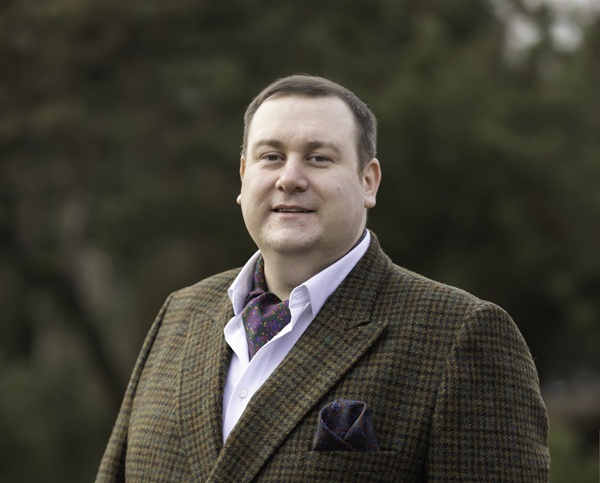
 Dennis Rossbach;
Credit: SYBX Group Sàrl
In a country where 70-75% of Luxembourg nationals normally end of working in the civil service, and most of the jobs in the country's largest business sector (the finance sector) are held by members of the international community, the innovation sector has been driven government initiatives and funding programmes such as Fit 4 Start through the national innovation agency, Luxinnovation which connects startups, researchers and enterprises; Also, ADEM, the national unemnployment office, has initiatives for those planning to start their own businesses.
Many of these jobs may be seen to be "safe" positions, without much risk, but there are people who are a bit more adventurous and are prepare to take "a leap of faith" to realise their own dreams, whether by design or by accident, or even by particular circumstances. Everyone's story is different...
However, on the ground, things many seem and feel a bit different… In this series of articles on entrepreneurship, Chronicle.lu is specifically addressing individuals who have left (the relative safety of) corporate life for (a relative risky jump into the unknown of) running one's own business.
For the first in this series, we are talking with Dennis Rossbach, the Managing Partner of SYBX Group Sàrl which helps businesses and public organisations manage their purchasing activities. "I take over procurement tasks, help companies find and select suppliers, negotiate contracts, and improve purchasing processes. I also help businesses reduce risks in their supply chains and ensure that they can continue operating when disruptions occur. In simple terms, I help organisations buy what they need, manage their suppliers, and keep their supply chains reliable. I currently have no full-time employees".
Chronicle.lu: Please tell us about your previous corporate work, including what sector you worked in, and for approximately how long
Dennis Rossbach: Before embarking on the adventure of entrepreneurship, I worked in consulting, industry and finance for a total of eight years. In consulting, I worked on various assignments across several industries, helping companies with their procurement activities. In industry, I worked in direct procurement and was responsible for components required in the aerospace sector. In finance, I worked for a bank in indirect procurement and established its operational purchasing department.
Chronicle.lu: When you decided to set up your own business, how long did it take you to set everything up before you handed in your notice and left corporate employment?
Dennis Rossbach: I always dreamed of having my own business one day. Even as a child, I "played" at being an entrepreneur by creating a newspaper, selling goods and so on. My parents always supported me, and I am very grateful to them. These endeavours shaped who I am. The journey therefore started early and became a reality more than a decade later. I launched my first company alongside my corporate job. When I was laid off, the decision was easy, and I went all in. It did not work out as planned, so I returned to the corporate world. After around nine months, I decided to leave corporate employment again and start another business. Once more, I began preparing everything alongside my regular job. By the time I left the corporate world, everything was ready. I have been self-employed ever since.
Chronicle.lu: Did your employer have any specific initiatives in place to help you ease the transfer for corporate to self-employed status (e.g. have a period of half-time employment while you get everything set up)? If so, please provide details
Dennis Rossbach: No specific options were offered. I prepared everything during my free time, outside my usual working hours.
Chronicle.lu: In setting up your own business, did you receive any specific help, e.g. mentoring, or did you follow any specific training courses (either sector-specific or about innovation/entrepreneurship/setting up a business)?
Dennis Rossbach: Following my first attempt, I had a network of fellow entrepreneurs, and we supported and encouraged one another. I have never attended any official training courses. In my experience, you need to learn from reality, not just from theory.
Chronicle.lu: Did you apply for any form of state aid or subsidy?
Dennis Rossbach: No. There was no support or subsidy available for my activities and, as an entrepreneur, I do not want to be dependent on the state.
Chronicle.lu: Please tell us about your experience of the administrative process, e.g. applying for a business licence, opening a bank account, registering your company, apply for a VAT number, etc.
Dennis Rossbach: Opening a bank account at the time was fine. I would not describe it as easy, but compared with the reality of opening a business bank account in Luxembourg today, it was much simpler. I know several entrepreneurs who have chosen a neobank because traditional banks are not always very supportive. Registering the company, applying for a VAT number, and completing the other formalities went quite smoothly. The only issue was the business licence, which took much longer than expected. However, after a meeting with the ministry at the House of Entrepreneurship, the process moved forward smoothly.
Chronicle.lu: How long after leaving corporate employment did you "open for business"?
Dennis Rossbach: When you are self-employed, you are always “open for business”.
Chronicle.lu: What do you find the most challenging aspect of running your own business? Sales / marketing / administration / finance…
Dennis Rossbach: For me, the most challenging part is sales. I work exclusively with businesses and public-sector organisations, so I do not have a conventional sales pipeline or strategy. Much of my business comes through networking, contacts, former clients and previous projects. The main challenge is showing potential clients that paying for my services is an investment that creates long-term value by improving procurement processes, reducing supply-chain risks, and identifying cost-saving opportunities. Today, AI can assist with marketing. I have completely outsourced finance and administration because I do not know how to handle every aspect correctly. Rather than risk making expensive mistakes, I prefer to let professionals manage these areas. Of course, I still need to ensure that all my documents are in place and properly organised. When this is done promptly, for example, immediately after returning from a business trip, everything runs smoothly, at least for me. It may take me an hour, but I then upload everything to the cloud, where it is shared with my accountant and tax adviser. I also use software to prepare quotes and invoices, and many of these processes are automated. I work entirely digitally, but even at the end of 2026, we still receive letters by post. I scan them using an app on my mobile phone, which formats the documents and uploads them directly to the cloud.
Chronicle.lu: What lessons have you learned that you would like to share with others thinking of doing the same, i.e. leaving corporate world and setting up on your own?
Dennis Rossbach: I have learned that you can be more resilient than you realise. Throughout the journey, you become increasingly creative and begin to see things differently. You should start with a financial buffer to cover your personal expenses because no one else is responsible for whether you earn money. Set aside more than you think you will need for taxes, and be aware of the advance tax payments you have to make. If you are not an expert in accounting or taxation, outsource these tasks. Yes, it costs money, but you can incorporate that cost into your pricing. The best way to start and test your business is to develop it alongside your regular employment. During this period, you can analyse and adapt your approach while retaining a safety net. Be aware that, as a self-employed person, you must pay 100% of your social security contributions. For me, at least, this is the largest monthly expense. If you want a company structure, you could start with an Sàrl-S, for example. If your field also allows you to work as a freelancer, consider taking that route first. I have also learned that you do not need to attend every event, as many of them simply cost you time. Depending on your circumstances, do not burn bridges with your former employer. If you were forced into self-employment after being laid off, contact ADEM and explore the possibility of setting up your business while continuing to receive financial support. Finally, remember that you are not alone. Talk to your family and friends, and consider joining a union. Most importantly, do not forget about yourself. Take care of your physical health and mental well-being. Nothing is more valuable than your life.