Luxembourg is playing its part to become a hub and force for good in Microfinance and the fight against poverty.
In recent years there has been an increased focus on this objective supported principally by Appui au Développement Autonome (ADA) asbl in Luxembourg and the European Investment Bank (EIB). There is also ever-increasing enthusiasm shown by LuxFLAG founding members (the Luxembourg government, ALFI, ABBL, ADA, EIF, Luxembourg stock exchange) who strive to establish a mark of quality backed by due diligence and audit for microfinance and other investment funds.
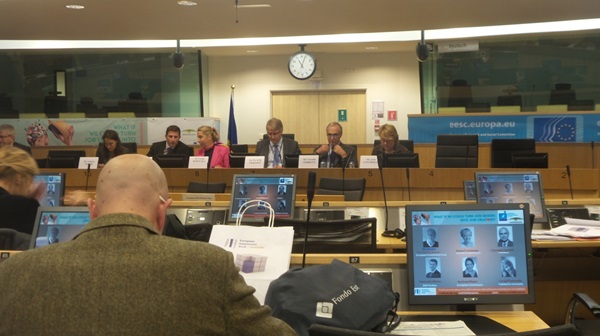
On Tuesday 20 October 2015, the EIB Institute organised the first European Microfinance day in Brussels with a workshop entitled “What if we could turn job seekers into job creators?” This was also a lead into the Ada Annual Symposium which was held yesterday 21 October in Luxembourg and was hosted by the EIB and the Université du Luxembourg.
The first European Microfinance Day started with the presentation of “Fund Helenos” which is a new Investment and Technical Assistance Fund to support, finance and strengthen the equity of small and start-up microfinance institutions in Europe and neighbouring countries. This was followed by a session on regulations and laws for microfinance in the EU.
The moderator, Per-Erik Eriksson, European Investment Fund, introduced the debate by explaining the ongoing need for a homogenous and especially flexible regulatory framework for microfinance including laws for micro borrowers, minimum functional and size requirements, equal opportunities and perhaps self regulation. Corrado Ferretti of PerMicro (Italy) followed with detail on the very high institutional diversity and country centric regulations which are not controlled by the European central bank. Lucija Popovska (Habitat for Humanity International, Slovakia) continued with the explanation that the current microfinance portfolio is estimated at €1.5bn while the need is expected to be €35-40bn.
Samuel Lefèvre (BNP Paribas, France) spoke about access being a key to funding ranging from local bank funding to private investors, ‘passion capital’, public subsidies, crowd funding and social impact bonds. He explained that there are guarantee programs in emerging countries but not in Western Europe.
Turning to regulation and anti-money laundering (AML), Anne Contreras (Arendt & Medernach, Luxembourg) said that Know Your Client (KYC) regulations are well established and in Luxembourg there is the requirement to obtain certification as a Financial Sector Professionals, known as PSF. Indeed, AML duties are enshrined in national law.
Further detailed discussions were held about the pricing of microfinance loans, private individual credits, credit agencies and how to avoid unduly heavy and restrictive regulation. In Europe there are some 105 microfinance institutions with a base value of some €5bn which is a 48% increase. Luxembourg is the No.1 country for microfinance funds or Investments Vehicles (MIVs) (60% are held here), followed by The Netherlands, so the Grand Duchy is already regarded as a hub for the funding side of the equation.
Photo by Clive Munn