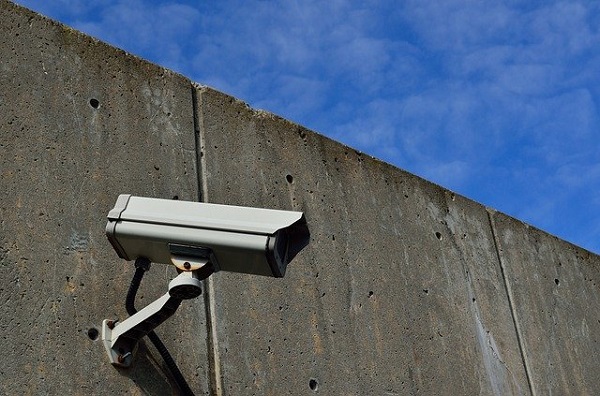
On Friday 15 July 2022, Luxembourg's Ministry of Internal Security announced its decision on the authorisation to maintain video surveillance in existing areas.
The law governing video surveillance entered into force on 19 July 2021. As provided for in the text, the maintenance of video surveillance in existing areas must be subject to ministerial authorisation within a maximum period of twelve months following the entry into force of the said law. Following the impact analyses of the Grand Ducal Police and after consulting the opinions of the actors involved - the State Prosecutor, the Municipal Council and the Advisory Commission, Minister of Internal Security, Henri Kox, in accordance with the procedure of authorisation, informed of its decision as to the maintenance of video surveillance in the existing zones.
Thus, the maintenance of video surveillance in the security zones subject to video surveillance by the Grand Ducal police before the entry into force of the new law, is authorised for the following zones:
- Zone A: Limpertsberg-Glacis district;
- Zone C: Station (Gare) district;
- Zone D: the area in and around the Luxembourg stadium (Stade de Luxembourg);
- Zone F: Adolphe bridge walkway.
Regarding the “Stade de Luxembourg” area, video surveillance will only be activated during large-scale sporting events or high-risk matches. The authorisations are granted for a maximum duration of three years and are valid from the signature of the ministerial order.
Zones B and E, which correspond to Place Hamilius and the Kirchberg Conference Centre (European Convention Centre - ECCL) and surroundings, respectively, are not subject to authorisation to maintain video surveillance. Given the particularity of these areas and following the analysis of the police as well as the opinions of the three aforementioned actors, they have been reclassified as a new area. Regarding the Hamilius zone, the configuration and layout of the premises have changed significantly following the major urban changes in this zone. It is therefore appropriate to reconsider the delimitation of zone B with a view to a possible extension beyond the current limits, respectively the adaptation of the locations of the cameras.
The granting of an operating permit by the Grand Ducal police for these areas will be done according to the procedure provided for by the provisions governing video surveillance in the law on the Grand Ducal police. The procedures relating to new requests for ministerial authorisations for these two areas have already been launched by the Grand Ducal police and will be processed as a priority.
As a reminder, the procedure for applying for an operating license provides that the license be issued on the basis of an impact analysis carried out by the police, which includes a justification of the need for video surveillance and detailed information on the delimitation of the area concerned, as well as the number of cameras desired and their locations. Opinions are also requested from the territorially competent State prosecutor, the Municipal Council and the Advisory Commission for the evaluation of video surveillance.
The Advisory Commission an independent body composed of a representative of the Ministry of Internal Security, the General Police Inspectorate, the Ministry of the Interior, the Ministry of Justice, the Advisory Commission on Human Rights, the Commissariat from the government to data protection, the National Committee for Social Defence and the Luxembourg Association of Criminology.