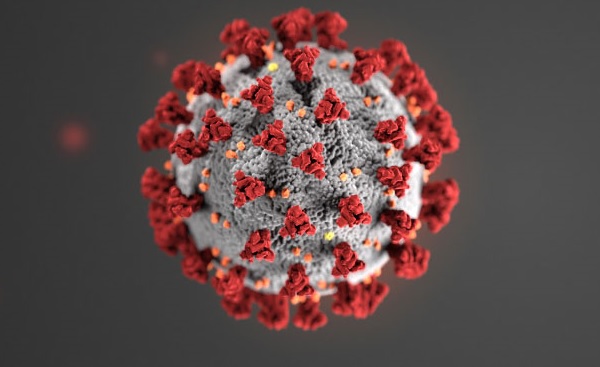
In addition to closing all educational establishments for two weeks from next Monday, they also announced a series of new measures and recommendations in order to protect public health - the evolution of the COVID-19 virus in Luxembourg has resulted in a significant increase in cases in the last 24 hours and the first cases of local transmission.
Concerning hospitals, visits to in-patients are prohibited; however, in the event that such a visit does take place, all necessary protective measures must be taken to ensure the protection of patients and can only be undertaken with special authorisation issued by the management of the hospital. Wherever possible, scheduled visits should be cancelled. Also, leave for all hospital / health sector personnel is recommended to be cancelled.
Diagnostic tests for suspected cases of infection are no longer recommended; instead, tests are being reserved for severe cases or those with complications. In this context, the notion of risk zone is no longer relevant to define a test indication.
Anyone who has been in direct or close contact (<2m for more than 15 minutes) with a confirmed case of infection is to go into auto-quarantine at home for 7 days, followed by a period of 7 days of self-monitoring (resumption of normal activities, but monitoring of body temperature twice a day, or cough, breathing difficulties).
And regarding businesses and public administrations, both are encouraged to continue their activities, as far as possible on the basis of their business continuity plans, in particular with regard to essential services. Teleworking is to be promoted as far as possible and preferably among the vulnerable population.
For such people, the following recommendations apply:
- Postpone unnecessary trips
- Avoid mass events and places where a large number of people gather (in cinemas, concert halls, sports arenas) and where it is not possible to maintain a safe distance of 1 - 2 metres
- Avoid public transport as much as possible.
For state-approved nursing homes and retirement homes, the following recommendations apply:
- The directors of the structures may allow derogations from the prohibition of the right of access and exit, in exceptional cases for relatives and family members, provided that they do not show symptoms.
- Staff showing symptoms should remain at home.
- Anyone entering must disinfect their hands and respect general hygiene rules.
Activities of "senior clubs" are suspended. The activities in day care centres can be maintained. The same is true of support and care networks. Meals on wheels will be maintained.