Following a series of information meetings held in December last year in four municipalities across the Grand Duchy (http://bit.ly/1NTdSpJ), the Luxembourg government has decided to urgently implement welcome centres for international asylum seekers in Diekirch, Junglinster, Mamer and Steinfort.
Following this decision, as well as the resolution to implement the necessary groundwork through the use of land use plans, state services have initiated the plans and prepared the relevant evaluation and authorisation procedures.
In regard to the Steinfort site, the Ministry of Sustainable Development and Infrastructure tasked an engineering consulting firm with putting together an evaluation summary of the incidences caused by the project on the environment. The study concluded that there had been no major incidences.
In accordance with Articles 2 and 3 of a law which was modified in 2008, the minister in charge of creating this land plan, François Bausch, decided in November 2015 that a systematic environmental evaluation was unnecessary. However, on 7 September 2016, the administrative tribunal overturned this decision considering the Steinfort site due to the fact that at the time the relevant environmental information which the minister possessed was incomplete.
In fact, during the process of adapting the land plan, it turned out that a protected species, the greater mouse-eared bat, was present in the area around the planned site for the refugee centres. Neither the engineering consulting firm nor the Minister of Sustainable Development and Infrastructure were aware of this at the time of the decision.
Considering the administrative tribunal’s decision, the government decided on 15 September 2016 to appeal against it due to the fact that this could in fact create numerous legal uncertainties. The government remains of the opinion that such evaluation summaries should only be carried out in the case of specific terrain which is favourable to protected species. The tribunal’s decision could lead to an indefinite number of lengthy studies which are disproportionate to the nature of the 2008 law.
In the meanwhile, the crisis in the Middle East, especially the conflict in Iraq and Syria, continues to generate a significant influx of migrants towards Europe.
Taking into account these new circumstances and the delays caused by the administrative tribunal’s decision, the government no longer plans to go ahead with the land use plans and instead will carry out more detailed environmental studies on the site in question before taking a more sustainable approach. One proposal has been to lodge asylum seekers in other places in the municipality in order to reduce the demand for the welcome centre on the land use site.
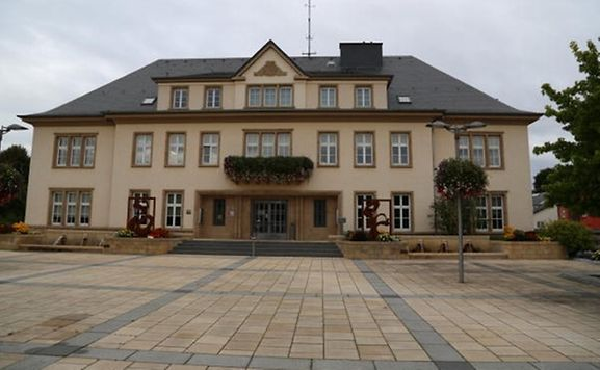
The local council in Steinfort has declared itself in favour of welcoming refugees in their area and has informed Minister Bausch that the municipality will create a list of empty homes which could be used to house asylum seekers.
The government remains convinced that a joint effort to implement welcome structures for refugees is the best solution for all those concerned. Most importantly, the government aims to guarantee legal security in regard to environmental incidences, and also put in place such welcome structures as soon as possible.