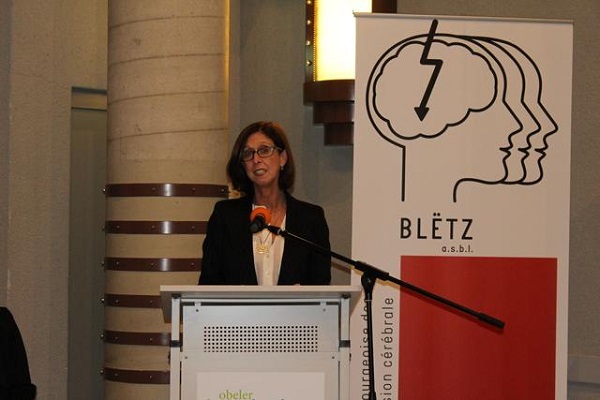
On the occasion of World Stroke Day, held on 29 October 2015, the Blëtz association organised a conference focused on the theme of women and the risk regarding strokes.
Cerebrovascular disease is the fourth leading cause of death and the leading cause of acquired disability in the Grand Duchy, where is it estimated that 1,400 people suffer a stroke annually, indicating around four individuals every day.
Whilst strokes often result in severe disability, they can also have significant psychosocial impacts. The subsequent loss of autonomy often experienced can result in necessary home care, job loss, financial problems, social isolation, depression and sexual problems.
It has been found that women are at a greater risk of mortal stroke than men, with six out of ten stroke-related deaths occurring in women. This is due to the strokes occurring at a later age, which often results in more severe consequences.
"Women, even more affected than men, should take the time for their health," commented Minister of Health, Minister of Equal Opportunities, Lydia Mutsch, at the conference. "It was found that women's support is usually done later and that rehabilitation is often overlooked; they do not receive care as well suited to their needs as men, even if they respond just as well to treatment".
Risk factors for strokes, such as diabetes, migraines with aura, atrial fibrillation, depression and high blood pressure, are more prevalent amongst women. Many risk factors are gender-specific, including pregnancy, preeclampsia or high blood pressure during pregnancy, the use of birth control pills, hormone replacement therapy for menopause, hormonal changes and gestational diabetes. One in five women is therefore at risk of stroke, against one in six men.
Additionally, whilst women are generally more familiar with the symptoms of a stroke and the corresponding treatment than men, they tend to take more time to arrive at the hospital after the onset of symptoms and are less aware of the fact that treatment must be initiated within 4 1/2 hours after the onset of the stroke.
The Health Minister therefore appealed to all stakeholders, including individuals, physicians and other health professionals, "to do everything to eliminated these equalities which still exist today".
The most important element in the treatment of acute strokes is the rapid transfer to a specialist neurological hospital unit dedicated exclusively to strokes. "A stroke is an emergency, calling for help immediately on 112 is saving numerous lives!" urged the Minister.
Stroke can be prevented through lifestyle changes, but women require specific information related to their gender in order to benefit from preventative measures, as well as acute and long-term care and support services. "Stroke is no different between men and women and concerns us all," concluded Lydia Mutsch.
Photo by Ministry of Health (Lydia Mutsch)