On Monday 26 October 2015, High Representative Federica Mogherini chaired the 'Foreign Affairs' Council on development training.
The Luxembourg Presidency of the Council of the European Union outlined and prepared the agenda, one of the key items of which was policy coherence for development. The meeting was allocated a whole day in order to fully review development policy and humanitarian aid in the second half of 2015.
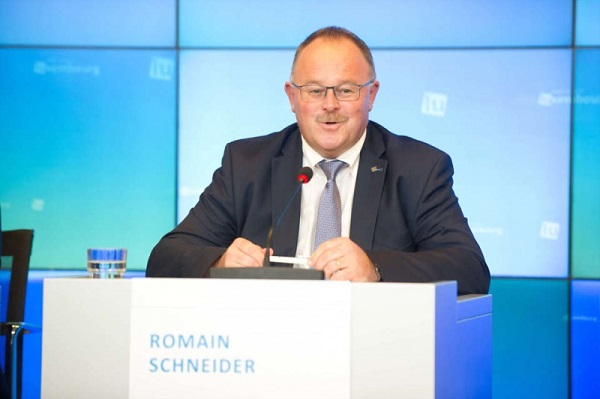
The Council adopted the conclusions in relation to the biannual report of the European Commission. The priority was operationalised by the Luxembourg Presidency in different sectors of the Council. Luxembourg Minister for Cooperation and Humanitarian Action, Romain Schneider, joined High Representative of the Union for Foreign Affairs and Security Policy, Vice President of the European Commission, Federica Mogherini, in appealing to other ministers to integrate development into their board meetings.
During the Council meeting, Minister Schneider encouraged colleagues to bring the subject of policy coherence for development in other sectors, having himself participated in the Informal Energy Council and the 'Justice and Home Affairs' Council. The Dutch Presidency, which will be taken up in January 2016, stated its intention to continue promoting the issue.
At the Council meeting ministers prepared the development component of the Valletta summit concerning aspects of migration, with a view to developing solutions for the medium and long term.
Also on the agenda was the World Humanitarian Summit to take place in May 2016 in Istanbul. The Luxembourg Presidency received a ministerial mandate to agree strong common responses to influence the preparation of the summit. The monitoring and implementation of the 2030 Agenda were discussed among the 28 Development Ministers and Environment Ministers at a joint lunch.
The close collaboration with the Latvian Presidency also culminated in an adopted 'Gender' action plan for the period 2016-2020, constituting a priority in Luxembourg's cooperation activities in the Agenda 2030 and also in the development activities of European institutions.
In terms of EU relations with African, Caribbean and Pacific (ACP) states, it was reported that public consultation is underway concerning the EU's future relations with the 79 countries of the latter. Discussions are focusing on the added value of an agreement on trade, development and diplomatic instruments. Divergent views have been expressed in first ministerial discussions to this effect.
Photo by eu2015lu (Minister for Cooperation and Humanitarian Action, Romain Schneider)