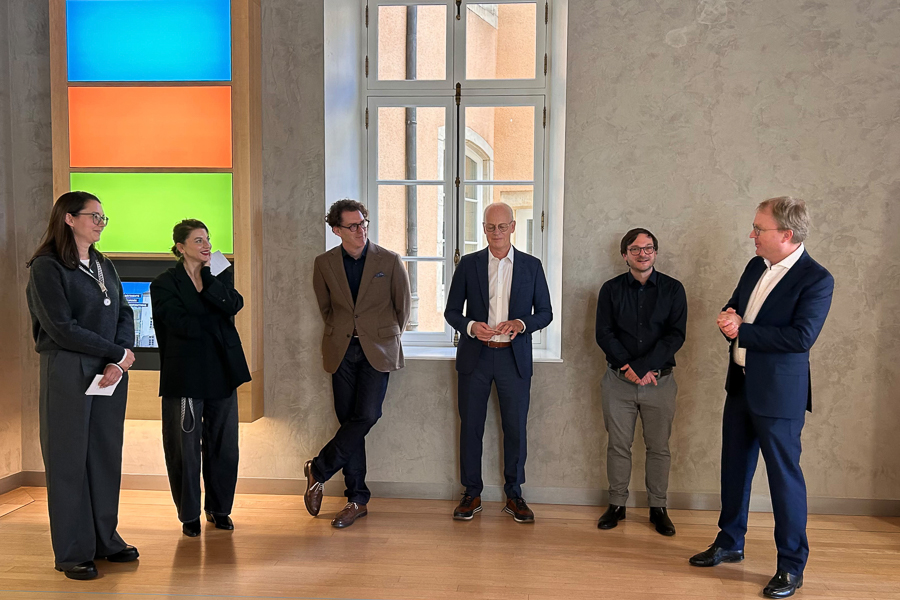
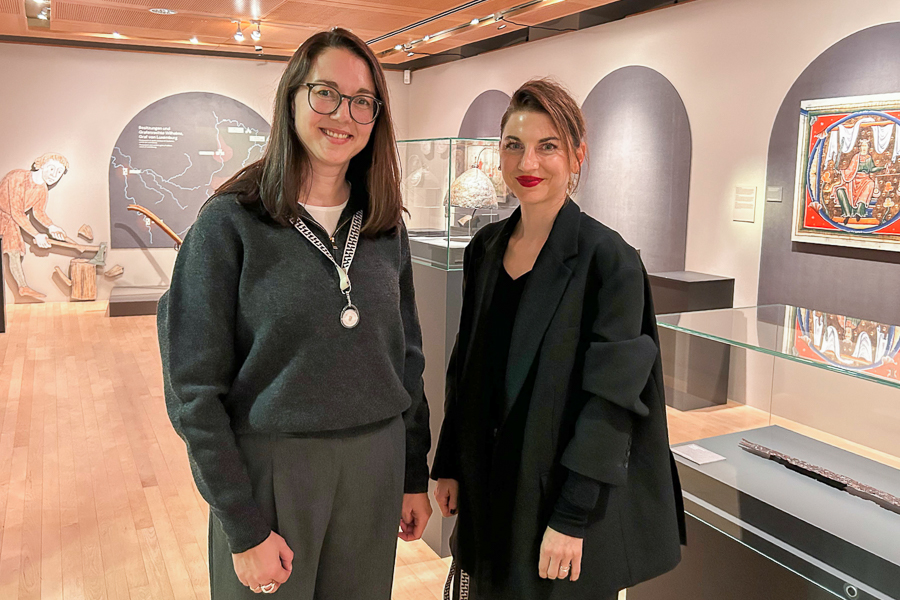
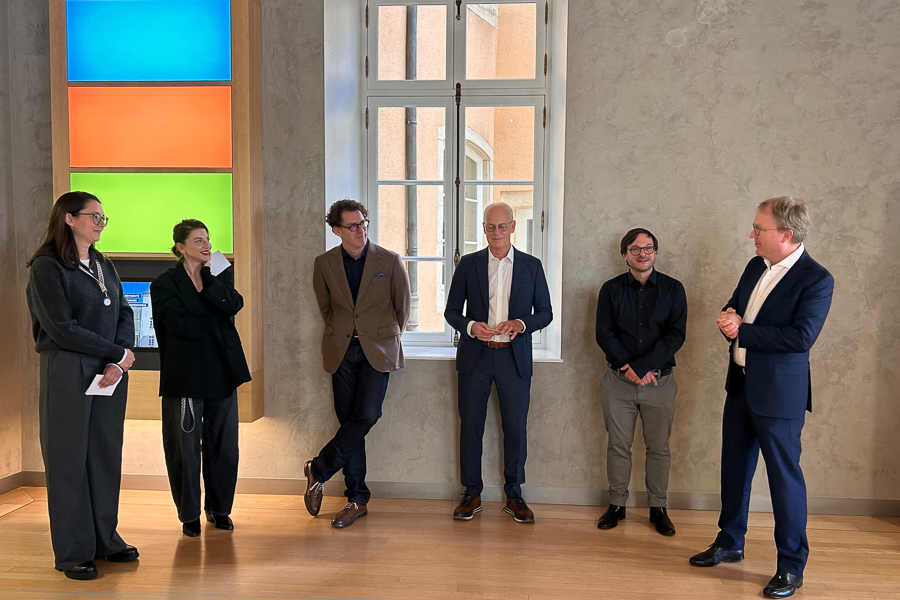
 (L-R) Sanja Simic; Anne Hoffmann; Pit Péporté; Michel Margue; Antoine Lazzari; Boris Fuge;
Credit: Elza Osmane, Chronicle.lu
(L-R) Sanja Simic; Anne Hoffmann; Pit Péporté; Michel Margue; Antoine Lazzari; Boris Fuge;
Credit: Elza Osmane, Chronicle.lu
On Thursday 8 October 2026, the Lëtzebuerg City Museum opened a new exhibition entitled “FUNDATIO – The Origins of the County of Luxembourg in the 12th Century”, exploring Luxembourg's development during the Middle Ages and the people who shaped its early history.
Open to the public from Friday 9 October 2026 until Sunday 11 July 2027, FUNDATIO takes visitors back some 900 years, when Luxembourg's counts were establishing their authority amid struggles for power between noble families, the Church and the Holy Roman Empire.
The exhibition was presented by the Lëtzebuerg City Museum's communications and press officer Boris Fuge, scientific curator Professor Michel Margue, curators Anne Hoffmann and Sanja Simic, assistant curator Antoine Lazzari and historian and historical consultant Pit Péporté, among others.
Developed in collaboration with historians, curators and specialists, the exhibition centres on a historical document dating from 1123, in which the title "Count of Luxembourg" appeared for the first time. The charter records how Count William of Luxembourg founded the Abbey of Our Lady (Altmünster), fulfilling the wishes of his father, Conrad.
The abbey became an important religious centre and burial place for the Luxembourg dynasty before its destruction during military conflict in 1543. Construction of its successor, the Benedictine Neumünster Abbey in Luxembourg-Grund, began in 1606.
Beyond political struggles, the museum aims to offer visitors an “immersive experience”, allowing them to discover everyday medieval life, from how castles functioned to the roles of counts, advisers, servants, craftsmen and farmers.
Visitors can also learn about the role of noblewomen, who could own property, manage estates and govern territories in their husbands' absence, as well as the relationship between political and religious authorities at that time.
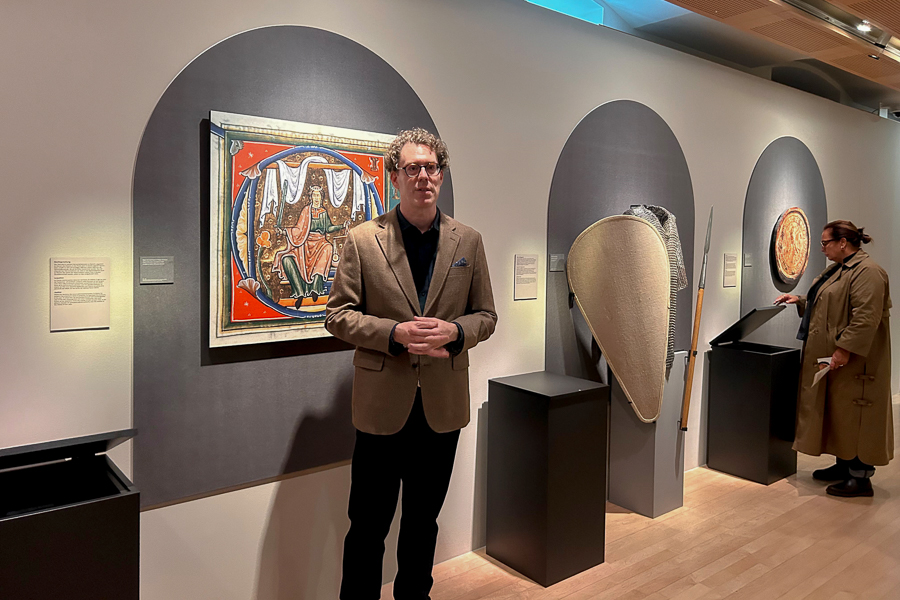
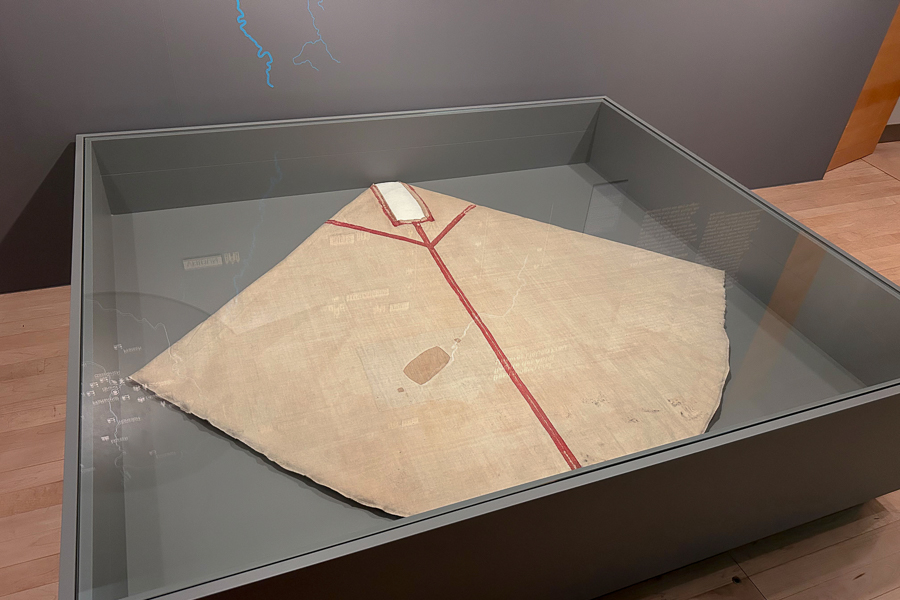
FUNDATIO features 87 objects, around two-thirds of which are original artefacts and documents from the twelfth century, while the remaining third consists of reproductions. The museum collaborated with 21 international lending institutions from France, Belgium and Germany, alongside Luxembourgish museums, archives and archaeological institutions.
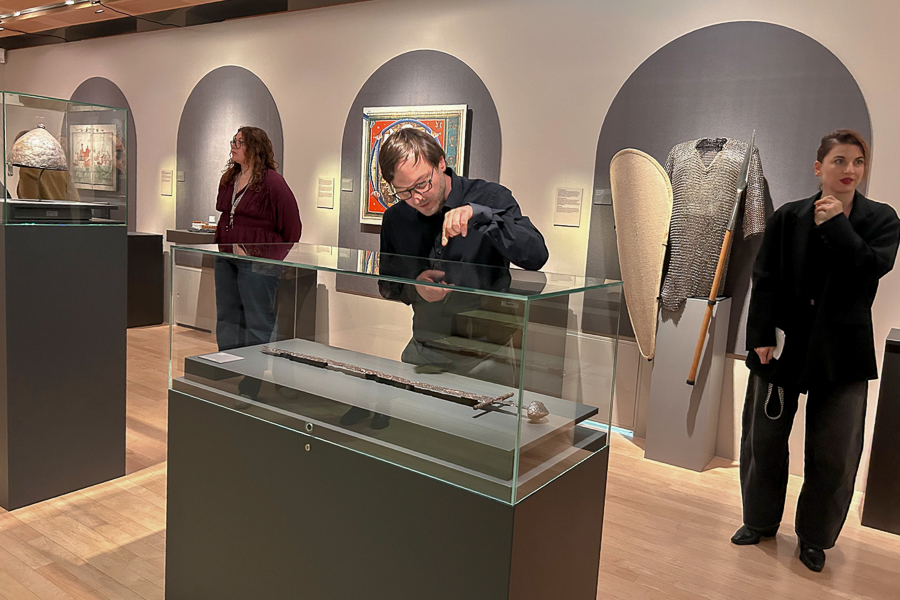
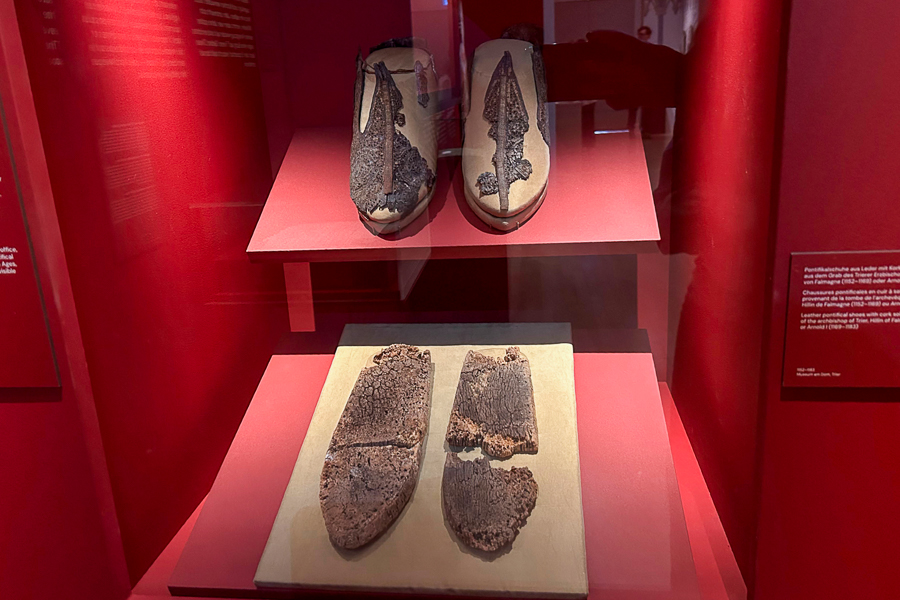
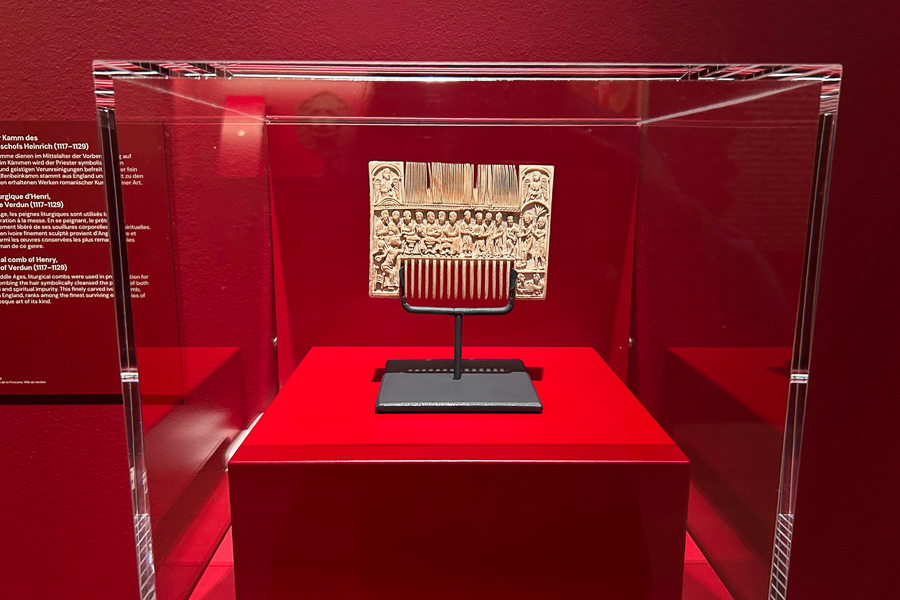
Among the historical highlights are the original 1123 charter, a medieval nasal helmet, religious objects including a lead seal of Pope Adrian IV and a sword that has never previously been exhibited. Antoine Lazzari explained that the sword underwent extensive restoration specifically for the occasion. Other objects include medieval chess pieces, decorated metalwork and items used in religious ceremonies.
Six of the loaned objects will only remain on display for several weeks or months due to conservation requirements.
Speaking with Chronicle.lu, curator Anne Hoffmann stressed that the museum wanted visitors to experience the period rather than simply read about it. The aim, she explained, is to allow people to "dive into the twelfth century".
"We want to get rid of the myth that medieval times were grey and pale," she said, explaining that the use of colours and immersive elements challenges the familiar image of a dark and colourless Middle Ages.
Boris Fuge further explained about the use of artificial intelligence (AI) in creating illustrations for the exhibition. He said that very few illustrated historical sources have survived. To recreate figures such as counts, noblewomen and clergy, the museum generated illustrations based on medieval chronicles and religious manuscripts from across Europe.
He also addressed the common association of Luxembourg's beginnings with Count Siegfried's acquisition of the Bock promontory in 963, pointing out that the territory only gradually developed into a political centre, with the title "Count of Luxembourg" first appearing in a document in 1123.