 Niamh Huggard;
Despite a gradual decline in the number of new infections confirmed in Luxembourg, COVID-19 (coronavirus) continues to affect a large part of the population; to date, 3,115 people have tested positive and 52 people have passed away from coronavirus in the Grand Duchy.
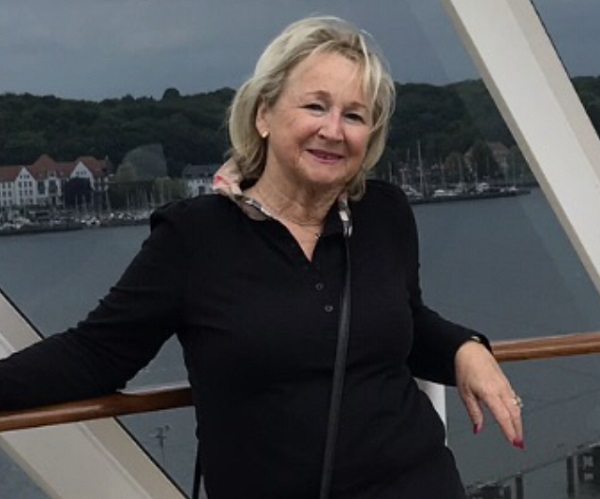
Niamh Huggard, a 65-year-old retired European civil servant living in Itzig, is the latest victim of the disease to share her experience with Chronicle.lu.
When were you first aware that you may have contracted COVID-19, and what were the initial symptoms?
Niamh: Two days after the Prime minister asked us all to go into isolation, I started to cough. Then as the week progressed my cough worsened, and although I had no temperature my breathing started to become a little laboured. As I had suffered from Pleurosy many years ago and am prone to chest infections, I phoned my doctor on Monday 23 March and she sent me to Zitha clinic for the virus test, which came back positive that evening.
Had you been practising self-isolation and/or social distancing up to that point?
Niamh: We are four adults isolating together and only went out for walks in the forest with the dog and just to get provisions. We protected ourselves with hand gel and disinfectant and did not go near anyone else.
How did the symptoms evolve and how did it affect you?
Niamh: During the week after diagnosis, my temperature raised and I was constantly shivering, nauseous, no sense of taste or smell.
Did you contact the health/medical service in Luxembourg? Were you hospitalised? Where? If so, for how long? Were you in intensive care?
Niamh: My breathing got so bad that I was taken to hospital by ambulance. At this stage I was vomiting but as I had not eaten anything except a little bread for the past week I was dry wretching and shivering with cold. I was choking every time I tried to breathe so was put on oxygen while they did a series of tests to rule out a pulmonary embolism, etc.
Please tell us about your experience with the health/medical services in Luxembourg in this regard.
Niamh: After admittance, I was put on oxygen and put on a drip and given antibiotics for pneumonia along with a trial drug called hydroxchloroquin. I was isolated in a sterile room. My oxygen levels were monitored regularly, as well as my other vital signs. The care I received was excellent. The medical staff were very caring and efficient and well protected against the virus. Every time someone came into my room they were covered in an extra layer of protective clothing which they then binned before leaving my room. Nothing that came into my room left my room. Everything, including food and eating utensils were binned and collected by suitably gowned cleaning staff every day. The hygiene and attention paid to containing the virus was excellent.
For how long did the symptoms last?
Niamh: After five days in hospital, my oxygen levels were good enough for me to be released. They had brought an X-ray machine into my room to check my lungs the previous day and although there were still signs of the virus, as my oxygen levels were good they let me go home. The nausea stopped the day before my release but my sense of smell and taste have not fully returned yet. I am still coughing but I feel no pressure on my lungs when I breathe in now. I am taking a cough bottle which the hospital prescribed for me. On Tuesday, they came to my house to do blood tests and also to test for the virus. The test was positive so I must isolate for a further fourteen days. The aftercare is second to none. Every day I go to an online app and answer a series of questions, which enables the doctors to see my progress. Any problem and they contact me immediately. My own doctor is in contact twice a week to follow up also.
Were any other family members affected?
Niamh: My husband's doctor told him he most definitely had it as he had mild symptoms for a week and, as we were in close proximity, it would be amazing if he had not contracted the virus. My son and daughter, who are also living with us, also had mild symptoms and are all healthy now, so we believe they too had a mild version of the virus.
What did you do to pass the time while recovering?
Niamh: As I have had very low energy, I slept a lot but now as I feel fine I go out in the garden, read, watch TV and we play family board games to while away our isolation.
For how long do you need to remain quarantined/in isolation?
Niamh: I have another two weeks of isolation and am then looking forward to a walk in the forest with my dog.
Do you have any advice for our readers as to what to do / what not to do in relation to avoiding COVID-19?
Niamh: Stay home unless it is necessary to go out. Wear a mask and protective gloves when going out for a walk or to the shop. Keep a good distance from other people. Disinfect appliances, phones, iPads, etc., all products which you bring into your house. This virus is rampant and it needs to be contained until they find a vaccination against it. We are very lucky here in Luxembourg that the authorities acted immediately in trying to contain it. I am most grateful to the medical service here for the wonderful, prompt and effective care I received and I thank them from the bottom of my heart for all they have done for me during this nightmare.
Niamh Huggard is among the 374 COVID-19 patients in Luxembourg to have been discharged from hospital to date. At present, 220 people who have or are suspected to have the virus remain in hospital, including 30 patients in intensive care.
To date, Luxembourg's authorities have carried out a total of 27,521 tests; on 1 April 2020, testing was expanded to include anyone with symptoms.