 Credit: Frederic Triest / Fairtrade Lëtzebuerg
Luxembourg NGO Fairtrade Lëtzebuerg has called for greater transparency concerning companies working with conflict minerals (known as 3TGs: tin, tungsten, tantalum and gold ore).
According to the NGO, some European Union (EU) member states are on the verge of further weakening the EU regulation on the responsible supply of 3TG minerals at the national level by hiding the list of companies subject to it. While the Luxembourg government is currently preparing the national implementation of the European regulation on conflict minerals, Fairtrade Lëtzebuerg has requested that it reveal its position in this context and that it ensure the annual publication of the full list of national companies and importers subject to European regulations. The NGO has claimed that it seems that 20 Luxembourg companies would be affected by this European regulation at present.
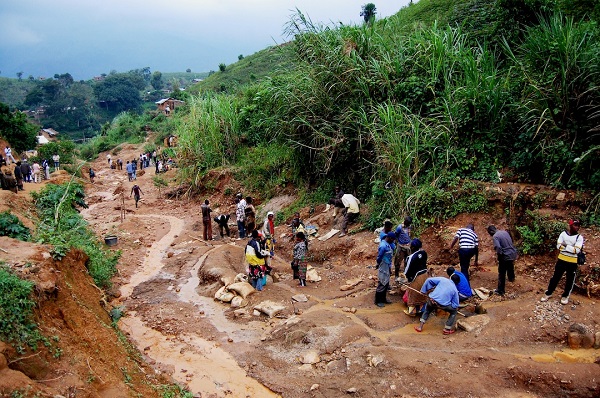
To put things into context, Fairtrade Lëtzebuerg has recalled that many everyday products, such as mobile phones and computers, are made from tin, tantalum, tungsten or gold. Behind these minerals, however, hides a little-known reality: their extraction and their trade are often linked to conflicts and human rights abuses, such as the slavery of diggers, the exploitation of children, torture and rape, according to the NGO.
In order to break the vicious circle between the trade in minerals and the financing of conflicts, Members of the European Parliament (MEPs) reached an agreement in 2017. The regulation called for mandatory “due diligence” checks for importers of tin, tungsten, tantalum and gold and their ores from conflict or at-risk areas. The NGO has said that it considers the EU regulation on responsible supply of 3TGs from these areas as an important first step towards the establishment of chains of supply free of human rights violations for these important minerals. The regulation will enter into force in 2021. Before that date, EU member states must adopt measures to ensure
implementation of the regulations.
However, Fairtrade Lëtzebuerg has argued that first implementing measures discussed by some member states risk diluting the effectiveness of the regulation. The NGO added that some member states seem to adopt a loose interpretation of the text of the regulation and do not seem willing to publish the list of national companies which are subject to the regulation. According to the NGO, this will make it impossible for civil society actors, both in Europe and in producing countries, to follow up on companies' commitments and to raise "justified concerns", as provided for in the regulation. Hiding the list of domestic importers would also create unequal conditions of competition between firms from different sizes.
Fairtrade Lëtzebuerg thus maintained that transparency is a fundamental requirement for effective due diligence. With a view to the next meeting of the European Commission's expert group on responsible supply of 3TG, the NGO has called for leaders to ensure that the list of domestic importers subject to the regulation is not only made available to the competent authorities, but also published annually. In addition, referring to the position of the initiative for a duty of vigilance in Luxembourg, of which Fairtrade Lëtzebuerg is a founding member, the NGO has called on the Luxembourg government and the EU member states for the implementation of effective sanctions for companies which do not comply with the information obligations provided for by EU regulation. Sanction mechanisms or legal consequences must be effective,
proportionate and dissuasive to ensure the effective application of the regulation. Finally, the description of the verification criteria should clearly refer to the current OECD mineral guidance, according to the NGO.
Fairtrade Lëtzebuerg concluded that the Luxembourg government, which is a candidate for a seat on the UN Human Rights Council, must therefore seize this opportunity to show leadership and take part in a constructive dialogue in order to convince the member states to commit strongly in favour of more responsible and transparent supply chains, thereby contributing to respect for human rights. This objective can only be achieved through coherent political choices, according to the NGO.