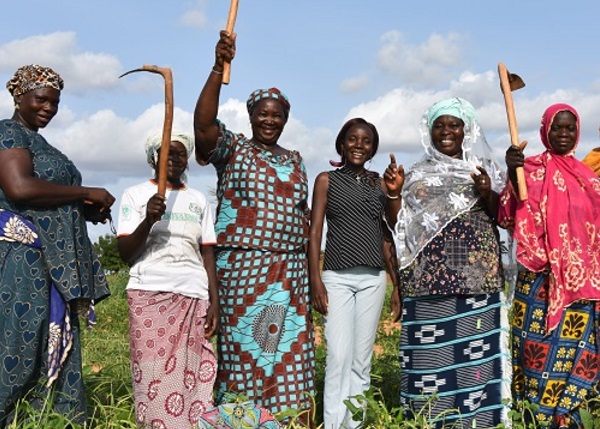
 Credit: SOS Faim Luxembourg
On the occasion of International Women's Day, SOS Faim Luxembourg has emphasised the role of women in the fight against hunger and poverty.
The Schifflange-based NGO has thus called for the strengthening of women's rights in developing countries to better combat such issues. Women take on a multitude of roles in the agricultural community, some of which are essential to food security and the well-being of the family. The NGO has stated that, as mothers, farmers, teachers and entrepreneurs, these women possess the keys to a world without hunger. Yet, they remain victims of discrimination.
In developing countries, 79% of economically active women produce food through agriculture. Women make up 43% of the agricultural workforce. They participate in all stages of food production and produce most of the food consumed locally. While men generally plow fields and drive draft animals, women do the majority of other work: seeding, weeding, fertilising and harvesting staples such as rice, wheat and maize. They also provide 60-80% of the family's food production and are heavily involved in production transformation activities as sources of family income.
However, the NGO has highlighted that the major role played by women in these areas often goes unrecognised, as they are faced with unequal access to basic resources and services. They have very little access to education, often marry very young and many face domestic violence. In many societies, tradition and legislation prevent women from owning land even in the event of their husbands' deaths. Without land as a guarantee, women have trouble accessing credit. And without credit, they often find it difficult to obtain basic inputs or to invest in improvements to the irrigation system.
As their role in agricultural production is poorly recognised, women rarely have access to training. They endure painful working conditions. In Asia and Africa, studies have shown that they work up to 13 hours more per week than men, and for much lower incomes (up to 50% difference). SOS Faim has maintained that the elimination of these gender disparities would significantly improve the livelihoods of rural people in general. According to the UN Food and Agriculture Organisation (FAO), the yield of family farms could increase by 20-30% if women had the same access to productive resources as men.
The NGO thus concluded that strengthening women's rights is the key to improving the food security of the world's 875 million hungry people, mostly in developing countries.