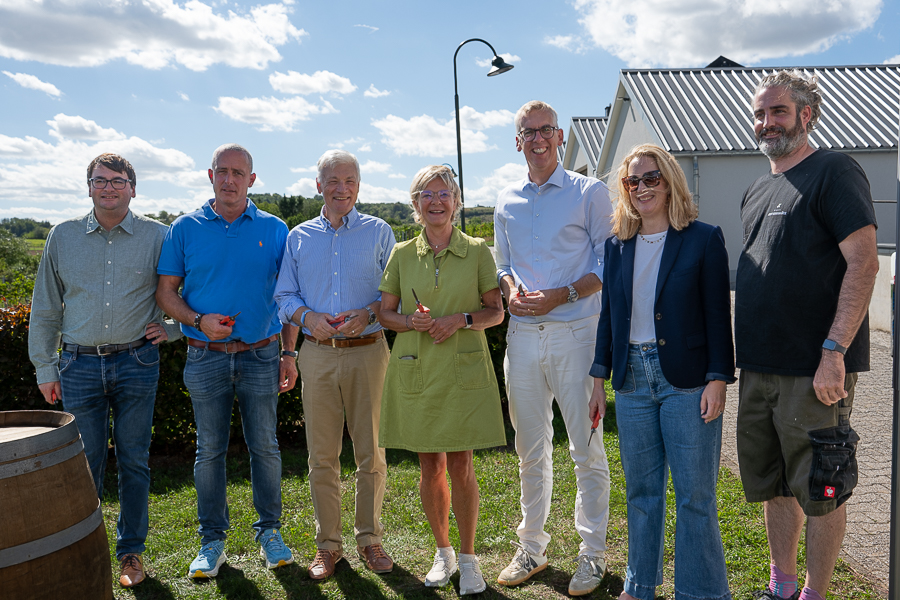
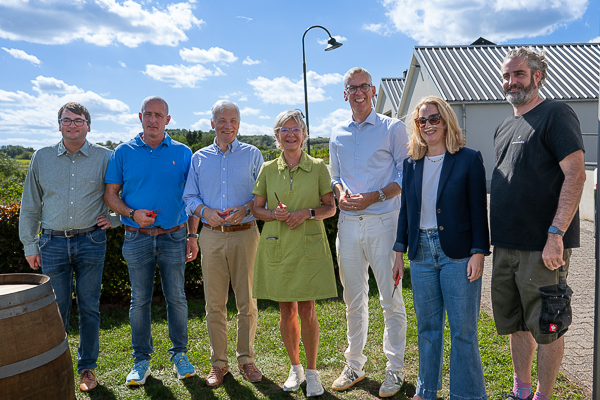
 (L-R) Serge Fischer, Director of the Wine Institute (IVV); Josy Gloden, (President of Vinsmoselle); Claude Wiseler; Martine Hansen; Leon Gloden; Isabelle Gales, Caves Gales; Jeff Konsbruck, Association of Private Winegrowers;
Credit: Ali Sahib, Chronicle.lu
(L-R) Serge Fischer, Director of the Wine Institute (IVV); Josy Gloden, (President of Vinsmoselle); Claude Wiseler; Martine Hansen; Leon Gloden; Isabelle Gales, Caves Gales; Jeff Konsbruck, Association of Private Winegrowers;
Credit: Ali Sahib, Chronicle.lu
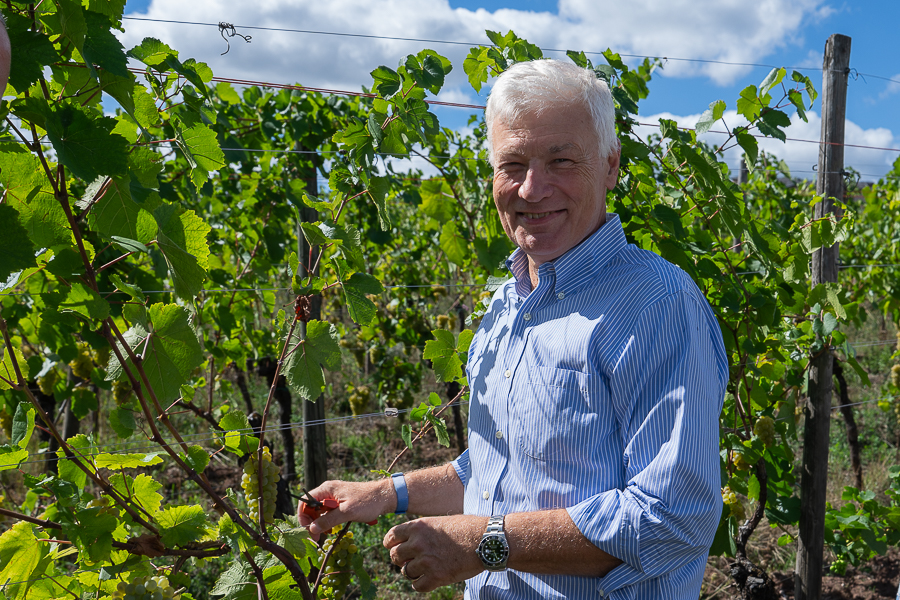
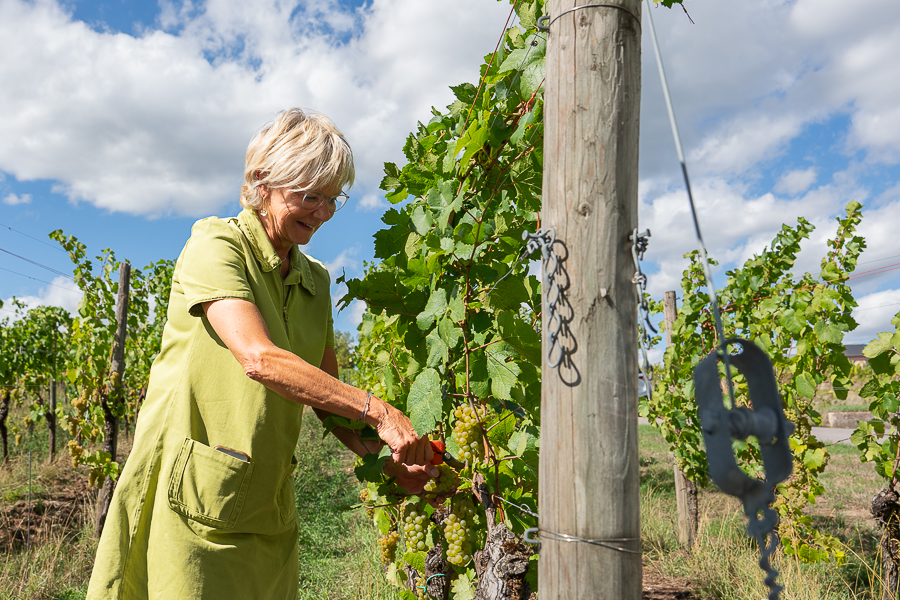
On Friday 4 September 2026, Luxembourg’s Minister of Agriculture, Food and Viticulture, Martine Hansen, Luxembourg Minister for Home Affairs, Leon Gloden and President of the Chamber of Deputies, Claude Wiseler, participated in the annual grape harvest of the Institute of Viticulture in Remich.
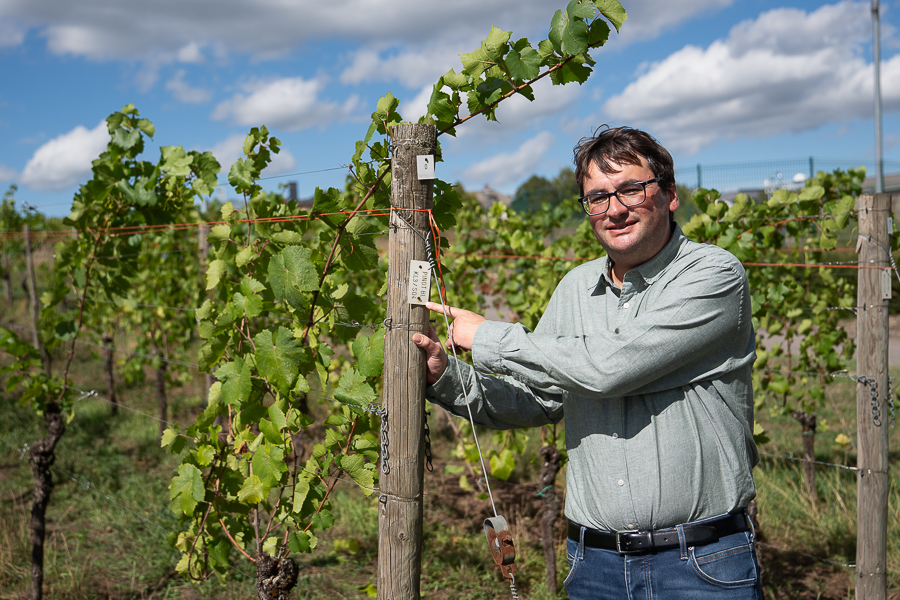
Along with representatives of Domaines Vinsmoselle, Privatwënzer Lëtzebuerg, and the Luxembourg Federation of Wines and Spirits, Minister Hansen and Claude Wiseler inspected the vines and this year’s crop of grapes destined to be transformed into wines and crémants.
Minister Hansen noted that this year has represented a challenge for winegrowers and praised the commitment of the sector after a summer marked by heatwaves and drought.
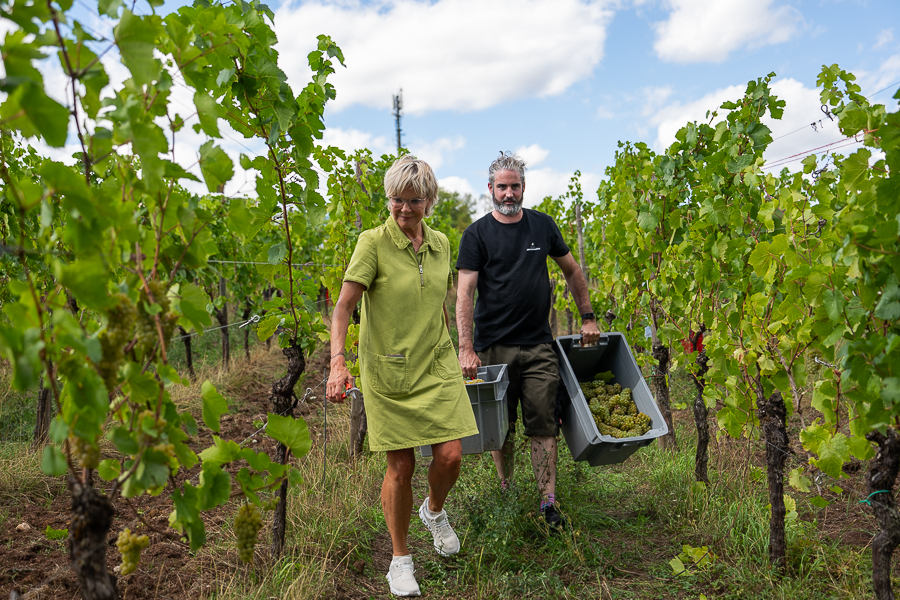
According to the Ministry of Agriculture, Food and Viticulture, the 2026 vintage has the potential to produce expressive, very high-quality wines, with a crop aided by more moderate temperatures and sufficient rainfall towards the end of August. However, due to the lack of water over the growing season, they remain small and winegrowers expect harvested quantities to be below average. The first grapes were harvested around Monday 17 August in Wintrange, representing a new record for early harvesting of the grape crop.
This year, Luxembourg's national employment agency ADEM organised the assignment of hundreds of seasonal workers to support the winegrowers in bringing the grapes into the winery.
During the visit to the vineyard, Minister Hansen spoke with winegrowers about the future prospects of Luxembourg viticulture, as well as issues related to promoting local wines and sustainability.
Martine Hansen remarked: “I wish everyone a very successful grape harvest and a high-quality crop. May this season be marked by the success, solidarity and passion that inspire our vineyards. The year 2026 has brought extremely difficult conditions. We can no longer deny climate change. Nevertheless, I am convinced that this exceptional vintage will reflect the expertise, motivation and passion for the profession demonstrated by our winegrowers. As for the long-awaited administrative simplifications, I am pleased that our bill aimed at reducing the administrative burden for seasonal and occasional work in the agricultural, winegrowing and horticultural sectors is progressing through the legislative process and will soon be placed on the agenda of the Chamber of Deputies.”
Speaking to Chronicle.lu, Minister Hansen highlighted the early harvest and said: “This year is really an extraordinary year, where the start of the récolte (harvest) has already started.”
She added: “This year we do not have a lot of grapes but the quality is really extraordinary. So, I think that we will have really an excellent vintage in 2026.”
Chronicle.lu also spoke with Serge Fischer, head of Luxembourg's Wine Institute (Institut d'état Viti-Vinicole, IVV), who emphasised that the occasion is “important for the wine growers because it is publicity for the wines and for the products of the Luxembourgish Moselle,” adding that the traditional meeting of the country’s Minister of Agriculture, Food and Viticulture and representatives of the wine sector helps to “show the nation and interested citizens that the wine harvest has started and to give an impression of the quality [of the vintage].”
According to the 2025 Viticultural Census, Luxembourg’s vineyard areas, which currently produce grapes for viticultural, total 1,165 hectares. The most widely cultivated grape varieties are:
• Rivaner (209 hectares)
• Pinot Gris (189 hectares)
• Auxerrois (174 hectares)
• Pinot Blanc (155 hectares)
• Riesling (153 hectares)
• Pinot Noir (130 hectares)
• Chardonnay (59 hectares)