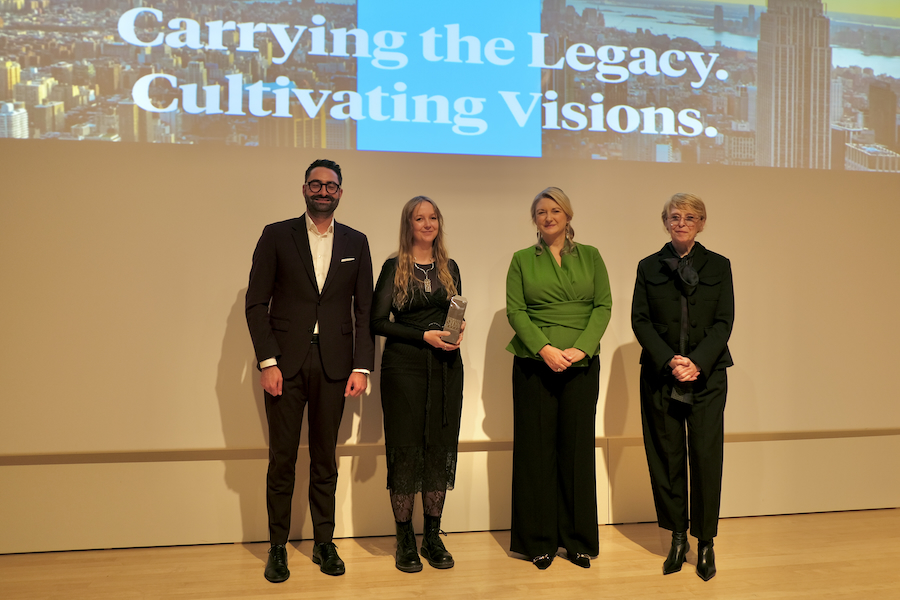
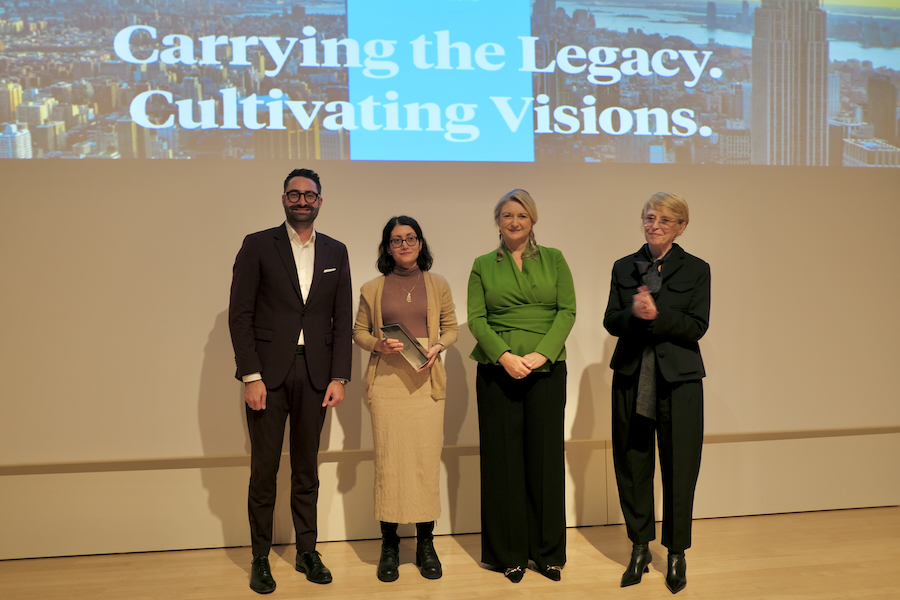
 (L-R) Luxembourg Minister for Culture Eric Thill; Nazanin Hafez; Grand Duchess Stéphanie; Françoise Poos, President of the Edward Steichen Award Luxembourg association;
Credit: Steven Miller, Chronicle.lu
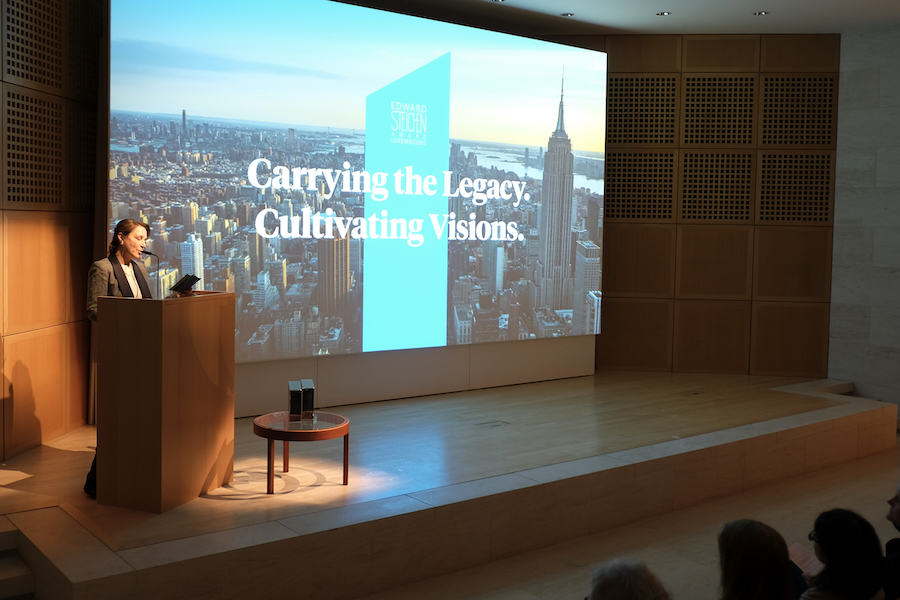
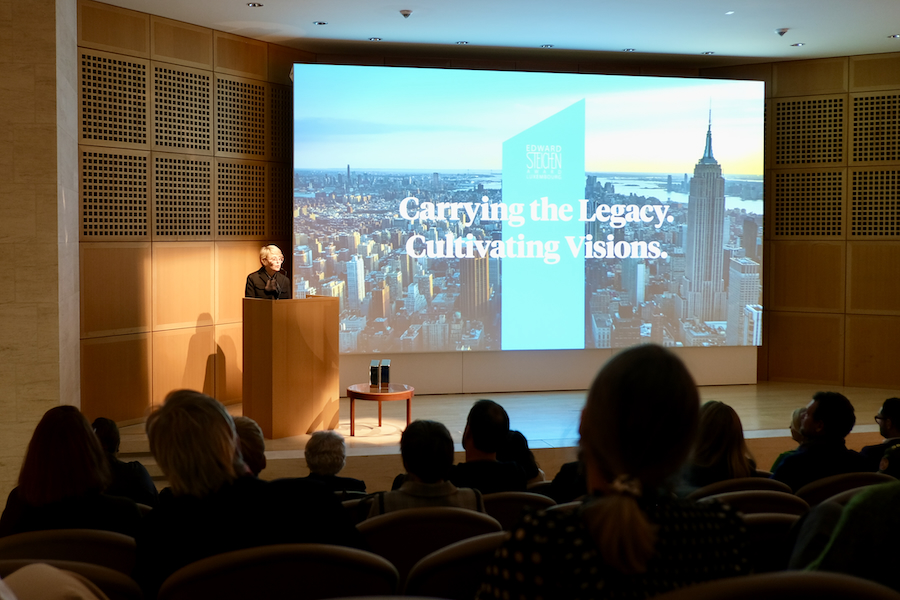
On the evening of Tuesday 27 October 2026, the Musée d'Art Moderne Grand-Duc Jean (MUDAM) in Luxembourg-Kirchberg hosted the presentation of the 2026 Edward Steichen Award, in the presence of Grand Duchess Stéphanie.
The ceremony, presented by Natasha Ehrmann, welcomed around 100 attendees, including Minister for Culture Eric Thill and Mayor of Luxembourg Lydie Polfer and president of the Edward Steichen Award Luxembourg association (ESAL) Françoise Poos.
The biennial award consists of two main contemporary art and photography prizes that support emerging artists with residencies at the International Studio and Curatorial Program in Brooklyn, New York (US):
⁃ Edward Steichen Award European Resident - Designed for European artists living and working in Luxembourg or the greater geographical region surrounding the country. It includes a six-month residency in New York.
⁃ Edward Steichen Luxembourg Resident in New York - Added in 2011, this prize is supported by the stART-up fund of the Œuvre Nationale de Secours Grande-Duchesse Charlotte and specifically recognises artists of Luxembourg origin or artists living and working in Luxembourg. It includes a four-month residency in New York along with a grant.
Natasha Ehrmann began by welcoming the attendees and announced: “Tonight we celebrate two artists whose work offers distinctive ways of looking at the world around us and the opportunities this award creates for artist exploration, new encounters and new perspectives. We are also here to celebrate a connection that remains central to the award, the connection between Luxembourg and New York so closely associated with Edward Steichen’s own life and work and one that continues to inspire new generations of artists.”
Bettina Steinbrügge, Director of MUDAM, then gave a speech in which she spoke of Edward’s Steichen’s origins in Luxembourg and noted, “his path reminds us that a place of birth does not define the limits of the horizon and that a singular vision can be found well beyond its time and country.”
On the subject of the award she highlighted “it is not only about distinguishing an artistic work, it is also about giving an artist the possibility to go further, to explore new paths, to take risks and to make others know. When an artistic career is built on its own, it needs to meet confidence and sometimes a decisive occasion to take a new step.”
In her speech, Françoise Poos thanked this year’s jury, which consisted of Dr. Nadia Ismail (Director at Kunsthalle Giessen), Melinda Lang (Director of Programs and Exhibitions at ISCP), Clément Minighetti (independent curator) and Michèle Walerich (Œuvre Nationale de Secours Grande-Duchesse Charlotte / Luxembourg), as well as the other members of ESAL and staff at MUDAM for their hard work in making the award possible.
“Steichen could not have imagined that more than a century after he left Luxembourg, a prize bearing his name would give young artists the time and space to work far from home but that is what part of his legacy has become,” remarked Françoise Poos.
Minister Thill spoke of Edward Steichen’s legacy and his influence beyond photography. He said: “His open-mindedness and his innovative approach to photography, and to art in general, are reflected in the richness and diversity of his artistic career... It is therefore quite natural that his name is also associated with a prize that distinguishes and supports young artists from diverse disciplines and offers them the opportunity to develop their work in a stimulating environment.”
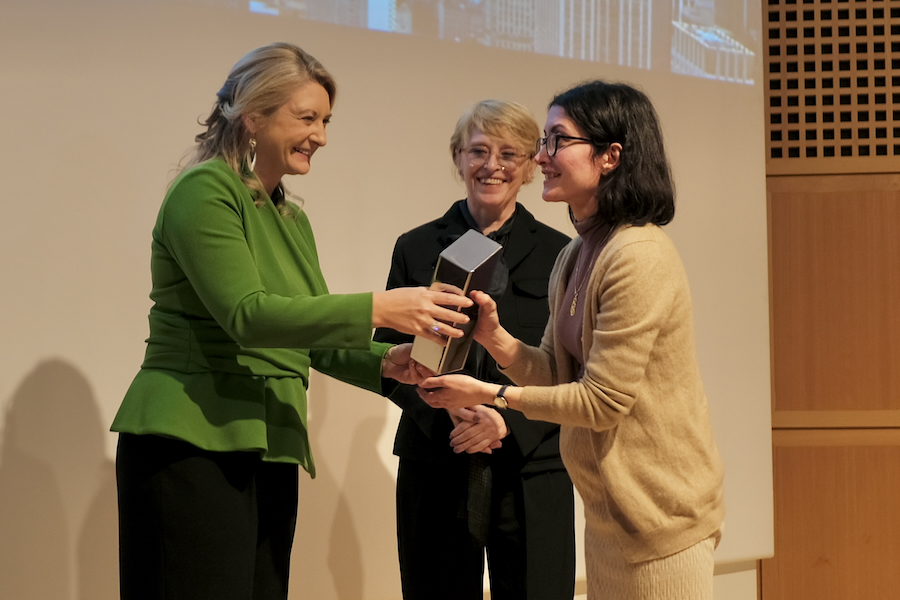
Following his speech Minister Thill revealed the award winners, with Grand Duchess Stéphanie presenting Iran-born Nazanin Hafez the Edward Steichen Award European Resident award, and Finnish-born Alexandra Uppman receiving the Edward Steichen Luxembourg Resident in New York award.
The official statement from the jury detailed how it was struck by “the urgency of Nazanin Hafez's work and by the discipline with which she works at the limits of what can be shown”.
“Working from the record of repression in Iran, much of it filmed by onlookers and shared online, she refuses to reproduce its brutality and turns our attention instead to the act of looking and to those who watch. Her photographs of women in the mountains offer a counterpoint: images of a freedom that the archive does not hold. Moving with assurance between collage, photography, film and installation, she works under pressure, with clarity and restraint. The jury's decision was unanimous, and it is proud to support her practice at this decisive moment.”
Both artists thanked the ESAL and the jury for selecting them for the award before they were invited to present an overview of their respective portfolios.
“Thank you for believing in my work and for making me feel supported, I truly appreciate it. And also my family and my partner, who are here tonight…I grew up in challenging cultural and political environments that have shaped and controlled everyday lives and personal experiences. This has influenced the way I see the world. My artistic work focuses particularly on violence, power structure, censorship, social and political injustice, especially those caused by the repressive regime in my homeland, Iran,” said Nazanin Hafez.
“I really wanted to emphasise that in my work I hope to continue to work with these subjects, to try to bring, I think, focus onto these questions of the natural world, what is happening, and create dialogue around these themes, even though with the wild females, for example, not to create a direct solution for the habits of loss, but to create discussions and hope to generate some questions around what's happening,” said Alexandra Uppman.