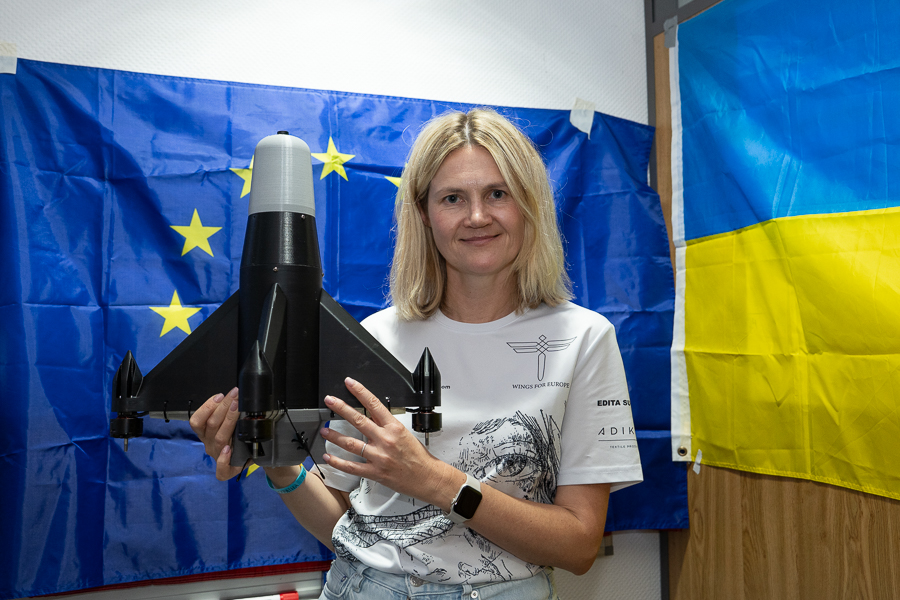
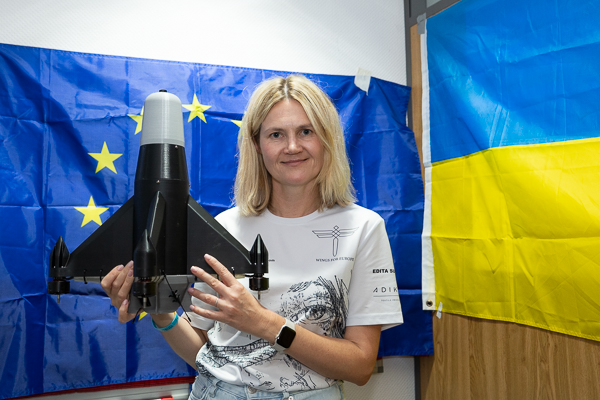
 Kotryna Vilnonyte, President of Wings for Europe asbl;
Credit: Ali Sahib, Chronicle.lu
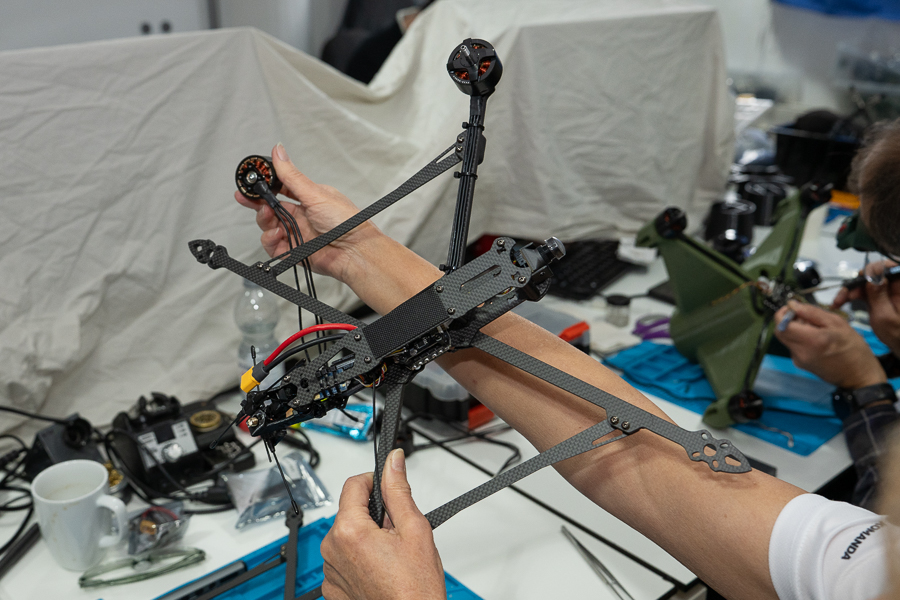
Luxembourg-based volunteer organisation Wings for Europe is expanding its support for Ukraine by introducing a new type of drone designed to intercept Russian unmanned aerial vehicles.
The initiative comes as Ukrainian forces face evolving aerial threats, prompting volunteers and engineers across Europe to develop new ways of helping protect Ukrainian cities and infrastructure.
Founded in 2023, Wings for Europe has grown into an international volunteer network assembling and delivering drones to Ukrainian defenders. Its latest project focuses on the Guardian interceptor, which the organisation is preparing to produce on a larger scale.
New drones to counter aerial threats
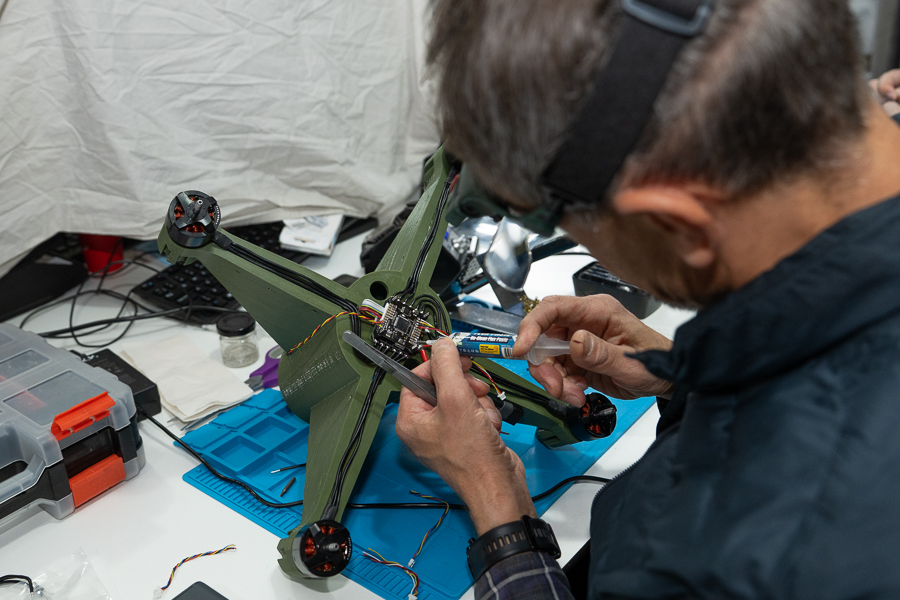
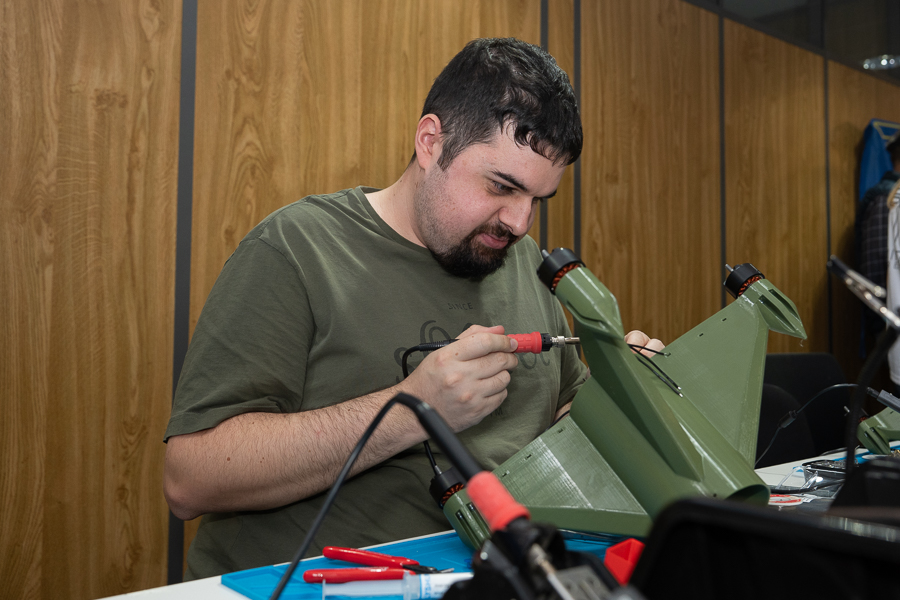
The Guardian was designed by Teufel, a 27-year-old engineering student from Germany who volunteers with Wings for Europe. He told Chronicle.lu that the project began following a request from Ukraine's 25th Airborne Brigade, whose personnel needed an interceptor but lacked the time and resources to develop one themselves.
Describing the development process, Teufel said: "While I was here, they were at the front and I designed the parts. They printed them in Ukraine, test-flew them, gave me feedback. I made a new design."
According to Teufel, the first successful interception took place in December 2025. Unlike conventional FPV drones, the Guardian prioritises speed over manoeuvrability, while using many of the same components to simplify production.
His motivation is also personal. Before Russia's full-scale invasion, he regularly played online games with two young Ukrainians. After they told him they were volunteering to defend their country, he lost contact with them.
Recalling how he became involved, Teufel explained: "I'm not really a soldier type. I haven't really any training at that. [...] They needed spare parts, 3D printed. Oh, that I know that I can do."
A growing European volunteer network
Wings for Europe President Kotryna Vilnonyte explained that the new project represents an important development for the organisation, which previously concentrated on assembling conventional FPV drones.
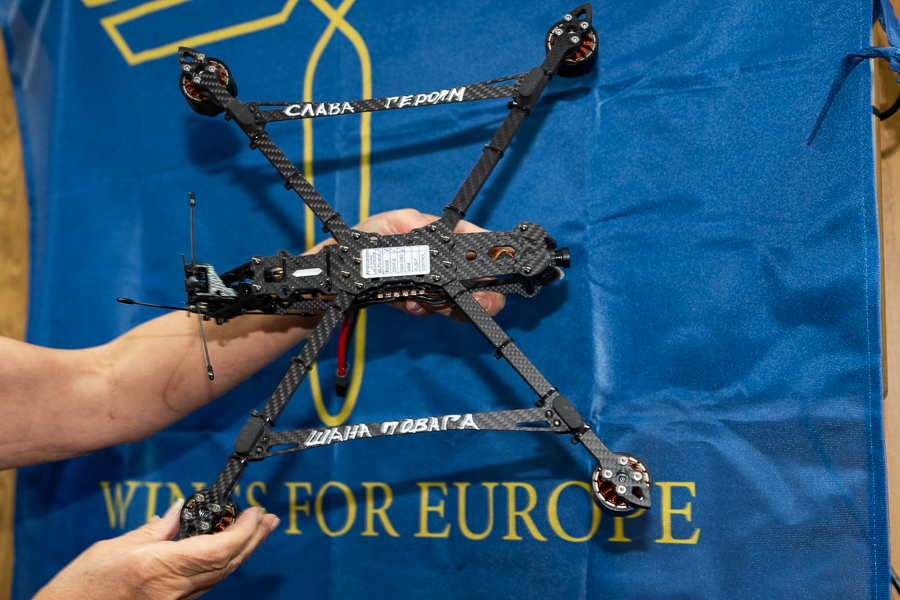
According to Kotryna Vilnonyte, the organisation has now assembled approximately 1,000 drones and currently sends around 100 per month to Ukraine. Kotryna Vilnonyte also highlighted what she described as the wider impact of donations: "One euro invested into Wings for Europe produces 53 times bigger impact in protecting, in defending."
When Chronicle.lu first reported on Wings for Europe in July 2025, the organisation had more than 60 volunteers and had delivered hundreds of drones. Its latest brochure reports more than 250 trained volunteers across Europe.
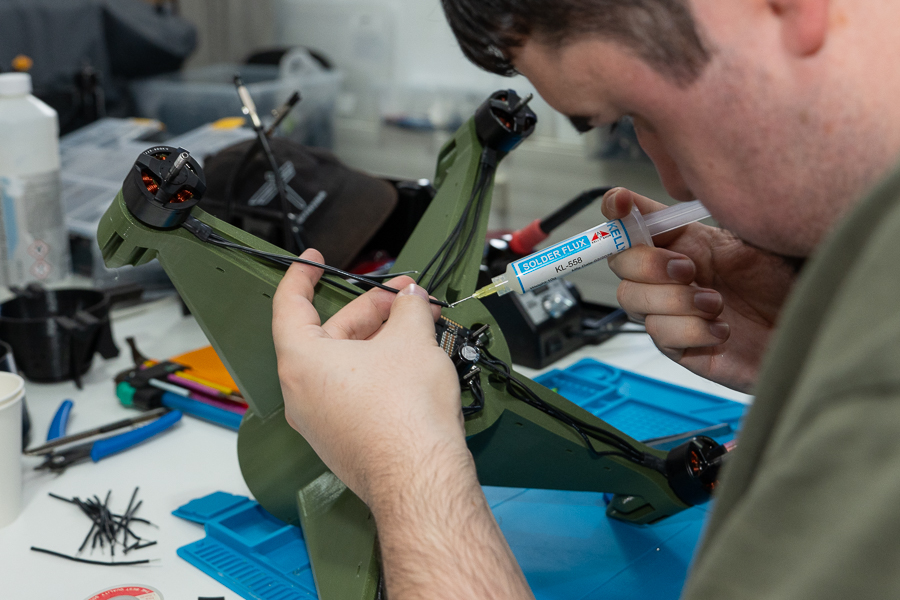
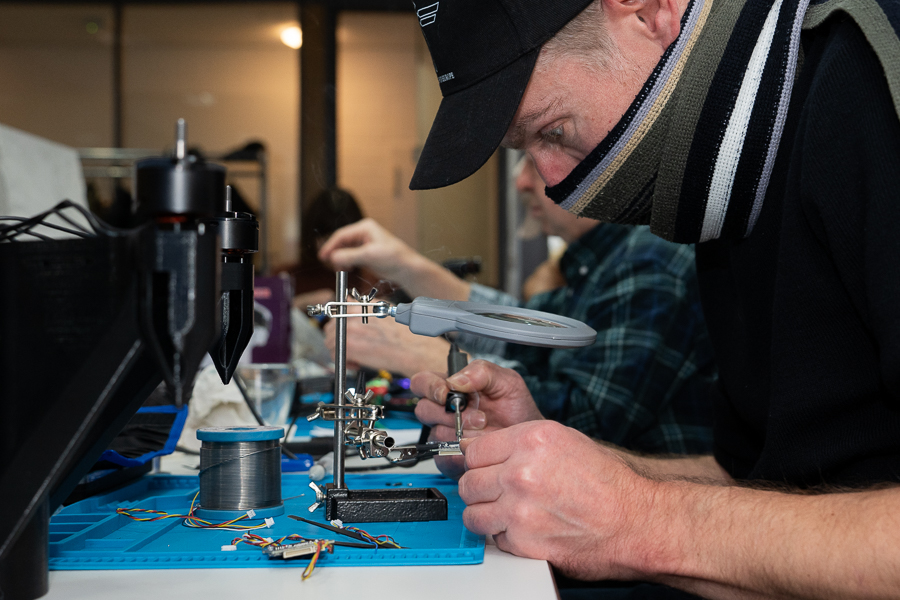
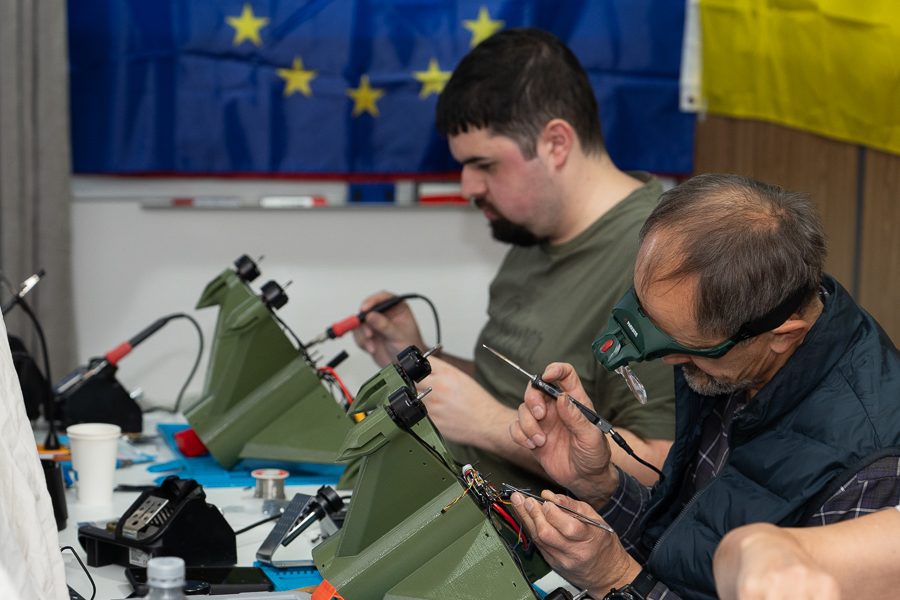
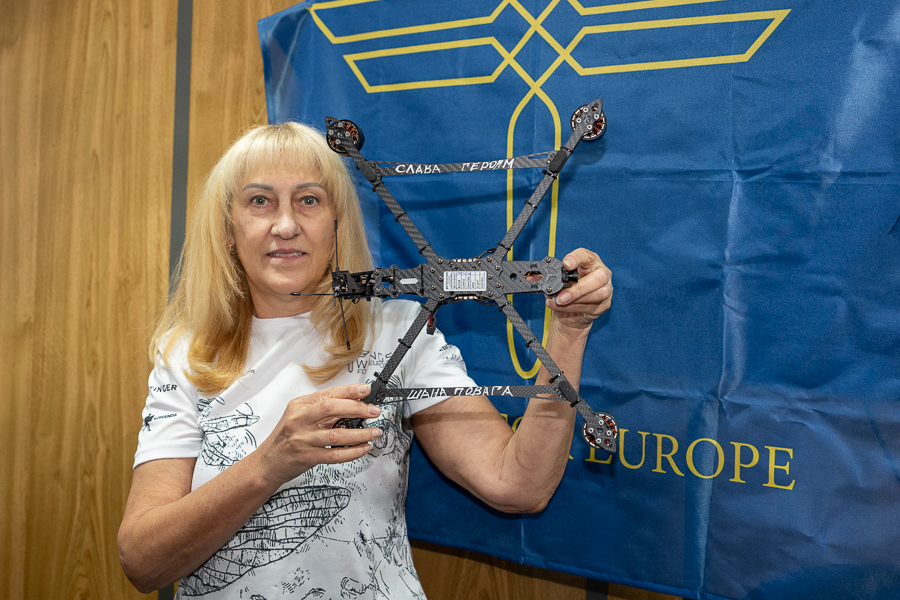
The organisation now holds regular workshops in Luxembourg, Belgium, Germany, Denmark and Lithuania. In Luxembourg alone, around 50 volunteers contribute to the initiative, working on drone assembly, logistics, fundraising, communications, administration and technical development.
However, Kotryna Vilnonyte stressed that funding remains the organisation's main obstacle: "We have lots of volunteers and lots of people write to us, but we cannot accept them because of lack of parts and lack of parts due to lack of funding."
Wings for Europe relies on private donations to purchase components and also assembles batteries. It is seeking to increase its use of European-made parts, including components sourced from Poland, Lithuania and Czechia.
Its activities have also attracted support from Members of the European Parliament. According to Kotryna Vilnonyte, Dainius Žalimas, Petras Auštrevičius, Reinis Pozņaks, Karin Karlsbro and Thijs Reuten have helped transport drones to Ukraine.
From humanitarian aid to assembling drones
Among the volunteers in Luxembourg is Iryna, a Ukrainian who has lived in the Grand Duchy for more than fifteen years and has been involved in humanitarian work since 2014.
She initially helped collect supplies for displaced children and, following Russia's full-scale invasion in 2022, participated in organising assistance for Ukrainian refugees and humanitarian deliveries. She recalled helping arrange an early shipment of approximately 40 tonnes of aid to Ukraine.
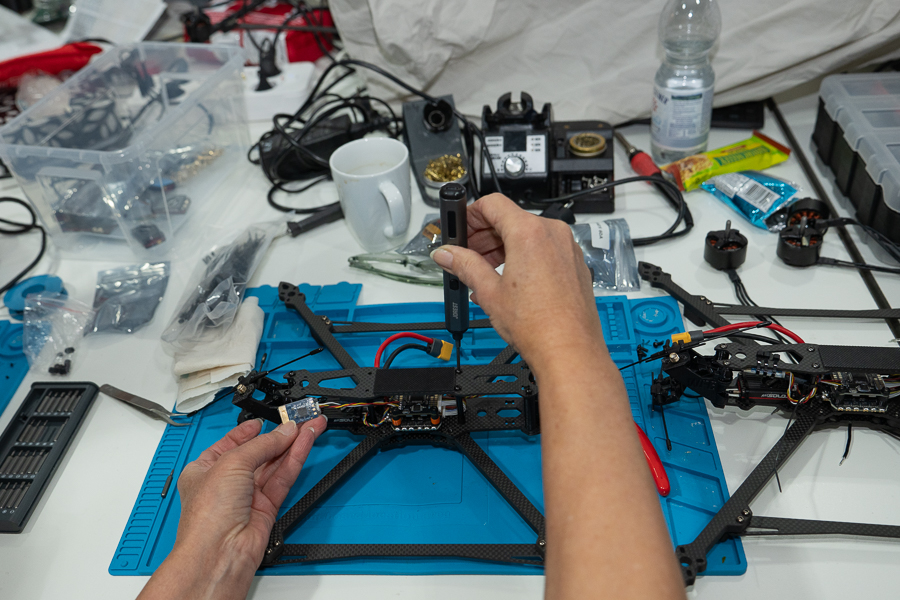
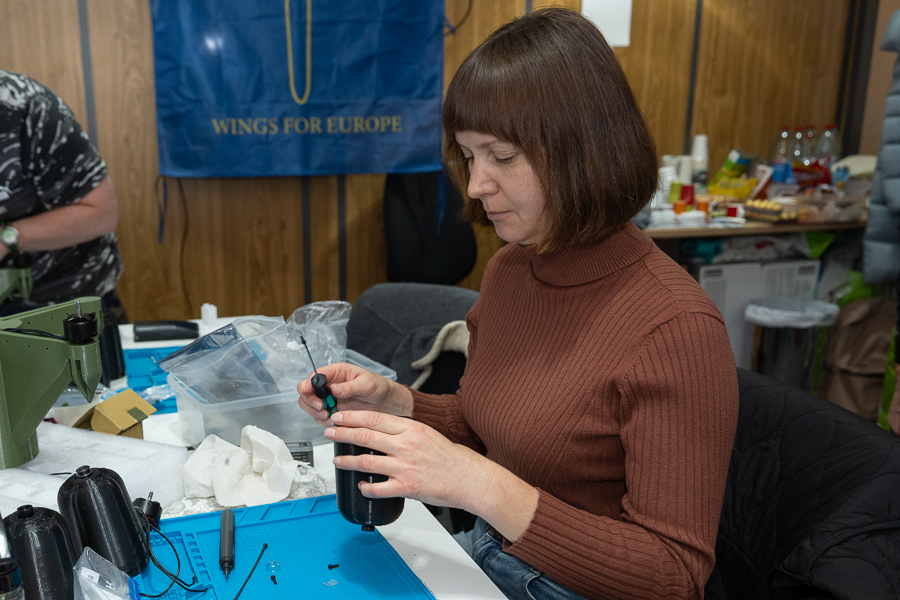
Around a year ago, Iryna joined Wings for Europe despite having no previous experience in electronics or soldering. She gradually learnt to assemble drones independently, from the frame to the final components.
Today, she dedicates Sundays to the workshop, assembling approximately one or two drones during a session. Alongside her volunteering, she and her husband run a landscaping business. Speaking in Ukrainian, Iryna described how volunteering has changed her weekends: "We used to go away somewhere occasionally, but now Sundays are sacred to me."
She described assembling drones as "my most important hobby at the moment".
Looking ahead, Kotryna Vilnonyte said Wings for Europe aims to scale up production of the Guardian interceptor, although securing sufficient funding for components remains its biggest challenge.
The organisation is also preparing to present its work at the NSPA Autonomy and AI Summit 2026, scheduled for Tuesday 24 November at the European Convention Center Luxembourg (ECCL). As a member of the Luxembourg Drone Federation, Wings for Europe has been invited to showcase its activities and discuss the challenges of expanding volunteer-led drone production.