 Credit: The Dots
On Wednesday 29 July 2026, The Dots, a Luxembourg-based innovation and technology agency, reported on the official launch of Wingos, an artificial intelligence-powered learning platform developed as part of a research project at the SnT Research Centre of the University of Luxembourg.
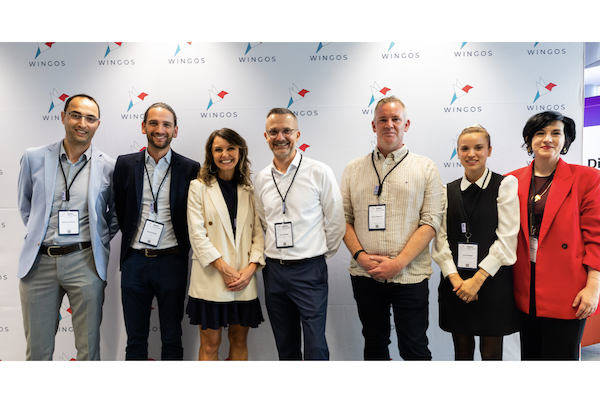
According to The Dots, the platform, funded by the Luxembourg National Research Fund (FNR), was officially launched on Wednesday 22 July 2026 at the Digital Learning Hub on the Belval Campus in Esch/Belval. The agency described Wingos as combining artificial intelligence with pedagogical principles to deliver personalised learning while "keeping teachers in control of content and student progress.”
The agency noted that the launch event brought together researchers, educators, institutional representatives, partners and international experts. The programme included a presentation of the platform's vision and roadmap, followed by two panel discussions focusing on artificial intelligence in education and digital sovereignty and trusted AI infrastructure for education.
Djamila Aouada, Deputy Director at the SnT Research Centre of the University of Luxembourg, explained: "If you do it right, you actually can empower education and make learning accessible for everyone. Wingos is a great opportunity to provide equal opportunities for all learners while keeping teachers and their expertise at the centre of the learning experience."
The first panel featured Philippe Hiligsmann, Vice-Rector for Academic Affairs at the University of Luxembourg, Nina Hall, founder of The Language Learning, Giles Kerridge, Assistant Head (Academic) at Lycée Edward Steichen Luxembourg, and Amélie Madinier, Entrepreneur-in-Residence (EiR) at Wingos and Executive Director of Aureus Ars & Scientia. Moderated by Serge Linckels, the discussion focused on the conditions required to develop artificial intelligence that addresses the needs of education.
According to The Dots, participants discussed the role of research in educational innovation, the challenges multilingualism presents for AI models and the importance of designing tools that support rather than replace teachers. Speakers also emphasised the need to involve educators, schools and future users throughout the development process.
Giles Kerridge said one of the key challenges addressed by Wingos is the personalisation of learning in increasingly diverse classrooms. "Teachers are encouraged to provide personalised content for each individual student according to their learning style and ability. When teachers have a large class full of students, that's almost impossible to do effectively. Wingos addresses this by providing personalised content for each student."
The event also included a live demonstration of the platform, presented by Eya Khamassi, UX Designer, Research & Development Specialist at the SnT Research Centre and Project Manager of Wingos, together with Mohamed Adel. According to The Dots, the demonstration showed how the platform adapts learning pathways to individual learners while enabling teachers to maintain full control over educational content.
Reflecting on the demonstration, Eya Khamassi said: "What stood out to me most was that participants didn't simply like what they saw; they genuinely wanted to try the platform themselves. Their curiosity and willingness to test Wingos showed that they could immediately see its potential and relevance." The project team said this response indicated that the platform's personalised approach addresses challenges faced by educators in the classroom.
The second panel brought together Sadia Berdaï, Head of the Compliance Division at the National Commission for Data Protection (CNPD), Bert Verdonck, CEO of the Luxembourg National Data Service (LNDS), Frédéric Habets, Head of Health and Public Sector Engagement at LuxProvide, and Martin Kracheel from the Curriculum Development Division at SCRIPT. Moderated by Mohamed Adel, the discussion focused on data protection, digital sovereignty and the responsible deployment of artificial intelligence in schools.
According to The Dots, participants agreed that innovation in educational AI must be accompanied by trust. Bert Verdonck commented: "We need to be able to trust these new tools. There's still a lot of work to be done in order to get back in control of what these tools use and how they can be used safely."
The discussion concluded that AI solutions for education should be designed to protect teachers' and students' data while ensuring transparency, security and human oversight.
The Dots added that the Wingos project is now entering its next phase of development, with the team focusing on expanding collaboration with teachers, schools and partners through pilot projects, with the aim of making the platform available to educators across Europe.
Amélie Madinier stated: "We hope Wingos will be available across Europe and support schools in many different countries. We want it to be a platform that can help the maximum number of schools, students and teachers.”
Further information about the platform is available on the official Wingos website.